






 Portuguese
  Spanish


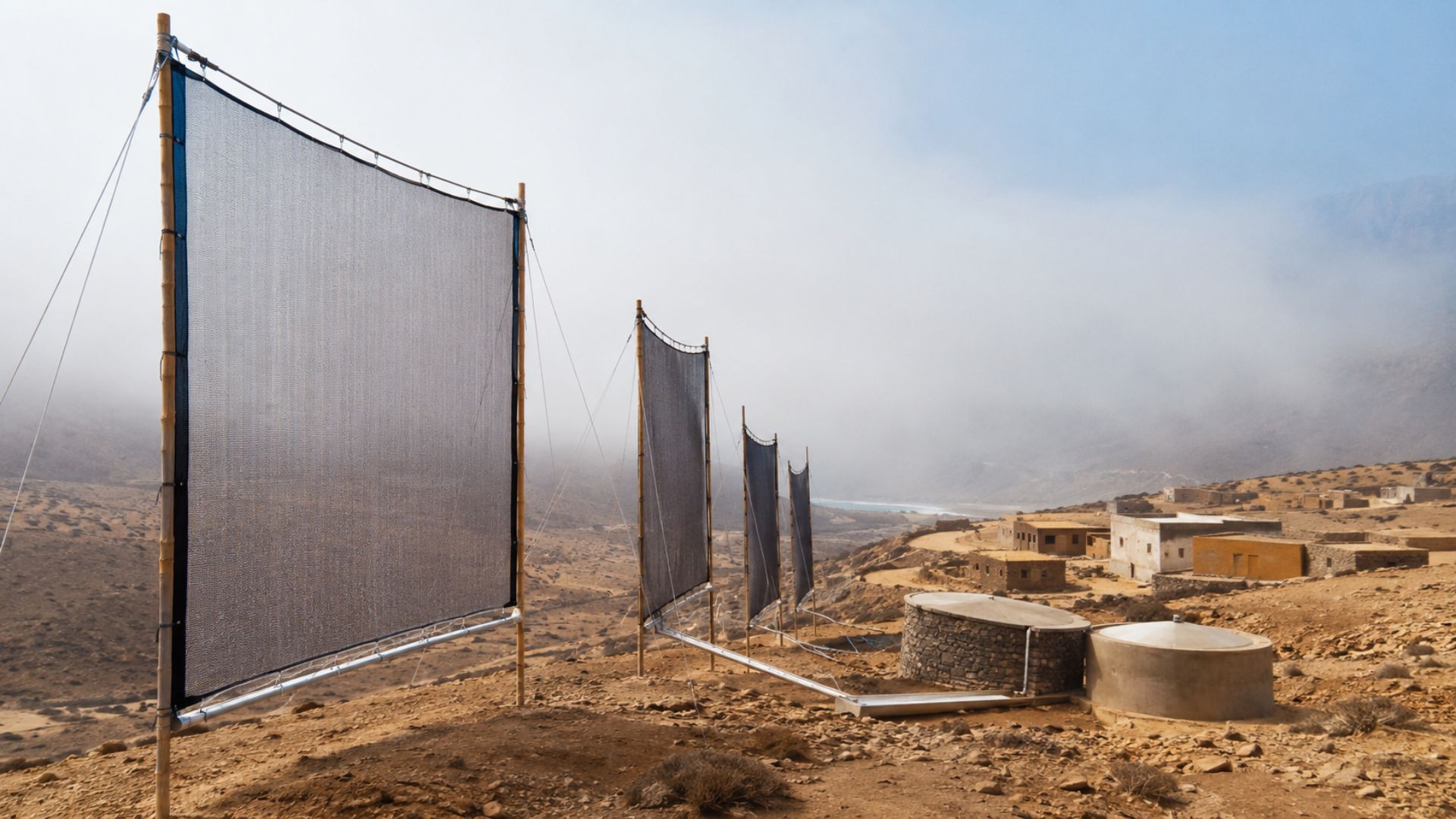


Communities in the Aït Baâmrane region, in southwestern Morocco, capture water from the Atlantic fog through large polymer nets installed on the slopes of Mount Boutmezguida, at over 1,200 meters altitude. The system operates without pumps and electricity: droplets are retained in the mesh, condense, and flow by gravity to reservoirs connected to kilometers of pipelines that deliver water directly to homes. In May 2026, the UN recognized the project as one of the most relevant examples of climate adaptation to desertification.
Entire villages in southwestern Morocco are drawing water directly from the air as wells dry up and the desert encroaches on what remains of arable land. The system is surprisingly simple: polymer nets installed on the slopes of Mount Boutmezguida capture the fog droplets that the moisture from the Atlantic Ocean pushes against the Anti-Atlas mountain range. The condensed water trickles through the mesh, accumulates in reservoirs, and descends by gravity through kilometers of pipelines until it reaches household taps, without the need for pumps, motors, or electricity. The project, led by the NGO Dar Si Hmad, has transformed the routine of communities where women used to walk up to four hours a day to fetch water from remote wells.
The idea was born from an accident. In the 1980s, researchers working in the Atacama Desert in Chile left a metal screen exposed to the wind overnight. The next morning, the screen was covered with water droplets in one of the driest places on the planet. This episode inspired decades of research that culminated in the fog harvesting systems now installed in Morocco, where the geographical conditions are ideal: high mountains near the Atlantic, constant winds laden with moisture, and nighttime temperatures that favor condensation.
How polymer nets transform air into water

When the Atlantic fog crosses the slopes of the Anti-Atlas mountain range at over 1,200 meters altitude, the tiny water particles collide with the threads of the net and accumulate until they form drops large enough to flow down by gravity.
-
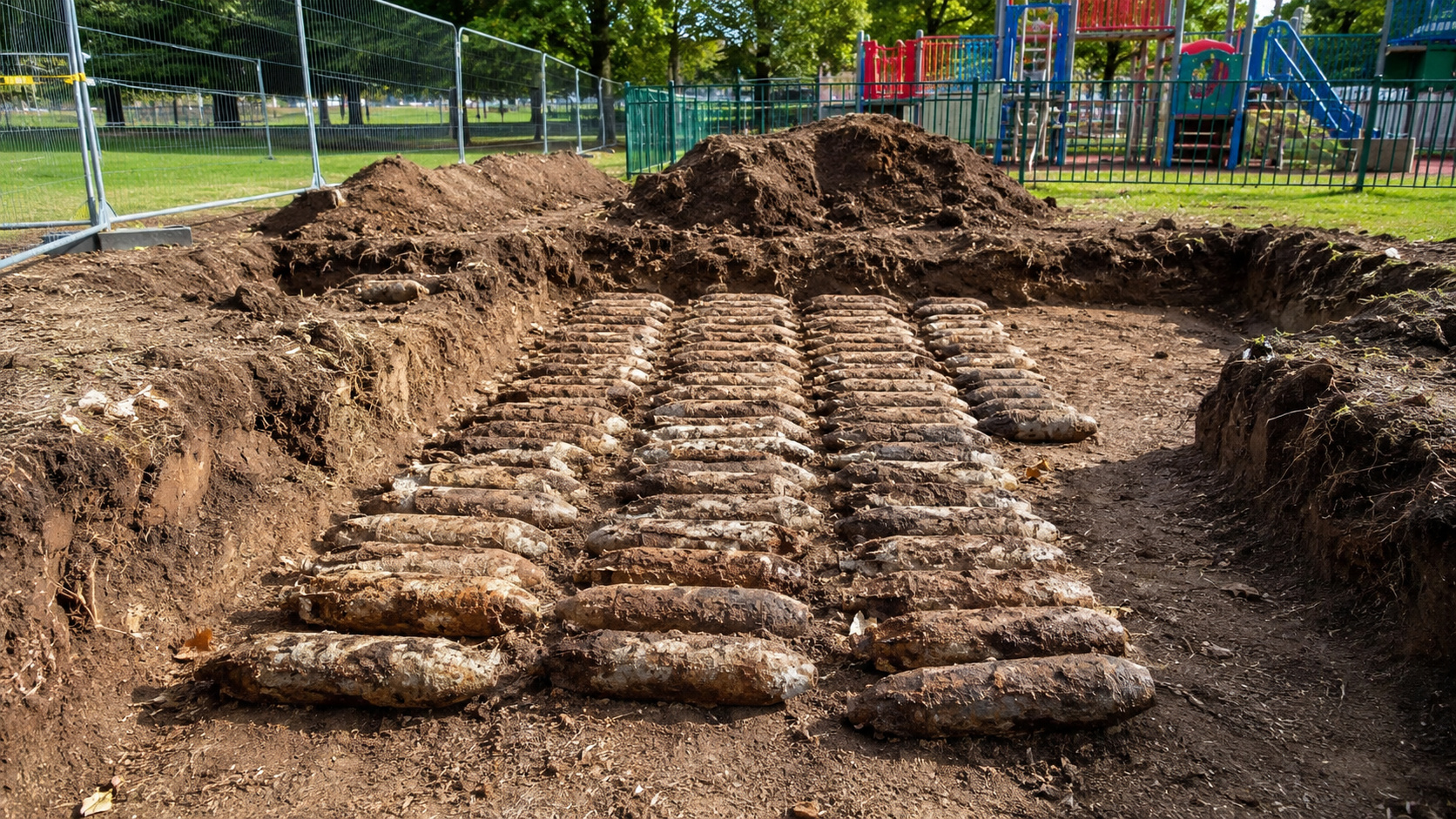
Workers renovating a playground in northern England uncover 176 World War II bombs buried underground; training artifacts still contained explosives.

-
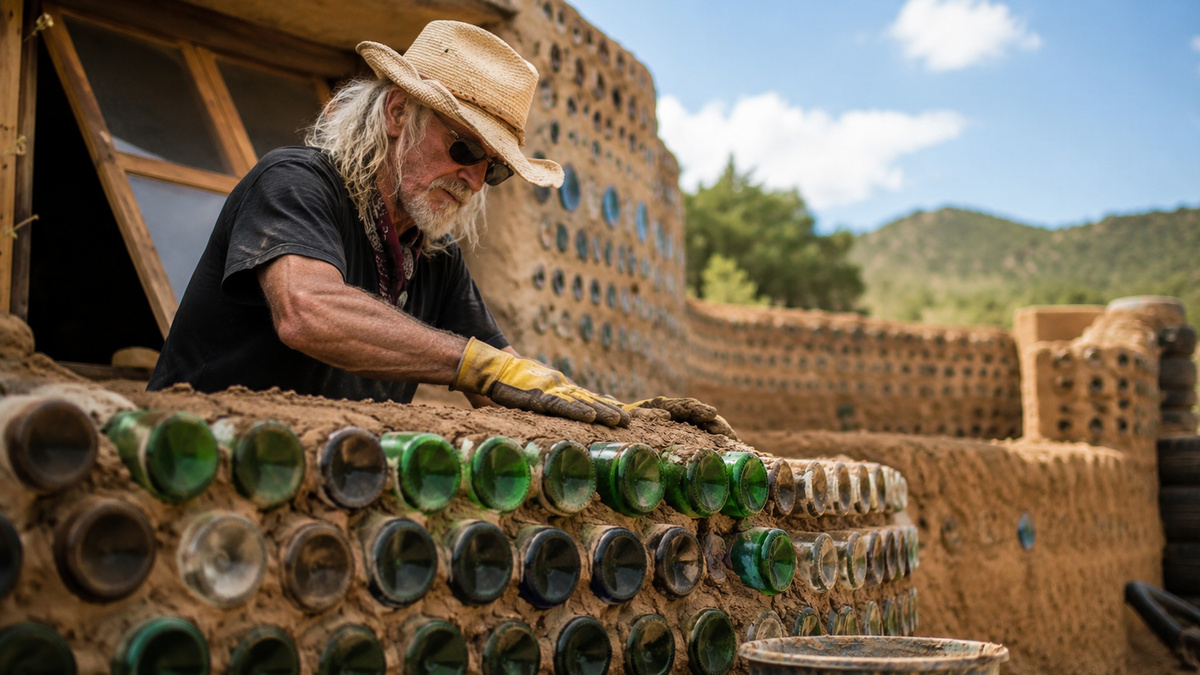
Brazilian Architect Transforms Waste into Sustainable Homes with Solar Power and Rainwater Systems for 40 Years

-
Security Guard Becomes Doctor at Louisiana Hospital Where He Once Worked, Studied Chemistry Between Shifts

-
Woman Rescued from Luxury Complex in Brazil Worked Without Pay for 55 Years, May Be Entitled to Over $300,000


The system does not require any external energy source. Condensation occurs naturally due to the temperature difference between the humid air and the mesh surface. The condensed water flows into gutters at the base of the nets, goes to storage reservoirs, and from there descends through pipes to the villages. Thanks to advances in material engineering, modern nets are much more efficient than the prototypes tested decades ago in Chile, Yemen, and Eritrea.
The women who stopped carrying 25 kilos on their heads
Before the installation of the water capture system, the routine of women in the Aït Baâmrane region was determined by scarcity. They walked up to four hours a day to remote wells, carrying barrels of almost 25 kilos on their heads on the way back. This task consumed half the day, prevented girls from attending school, and placed the entire responsibility for the community’s water supply on the women.
When the fog water started flowing from taps inside the houses, the transformation was immediate. Women gained free hours that they began to dedicate to work, study, and family life. Girls returned to school. The Dar Si Hmad project, however, went beyond water infrastructure and incorporated literacy, technical training, and community management programs, recognizing that changing access to water meant reorganizing the entire social structure of the villages.
The resistance of those who never drank water that didn’t come from the ground
The technology worked from the first days, but convincing the population was more difficult. Some residents were suspicious of water that had never touched the ground and that, according to local beliefs, lacked minerals and “life”. The fog represented something ambiguous, almost unreal, very different from the traditional sources that ancestors had used for generations.
Resistance gradually decreased as families in Morocco found that the water was safe, constant, and clean. The transition also revealed an unexpected effect: some women felt they were losing part of their central role in the home by no longer being responsible for fetching water. The project needed to integrate these cultural dimensions so that acceptance was complete and fog water collection was not seen as a threat to community identity.
UN Recognition and the Limits of Technology
In May 2026, the UN recognized the Moroccan system as one of the most relevant examples of climate adaptation to desertification. The project demonstrated that extremely dry regions can access invisible water resources that were previously ignored, offering a viable alternative in scenarios where drilling wells has become useless because aquifers are depleted.
But the technology has clear limits. Fog collection only works where mountains, ocean moisture, and very specific atmospheric conditions coincide. It is not a universal solution for the global water crisis. Still, the image is powerful: as wells dry up and the desert advances in Morocco, entire communities have begun to capture water from the air to survive, proving that the most effective engineering is not always the most expensive or complex. What happens in the Moroccan desert can inspire other arid regions of the planet to seek similar solutions.
Did you know that it is possible to extract potable water directly from the air using only nets and gravity? Do you think this technology could work in the Brazilian semi-arid region or are the climatic conditions too different? Tell us in the comments.


Water condensation has been a known phenomena for centuries. But harnessing it at a large scale is truly innovative.
The Water accumulated from the fogs are acidic? And there’s no minerals content? It’s safe to drink?