Portuguese
  Spanish


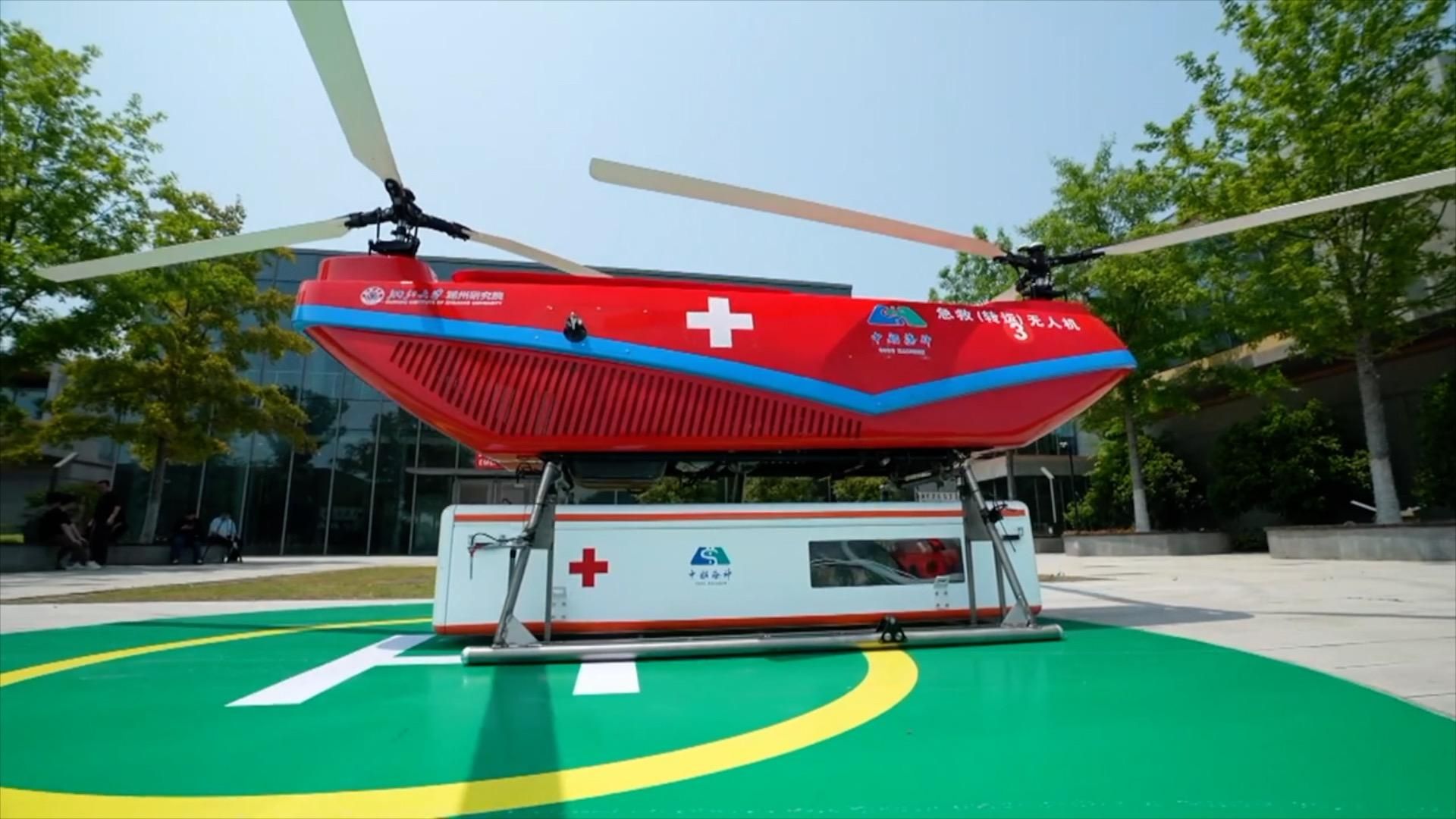

Aerial technology integrates rescue, medical care, and evacuation in extreme environments, expanding response capability in critical scenarios and reducing the time between victim location and the start of clinical support in complex operations.
China has unveiled a medical rescue drone designed to locate victims, initiate emergency care, and transport injured individuals in hard-to-reach areas, including turbulent marine environments, regions of extreme temperature, and high-altitude locations.
The proposal combines different stages of rescue into a single operation, focusing on reducing the time between the first contact with the victim and the start of clinical care at the scene.
The equipment was developed by CSSC Haishen Medical Technology, affiliated with China State Shipbuilding Corporation, in partnership with the Chinese Academy of Sciences and industry companies, according to information released by China Daily and Xinhua news agency.
-
Iraq floats and sinks under an arm of the Euphrates 10 giant concrete boxes of 46,000 tons and 125 meters each to assemble a 2.4 km submerged tunnel and open a new land route between Asia and Europe.

-
Scientists use more than 20,000 artificial birds and solar speakers to “trick” seabirds, reactivate nesting routes, and revive a colony on an island that seemed abandoned.

-
She spent 73 years breathing inside an iron lung, survived the aftereffects of polio, and became the last woman in the United States dependent on the equipment before dying at 78 years old.
-
Brazilian students created a $1 filter using pine bark, cotton, and 3D-printed parts to clean cassava wastewater, reduce the toxicity of a hazardous waste, and transform contaminated water into biofertilizer.



This joint effort seeks to address historical limitations faced by rescue teams in hostile environments, where human displacement can be slow, risky, or unfeasible.
Medical care at the rescue site
The main difference compared to drones used in rescue operations lies in the onboard clinical resources.
The aircraft combines respiratory support, intravenous infusion, vital signs monitoring, defibrillation, and real-time video transmission for remote monitoring by medical teams.

With this setup, the equipment was designed to act before the victim’s removal, reducing the interval between locating the injured person and the start of emergency care.
This capability changes the traditional logic of rescues, which normally depend on transport to a safe point before advanced procedures begin.
The proposal is to integrate search, initial medical support, and transport on a single platform, allowing clinical decisions to be made based on data collected during the operation.
The manufacturer states that the drone can be used in natural disasters, health emergencies, and operations in locations where human teams face logistical barriers or high risk.
The model combines autonomous waypoint navigation, hovering, and terrestrial remote control, which enhances operational flexibility and reduces the need for direct exposure of professionals in dangerous areas.
Operation in turbulent seas and extreme temperatures
Huang Yuhong, president and chief engineer of CSSC Haishen Medical Technology, stated that the aircraft can operate in humid, salty, and turbulent seas, in addition to withstanding temperatures between -25 °C and 46 °C.
This range significantly expands the spectrum of use, allowing operation in both intensely cold regions and areas of extreme heat, where conventional equipment may have limitations.
The executive also reported that the drone was designed for missions at altitudes of up to 5,000 meters, which expands its potential use in mountains, isolated areas, and regions affected by natural disasters.
This type of scenario often imposes additional challenges on traditional rescue, such as limited access, adverse weather conditions, and communication difficulties.
Another highlight from the company is its load capacity, which positions the equipment as a hybrid platform between an aircraft and a life support unit.
The equipment weighs 600 kilograms and supports up to 300 kilograms, a size that allows combining the transport of people, medical instruments, and monitoring systems in a single operation.


This relationship between weight and payload reinforces the objective of transforming the drone into a means capable not only of locating victims but also of stabilizing and rapidly removing them.
Platform combines autonomous flight and life support
The presentation took place during the China International Medical Equipment Fair, an exhibition focused on medical equipment and solutions, where the project was displayed as part of a broader innovation strategy in emergency response.
At the same event, the company showcased transfer and rescue robots capable of climbing stairs, bypassing obstacles, and transporting injured individuals on stretchers to aid stations.
Although they have different functions, the systems follow the same development line, which seeks to integrate mobility, automation, and medical intervention capabilities in critical scenarios.
The joint demonstration reinforces the intention to create an ecosystem of intelligent equipment aimed at assistance in crisis situations, with less dependence on traditional infrastructure.
In the case of the drone, this strategy becomes more evident due to the combination of resources that are normally distributed among different rescue means.
The aircraft can be quickly sent to an affected area, maintain real-time visual contact with the victim, sustain emergency procedures, and perform removal in sequence.
This operational chain tends to reduce delays that can be decisive in serious occurrences, especially when the clinical picture evolves rapidly.
The company did not inform, in the consulted disclosure, deadlines for large-scale adoption, start of commercial operation, or specific deployment locations.
Independent performance tests in real rescue situations were also not detailed, which still limits external evaluation of the system’s effectiveness in the field.
Even so, the project positions the drone as part of a new generation of emergency equipment, where displacement speed ceases to be the sole differential and begins to share space with the ability to provide clinical care at the exact point of the occurrence.