Portuguese
  Spanish


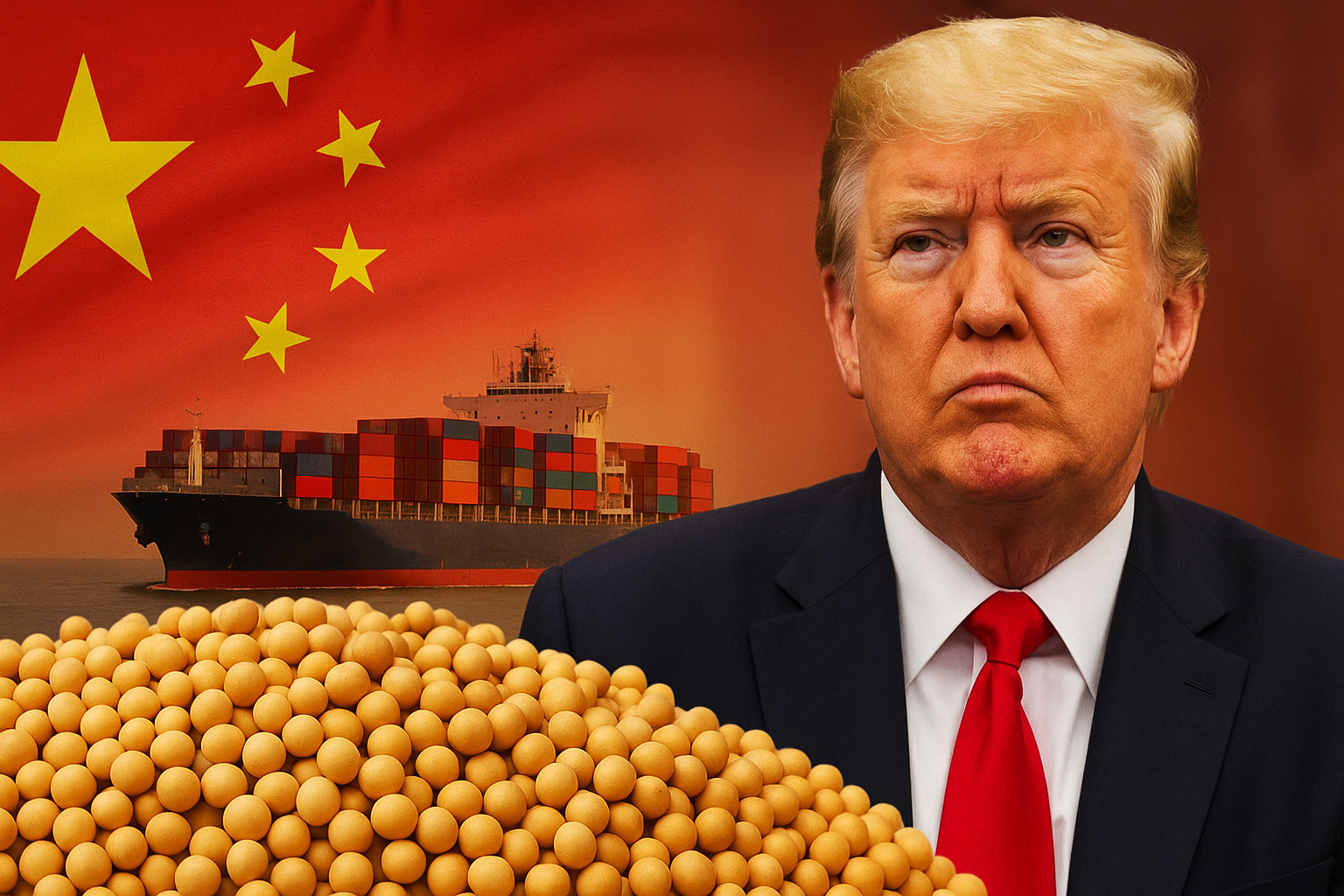

China Accelerates Soybean Purchases From Argentina and Pressures Trump on Foreign Trade. Understand the Explosive Impact for the US and Brazil.
China Prioritizes Argentine Soybean and Leaves US Behind
China has decided to heavily invest in Argentine soybeans and has left the United States behind. The move comes amid a trade war and puts Donald Trump under pressure.
With accelerated purchases, the Chinese reserved millions of tons of soybeans in record time. Meanwhile, American farmers are left without options and are pushing for immediate answers.
Moreover, Argentina has eliminated tariffs on the export of soybeans, corn, wheat, barley, and meats. As a result, the country has recorded a historical high in agricultural exports.
-
Not even the end of the ‘roller coaster’ described by the price of Brent crude oil (the main global benchmark) – which jumped from a price of $72 to $120, then dropped to $76 per barrel – due to the recent peace agreement between the US and Iran, was enough to relieve the Brazilian economy from inflationary pressures.

-
European Union looks again at Brazilian seafood after a nearly 8-year ban and may unlock a coveted market for lobster, tuna, tilapia, and shrimp.

-
Japanese retro sneakers become a sales phenomenon, help Asics achieve record profits, and gain their own operation to target Los Angeles, Milan, and Seoul.
-
Weg is the Brazilian company most exposed to Trump’s tariff hike. The multinational manufacturer of industrial motors and equipment, headquartered in Jaraguá do Sul (SC), is racing against time to reduce the impact of the new U.S. taxation.





In just three days, Buenos Aires secured numbers that shook the soybean foreign trade and expanded global competition.
Argentine Soybean Soars and China Takes Control
Just in soybeans, Argentina sold 2 million tons in a flash. On the first day, China reserved 650 thousand tons.
Shortly after, it doubled that purchase. The result? A lineup of 20 ships already scheduled to depart from Buenos Aires to Shanghai in October.
This volume alone represents 1.3% of the Brazilian soybeans that China is expected to import for the entire year. Thus, it is clear that Beijing prefers to diversify suppliers and avoid relying solely on Brazil or the United States.
Foreign Trade in Turmoil: Argentina Moves Forward
In addition to soybeans, Argentina closed contracts for 11.4 million tons of corn, soybean meal, wheat, soybean oil, and barley. Therefore, the Argentine offensive strengthens its position in foreign trade and sends a clear message to Trump: the Chinese are in no hurry to buy the American harvest.
Meanwhile, the Chicago Stock Exchange initially reacted, but soon fell again. The price of soybeans closed down 0.3%, revealing uncertainty in the international market.
Pressure Explodes on Trump in the US
Donald Trump now faces a political and economic storm. His biggest supporters, American farmers, are expecting a quick solution. However, exports to China remain stalled.
This frustration generates political wear. After all, farmers were one of the most loyal bases for the Republican’s reelection campaign. Thus, each ship that departs from Argentina to China increases the pressure on the White House.
Impacts for Brazil: Alert is On
Although Brazil retains its global leadership in soybean exports, China’s message is clear. If Argentina gains ground, Brazil may lose part of its prominence. Furthermore, Chinese dependence continues to dictate the course of agricultural foreign trade.
Thus, the international scenario shows that no country can afford to hesitate. With China controlling demand, both Argentina and Brazil become key players. And the United States, for now, is left out of the game.
Conclusion: The Global Board Has Changed
Therefore, the dispute goes far beyond soybeans. Foreign trade is turning into a geopolitical arena, where every exported ton represents power. Argentina takes advantage of the moment, China sets the pace, and Donald Trump faces the fallout.
Meanwhile, producers from Brazil and the US watch closely. After all, those who earn China’s trust ensure not just a market, but also global influence.