






 Portuguese
  Spanish


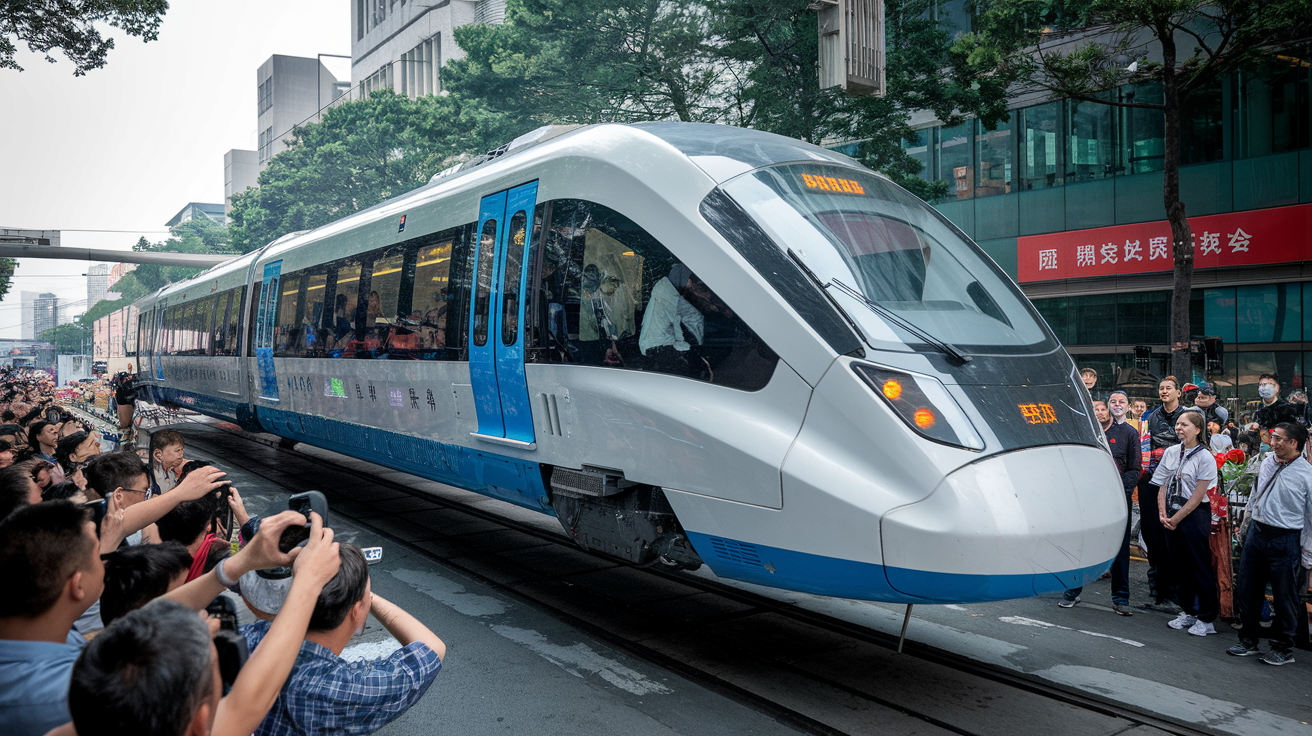


China Has Developed Innovative Technology That Promises to Transform Transportation: A Train That Doesn’t Need Tracks or a Driver. Understand How This Vehicle Works with Virtual Tracks and Its Implications for the Future of Mobility.
The gigantic Chinese cities present a real challenge for authorities in terms of urban mobility. To tackle this problem, China is innovating with advanced solutions to improve passenger transportation. One example of this is the Autonomous Rail Rapid Transit (ART), the world’s first train that doesn’t need tracks. This revolutionary vehicle uses virtual track technology, providing a new era in efficient and sustainable urban transportation. Check out all the details about the world’s first trackless train!
Train with ‘Virtual Tracks’ Can Reach Speeds of Up to 70 km/h

The technology for the trackless train was developed by CRRC Corporation and uses a magnetic ground detection system that allows the vehicles to navigate autonomously. The vehicle operates on rubber tires with pre-defined paths remotely, basically relying on virtual tracks.
Thus, it does not require a driver, allowing it to operate on regular roads alongside cars. Additionally, an autonomous system for detecting pedestrians and obstacles on the road prevents any type of accident.
-
China Develops Custom 140-Ton Electric Mining Truck with 770 kWh Swappable Battery, Deploys 290 Units in Xinjiang’s Largest Zinc Mine

-
Meta to Launch Arena, a New Prediction App Targeting 3.56 Billion Users, Competing with Polymarket and Kalshi

-
Scientist Challenges Famous Human Evolution Theory, Argues Homo Sapiens Evolved Gradually Over Thousands of Years
-
15-Year-Old American Builds Ocean Generator with PVC Pipe and 3D-Printed Propeller for $12, Wins National Prize, Presents at White House, and Makes Forbes 30 Under 30 List




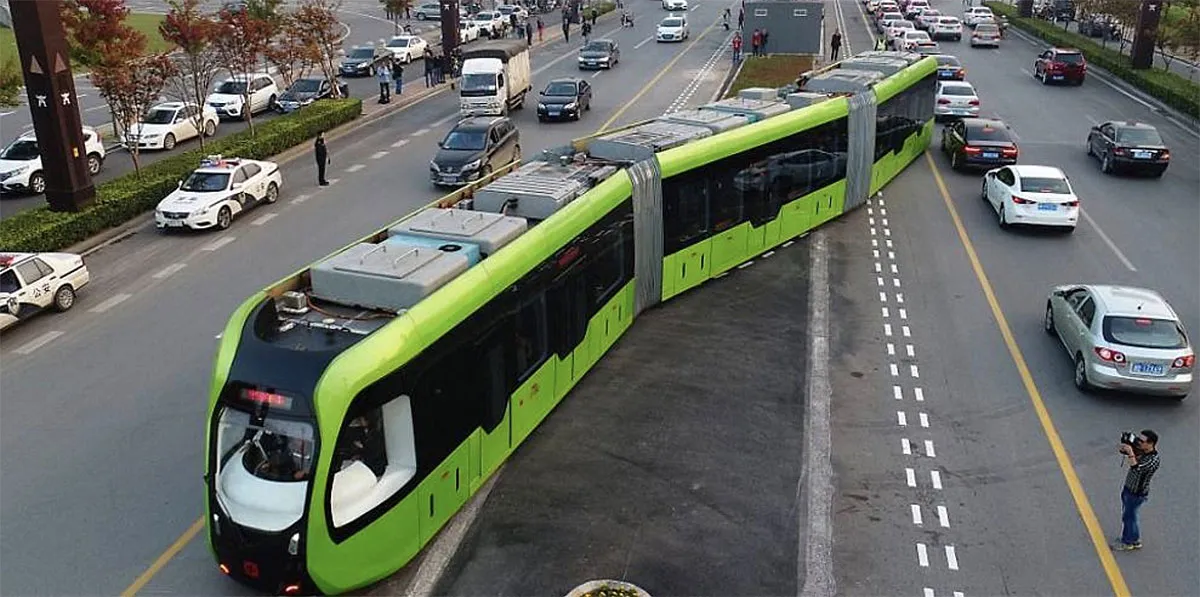
With a speed of up to 70 km per hour, the trackless train is advocated by experts as an ‘alternative to relieve congested cities and revitalize suburbs.’ Until now, the train that uses virtual tracks operates on internal combustion, but could also be electrified from the ground.
The goal is for it to help China achieve its sustainable development goals by reducing greenhouse gas emissions. It is worth mentioning that countries such as Zimbabwe, Qatar, and Australia are also planning to invest in the trackless train technology.
Trackless Train Can Transport up to 300 Passengers
CRRC Corporation introduced an innovation by using rubber wheels with a plastic core, a unique model in the market. The estimate is that the trackless train has a service life of approximately 25 years. With a length of 32 meters, it can accommodate up to 300 passengers at once.
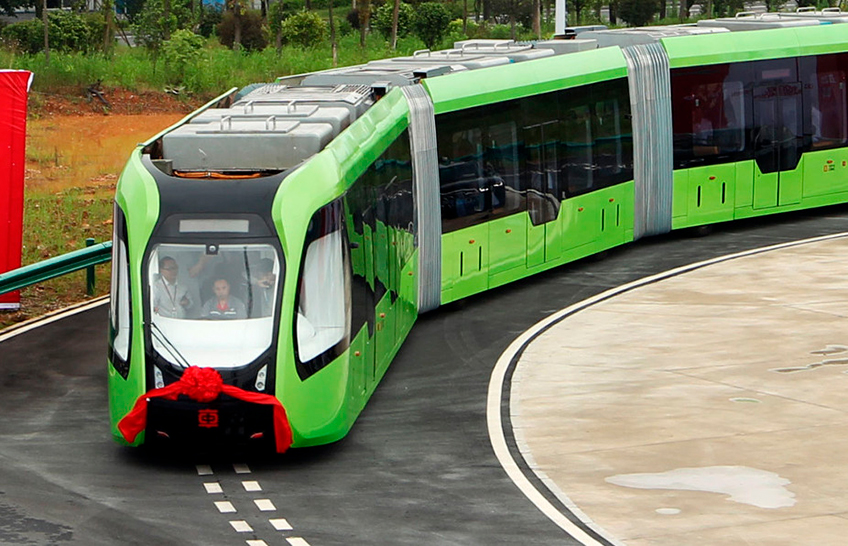
As previously mentioned, instead of relying on physical tracks, it follows dotted lines painted on the road, with a width of 3.75 meters. The model is equipped with advanced sensors that detect the pavement and collect crucial information during the journey.
With a unique and innovative design, the train that uses virtual tracks is considered an evolution of the traditional public bus, resembling more of a tram. Its independent operation from physical tracks, and the dual-head system allows it to function like a subway train, eliminating the need for maneuvers to change direction.
This advancement represents a significant improvement for the city of Zhuzhou, which has a population of approximately 4 million inhabitants, providing an efficient and modern transportation solution.
Europe Bets on Magnetic Levitation Trains
In addition to the innovative train that doesn’t need tracks, another project is being developed in Europe, which is betting on magnetic levitation to speed up transport. The Hyperloop is a modern train that utilizes magnetic levitation, meaning it floats in the air using magnets and travels inside a vacuum tube to avoid air resistance.
The vehicle has two motors, one for levitation and another for propulsion, to move forward and reach an incredible speed of up to a thousand kilometers per hour, outpacing Formula 1 cars. This type of technology is also being used with some under construction in China and in Abu Dhabi, United Arab Emirates.







A maior burrice política e econômica foi desprezar as malhas ferroviárias para ficar quase que só com as rodovias.
Pelo alto nível dos comentarios, nunca teremos isso aqui no Brasil.
Cara que façanha…. Um ônibus bitrem articulado… Nnnoooossssaaaaaa