






 Portuguese
  Spanish


China Says It Wants to Cooperate with Brazil and Brics to Defend Global Trade Against Trump’s Tariffs, While Brazilian Government Seeks to Reverse 50% Surcharge Coming into Effect in August.
China stated on Monday (28) that it is willing to work with Latin American countries and Brics, including Brazil, to “jointly defend the multilateral trading system, centered on the WTO, and protect international justice and equity.” The statement was made by the spokesperson for the Ministry of Foreign Affairs, Guo Jiakun, during a press conference in Beijing.
This signaling comes at a time when the U.S. government, led by Donald Trump, is preparing to enact new tariffs of 50% on Brazilian products starting August 1st. Brazil is among the countries most affected by the measure.
China Mentions Possibility of Expanding Trade with Brazil
When asked about the possibility of the Asian country opening its market further to Brazilian products that currently have the U.S. as the main destination, Jiakun stated that Beijing values the commercial partnership with Brasília. He highlighted sectors such as aviation and other strategic segments, stating that any progress would be “based on market principles.”
-
World’s Largest Pencil Factory, Producing 2 Billion Annually, Operates in a Brazilian University Town with Its Own Sustainable Forest

-
World’s Largest Banknote Printer is a British Private Company Producing Currency for Over 69 Nations
-
Europe’s Largest Hydrogen Truck Fleet Begins Operation with 125 Vehicles Emitting Only Water Vapor

-
Around 60% of the World’s Christmas Decorations Come from Factories Near Yiwu, China’s Largest Wholesale Market with 75,000 Shops


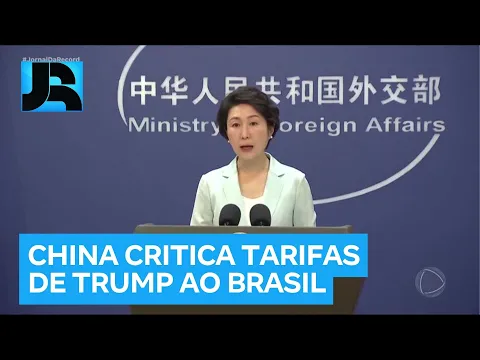

Regarding the hypothesis of an agreement similar to the one recently made with the European Union, which has faced internal criticism, the spokesperson responded that China advocates for resolving economic differences “through dialogue and consultation on an equal footing.”
Brazil Tries to Reverse 50% Tariff
In Brazil, the week began with intense diplomatic mobilization to try to reverse Trump’s tariff. The U.S. president ruled out on Sunday (27) any possibility of an agreement or postponement of the measure, which takes effect on Friday (1st).
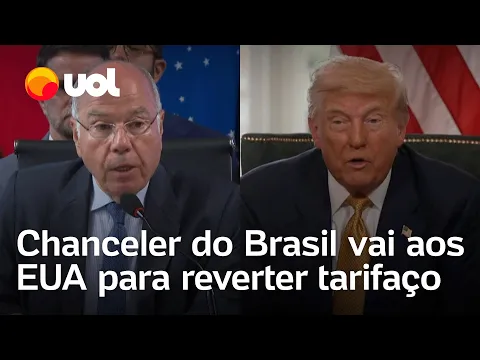
The Minister of Foreign Affairs, Mauro Vieira, landed in New York on Sunday for a commitment at the UN, but indicated that he might go to Washington if the White House shows interest in dialogue. According to members of the Brazilian government, there has been no clear response from the U.S. so far.
Senators Seek to Open Dialogue in the United States
A delegation of eight Brazilian senators from different parties is in Washington seeking dialogue. On Monday morning (28), the group met with Ambassador Maria Luiza Viotti and Brazilian diplomats. In the afternoon, the parliamentarians have meetings with representatives of the Brazil-U.S. Chamber of Commerce.
Senator Nelsinho Trad (PSD-MS) acknowledged the difficulty of negotiation. “From what we are observing, there is no channel for dialogue. And now we are hoping that dialogue can resume so we can make this understanding happen as soon as possible, before we face the prolongation of this surcharge, which will be very bad for the whole Brazilian economy,” he said.
Rogério Carvalho (PT-SE) argued that Brazil should maintain firmness and serenity in the face of the U.S. position. “Even with historical partners like Canada, Mexico, and Europe, the relationship has been tough. It will not be different with Brazil, and we need to have patience and resilience,” he said.
Brics and Latin America Could Be a Commercial Alternative
The statement from China reinforces the possibility of greater economic rapprochement with Brics and Latin American countries if the U.S. tariffs come into effect. The Chinese government has advocated for preserving multilateral trade rules and expressed interest in expanding relations with emerging markets.
The scenario places Brazil in a delicate position, with short deadlines to try to avoid the U.S. surcharge while also evaluating new fronts for international cooperation.


