Portuguese
  Spanish




Paraíba International Quantum Computing Center will have R$ 150 million, 5,100 m² and two quantum computers of 20 and 100 qubits in João Pessoa.
According to the Ministry of Science, Technology and Innovation, the Paraíba International Quantum Computing Center, CIQuanta, will be installed at Estação Ciência Cabo Branco, in João Pessoa, with more than 5,100 square meters of built area and an investment of R$ 150 million. The project stems from a cooperation agreement signed in November 2025 between MCTI, the Government of Paraíba, and the Suzhou Quantum Center, a center linked to CETC, one of China’s largest state-owned technology companies.
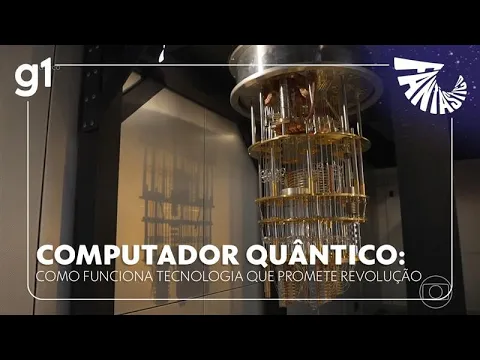
CIQuanta will house two 20 and 100-qubit quantum computers, equipment that needs to operate below 10 millikelvin, a temperature slightly above absolute zero, equivalent to about -273°C. The schedule foresees training for Brazilian researchers in China in June and July, equipment arrival in August, and assembly completed in October.
CETC-IQC Vice President Xu Hai stated that the goal is to enable Paraíba to develop its own quantum computers with technology transfer. If the schedule is met, João Pessoa will host the first operational quantum computers in Latin America.
-
Brazilian Engineers Lead $200 Million Project to Bring Water from São Francisco River to Transform Supply in Northeastern Cities

-
Brazilian University Tests Recycled Plastic Component for Homes, Aiming for More Sustainable Single-Family Housing Construction
-
Apple, Samsung, and Sony Warn: Wet Bluetooth Earbuds Can Be Damaged if Stored Before Fully Drying
-
Brazil Develops AI-Driven Technology to Measure Brain Pressure Non-Invasively, Detecting Nanometric Deformations in Real Time to Aid Early Medical Intervention


Quantum computing in Paraíba can place Brazil in a new technological phase
Quantum computers are not just faster conventional machines. They operate with a different physical logic, based on quantum mechanics, and can solve problems that traditional computers would take an impractical amount of time to tackle.
A conventional computer uses bits, which assume a value of 0 or 1. A quantum computer, however, uses qubits, units capable of representing multiple states simultaneously through superposition. Ten qubits represent 1,024 states, while 100 qubits represent about 1.27 trillion trillion states at the same time.

This capability makes quantum computing strategic for areas such as artificial intelligence, new drugs, precision agriculture, cryptography, financial optimization, logistics, and advanced materials. The differential is not in accelerating any common task, but in opening new possibilities for complex scientific and industrial problems.
Brazil will have physical access to quantum computers for the first time in Latin America
Until now, access to operational quantum computers was concentrated in a few countries, such as the United States, China, the United Kingdom, Germany, and the Netherlands. Brazilian researchers relied on foreign remote access platforms, usually controlled by companies or institutions outside the country.
This model imposes limitations on usage time, latency, access queues, and dependence on external authorization. CIQuanta changes this scenario by bringing physical equipment to Brazilian soil, with permanent operation and remote access for national universities and research centers.
The difference is strategic. It’s not just about using a foreign machine over the internet, but about creating proprietary infrastructure to train researchers, develop quantum algorithms, and build technological knowledge within Brazil.
Paraíba was already a pioneer in computing in the Northeast and now aims for quantum leadership
The choice of Paraíba to host CIQuanta is related to a history of technological pioneering. In 1968, the state was the first in the Northeast to receive a mainframe computer, the IBM 1130, installed in Campina Grande.
From this milestone, the region consolidated a strong academic base in engineering, computer science, and technology. The Federal University of Campina Grande, UFCG, became one of the most recognized Brazilian institutions in these areas.
Physicist Amílcar Queiroz, a professor at UFCG and president of Fapesq, was the main technical articulator of the project. According to him, the center should generate solutions in new drugs, precision agriculture, financial optimization, and advanced materials, in addition to training people to develop algorithms, market applications, and hardware improvements.
Two quantum computers of 20 and 100 qubits will have different functions at CIQuanta
The 20-qubit quantum computer will be aimed at educational applications, exploratory research, and initial quantum software development. For students and researchers just entering the field, this machine will allow them to test real algorithms and understand the logic of quantum computing in an operational environment.

The 100-qubit equipment will have greater scientific potential and can be used for problems closer to the technological frontier. Applications include molecular simulations, research in post-quantum cryptography, financial portfolio optimization, and materials modeling.
The chips in these computers need to operate below 10 millikelvin. To reach this extreme temperature, the systems use dilution cryostats with helium-3 and helium-4, capable of cooling qubits to levels colder than interstellar space.
Chinese technology transfer is the central point of the CIQuanta agreement
The most strategic part of the agreement between Paraíba, MCTI, and CETC-IQC is not just the arrival of the computers. It is the technology transfer, described by Vice President Xu Hai as something unusual in contracts of this type.
Historically, many technological agreements signed by Brazil with foreign companies delivered equipment, manuals, and operational training, but did not allow for real mastery of the technology. In the case of CIQuanta, the promise is to go beyond basic operation.
Secretary Cláudio Furtado stated that the transfer will allow Paraíba to develop its own quantum computers. If this stage truly advances, the project will cease to be merely equipment import and could become a basis for Brazilian technological autonomy.
Brazilian researchers will be trained at the Suzhou Quantum Center before operation in João Pessoa
The schedule foresees Brazilian researchers traveling to the Suzhou Quantum Center, in China, in June and July 2026. The training should involve equipment operation, algorithm development, hardware improvement, and creation of market applications.
The operation of CIQuanta will be 24 hours a day, 7 days a week, with shared administration between state and federal governments. Remote access will allow universities and research centers across the country to use the infrastructure installed in João Pessoa.
Professor Amílcar Rabelo, deputy coordinator of the project and researcher at UFCG, stated that researchers and students will be able to remotely access the first quantum computers in Latin America. This can help create a national culture in quantum computing, communication, and technologies.
Brazil-China agreement on quantum computing occurs amidst global technological dispute
The agreement between Brazil and China takes place in a context of international dispute over critical technologies. Quantum computing is one of the most strategic areas of the 21st century, with civil, industrial, scientific, and also security applications.
The United States leads part of the sector with companies like IBM, Google, and IonQ, but primarily offers controlled remote access, without broad knowledge transfer or physical installation of machines in countries like Brazil. China, through CETC-IQC, offers CIQuanta equipment on Brazilian soil and technical training.
This context makes the project both relevant and sensitive. Brazil seeks to reduce technological dependence, but will need to ensure that the partnership with China generates its own capacity, and not just a new form of external dependence.
Quantum computing can impact pharmaceuticals, agriculture, finance, and digital security in Brazil
With the two operational quantum computers, Brazilian researchers will be able to advance in molecular simulation for new drugs, including those aimed at tropical diseases affecting the country. This application is one of the most promising in quantum computing.
In precision agriculture, quantum algorithms can help optimize management variables, considering soil, climate, irrigation, logistics, inputs, and productivity. For an agricultural country like Brazil, this connection between frontier technology and field production has direct relevance.
In the financial sector, CIQuanta can support portfolio, risk, and optimization models. In digital security, post-quantum cryptography will become increasingly important for banks, government, defense, telecommunications, and critical infrastructure.
CIQuanta will be integrated into the national advanced computing and artificial intelligence network
MCTI Ordinance No. 9,445/2025 regulated the National High-Performance Processing System and created Cenapad-IA, National High-Performance Processing Centers in Artificial Intelligence.
CIQuanta’s integration into this network can connect quantum computing, artificial intelligence, and high-performance processing in a national research infrastructure. This expands the center’s reach beyond Paraíba.
Federal universities in Ceará, Pernambuco, Maranhão, and other states will be able to access quantum computers remotely. João Pessoa could become a national hub for quantum computing, artificial intelligence, and applied research.
The challenge will be to transform quantum computers into research, training, and industry
The installation of the computers will only be the first step. CIQuanta’s true test will be to train researchers, create access programs, produce relevant studies, develop algorithms, and attract companies interested in real-world applications.
20 and 100-qubit quantum computers alone do not solve Brazil’s scientific and industrial bottlenecks. They need to be accompanied by continuous funding, technical governance, digital security, and integration with universities and the productive sector.
Brazil is close to receiving unprecedented infrastructure in Latin America. The question now is whether the country will be able to transform CIQuanta into a long-term technological policy or if it will treat quantum computing merely as another isolated equipment delivery.