






 Portuguese
  Spanish


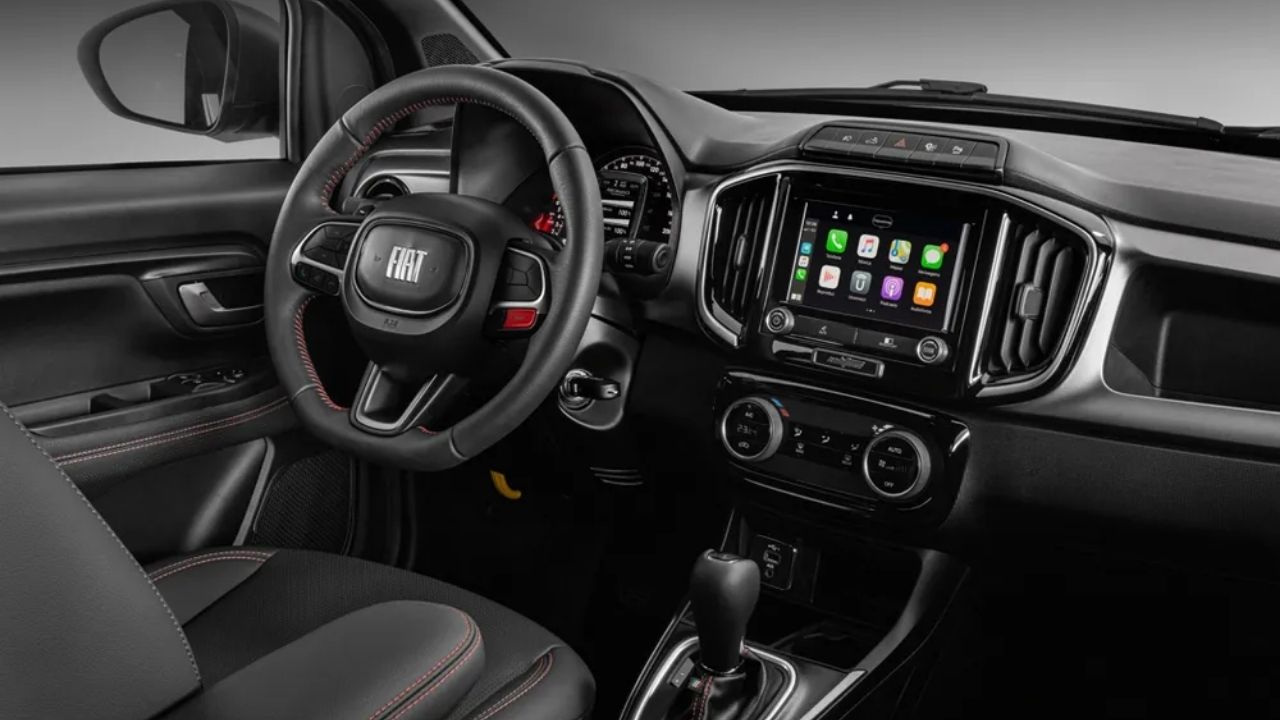

With Fiat Strada in focus, the Strada Turbo combines a 1.0 engine of up to 130 hp, CVT transmission, and Sport mode to improve performance. Evaluation praises fuel consumption, headlights, and ergonomics, but points out brakes, multimedia, rear camera, soundproofing, and rear comfort as limits of the compact pickup in daily Brazilian use.
The Fiat Strada Turbo was evaluated in a video as a version that addresses the main criticism of the 1.3 configurations: the lack of power in certain usage situations. The analysis shows the Fiat pickup with a 1.0 turbo engine of up to 130 hp, CVT transmission, and Sport mode, in an urban and highway use test in Brazil.
In a video published by the channel Auto Reporter, the evaluation highlights that the Strada gained performance, faster responses, and fuel consumption considered positive under the conditions faced, including urban traffic in Natal. At the same time, the test points out limitations in braking, multimedia, rear camera, soundproofing, equipment, and comfort for those traveling in the back seat.
Turbo engine solves the main criticism of the 1.3 versions

The major change in the Fiat Strada Turbo is under the hood. The 1.0 turbo engine with three cylinders and 12 valves, also used in other models of the brand, delivers up to 130 hp with ethanol and appears as the most praised point of the evaluation.
-
British Factory Transitions from Mechanical Parts to Producing 420,000 Electric Power Units Annually, Supplying 70% of Ford’s Electric Cars Sold in Europe

-
Toyota Shifts from Hybrid Cars to Electric Air Taxis with Joby’s 6-Rotor Aircraft, Capable of 322 km/h, Aiming for Mass Production to Electrify Urban Skies

-
Ferrari Unveils Limited Edition 12Cilindri Manuale: 6.5-Liter V12, 830 HP, 0-100 km/h in 2.9 Seconds, Top Speed Over 340 km/h, Only 1,499 Units Available

-
Discover the 2021 Fiat Cronos 1.3: Affordable Maintenance, Reliable Mechanics, and Fuel Efficiency of Up to 15.6 km/l


According to the test, this setup resolved the feeling of lack of power perceived in the 1.3 versions, especially on highways and overtaking. The pickup stopped just “going through the motions” in performance and started delivering surplus response in more demanding situations.
CVT transmission surprises with smoothness, but maintains typical characteristic

Image: Disclosure.
The CVT transmission of the Fiat Strada simulates seven gears and was described as smooth in everyday use. The evaluator notes that the transmission only reveals its CVT nature more clearly when the driver accelerates harder, increasing the revs and keeping the rotation constant.
Despite not being a fan of this type of transmission, the test considers the result positive in the Strada Turbo. The combination of turbo engine and CVT transmission improves the driving sensation without making the pickup abrupt, especially in normal mode.
Sport Mode changes the pickup’s behavior
Another highlighted point is the Sport mode. In the Fiat Strada Turbo, the difference between normal and sport mode was considered noticeable, especially when the driver needs quick responses on the road or in overtaking.
The Sport button changes the car’s dynamics and makes the accelerator more direct. The evaluation indicates that the change is more evident than in some models of other brands, where the transition between modes can be too subtle for the driver to notice in common use.
Braking appears as one of the main criticisms

Image: Disclosure.
Even with the performance gain, braking was pointed out as an area that could improve. The evaluator states that the Fiat Strada Turbo could brake better and suggests that rear disc brakes might help reduce stopping distance.
The criticism gains weight because the pickup has stronger performance, going from 0 to 100 km/h in under 10 seconds, according to the evaluation, and can reach 180 km/h. With more power available, the brake system becomes even more important to convey safety.
Small multimedia and limited rear camera annoy
In the cabin, the multimedia center was considered functional but small. The Fiat Strada offers wireless mirroring for Android Auto and Apple CarPlay, which is a positive point, but the reduced screen limits the visual experience.
The rear camera also received criticism. The positioning and angle did not seem ideal in the test, and the image still loses space with a warning strip on the screen. For a vehicle used daily, in maneuvers and tight parking spaces, the camera quality could be better.
Missing equipment leaves gaps in the package

Image: Disclosure.
The evaluation also mentions important absences in the equipment package. The Fiat Strada Turbo has wireless phone charging, LED headlights, automatic digital air conditioning, rear parking sensor, and rear camera, but fails to offer some desired items.
Among the points mentioned are the lack of a front sensor, blind spot alert, and cruise control. The test also notes non-functional buttons on the steering wheel, which gives the impression of space reserved for equipment that was not included.
Front comfort pleases, but rear remains tight
In the front, the Fiat Strada Turbo was praised for comfortable seats, good ergonomics, and firm suspension without overly compromising comfort. The higher profile tires also help filter out irregularities, maintaining the pickup’s reputation for robustness.
The problem appears in the rear seat. The evaluation shows that legroom is limited, especially when the front seat is adjusted for someone of average height. The Strada can be homologated for five people, but three adults in the back should not travel comfortably.
Internal noise and acoustic insulation could improve


Acoustic insulation was another point of attention. The test indicates that engine noise, wind noise, sound from the canvas, and vehicles passing around enter the Fiat Strada cabin with some ease.
This does not eliminate the good mechanical set, but it affects the perception of refinement. In urban or highway routes, especially when the driver accelerates more strongly, the engine’s roar is clearly heard inside the cabin.
Urban consumption pleasantly surprises
Even with the intense use of power, the evaluation indicates satisfactory consumption for the Fiat Strada Turbo. The test cites the numbers from Inmetro’s labeling program and also an average obtained in 100% urban use, in Natal, under traffic considered heavy.
The result was seen as positive because the evaluator claims not to have eased off the pedal during use. The combination of turbo engine, CVT, and competitive consumption helps explain why the Strada remains strong in the Brazilian market.
The Fiat Strada Turbo seems to have resolved the most important criticism of the 1.3 versions: the lack of power. With an engine of up to 130 hp, smooth CVT transmission, and noticeable Sport mode, the pickup became more agile, more pleasant in recoveries, and better prepared for the road.
On the other hand, the evaluation shows that there is still room for improvements in brakes, multimedia, rear camera, acoustic insulation, equipment, and rear comfort. Do you think the power of the turbo engine compensates for these limitations, or should Fiat deliver a more complete package in the Strada? Leave your opinion in the comments.


