






 Portuguese
  Spanish


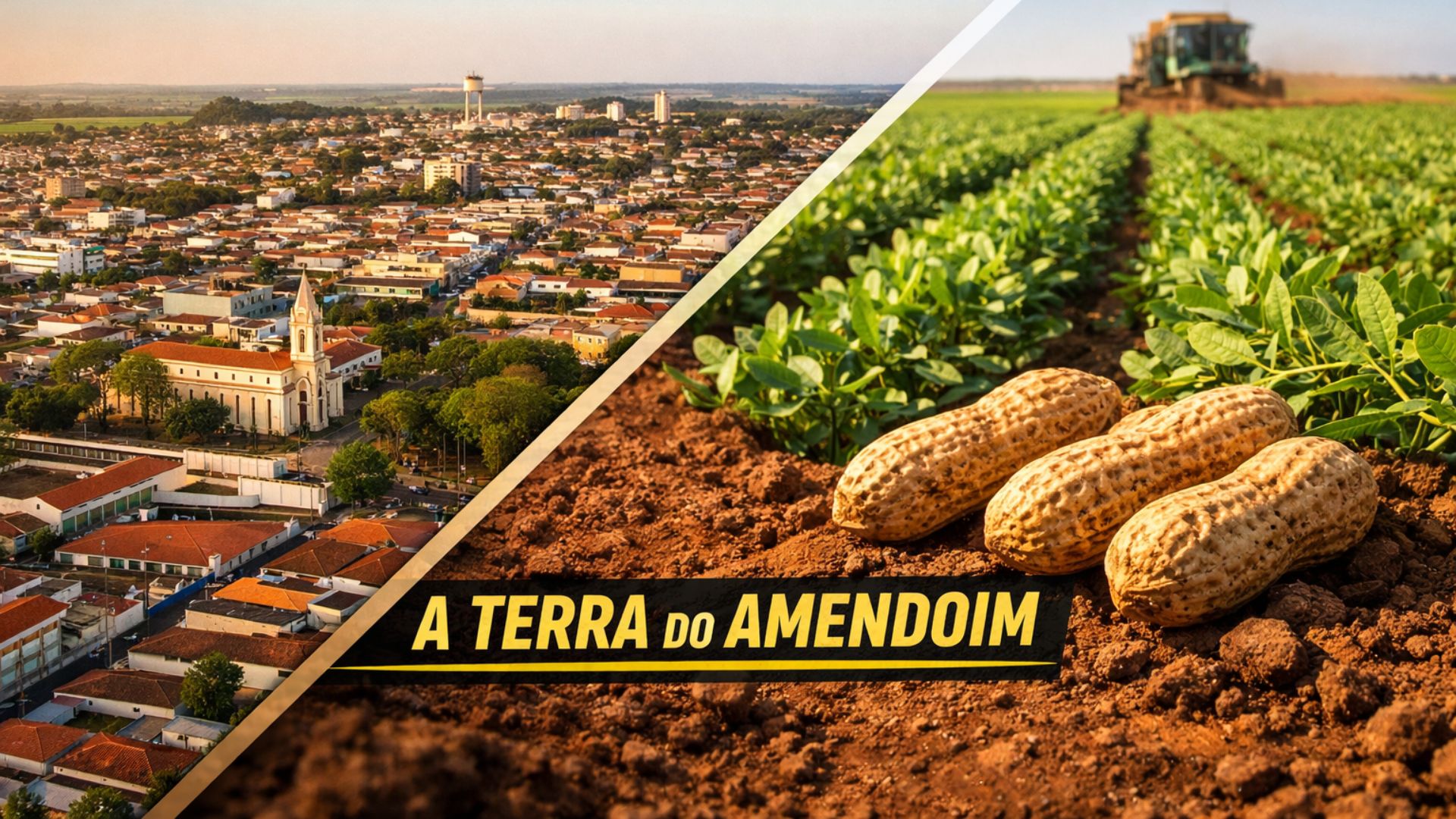


The Municipality of São Paulo’s Interior Consolidated Itself as a Hub for Peanuts by Integrating Agricultural Production, Derivatives Industry, Regular Exports, and Events Related to the Field, Combining Research, Logistics, and Cultural Identity in a Chain that Influences the Regional Economy and Connects Local Agribusiness to International Markets.
Exports and Derivative Products Strengthen the Economic Growth of the Municipality
Jaboticabal, in the interior of São Paulo, has established itself as one of the most relevant hubs in Brazil’s peanut production chain, bringing together agricultural production, industrial processing, and participation in the external market.
The municipality was granted the title of State Capital of Peanuts by state law, a recognition associated with the historical and economic weight of the crop in the region.
-
Brazilian State Sets Example by Investing Over $11 Billion in 2,000 Miles of Highways, Transforming Roads into Corridors Linked to Ports Handling 28.87 Million Tons of Cargo

-
The Fragrant Plant That Thrives in Partial Shade and Enhances Your Home’s Entrance with a Daily Garden Scent

-
Latin America’s Deepest Subway Station Opens in Brazil, Featuring London-Inspired Trains and a Tunnel Under the Tietê River
-
4,000-Year-Old Stone Towers Discovered Across Sardinia, Puzzling Archaeologists About This Mysterious Civilization


This activity drives different sectors of the local economy and coexists with a calendar of events and cultural manifestations related to rural life.
Situated in one of the most productive agricultural areas of São Paulo’s interior, Jaboticabal is part of a territory where peanut cultivation has expanded over the past few decades.
The crop has begun to occupy a strategic position in rotational systems, especially in areas traditionally associated with sugarcane.
According to surveys conducted by sector agencies, São Paulo concentrates the majority of national production, a scenario that has favored the development of processing and logistics structures in the state.
Legal Recognition and Productive Structure of Peanuts

The official title of State Capital of Peanuts was granted through a law passed by the São Paulo Legislative Assembly in 2018.
The measure aimed to give institutional visibility to a production chain that was already established in the municipality, consisting of rural producers, cooperatives, processing companies, storage, and transportation.
The recognition did not change the productive structure, but it has been used as a tool for economic and institutional promotion.
In practice, Jaboticabal’s relevance is associated with the ability to integrate different stages of the production chain.
A significant portion of the production is marketed as grain, while another portion goes to industrial processing.
Local companies and cooperatives engage in the production of derivatives, such as peanut oil and paste, which increases the value added to production and reduces exclusive dependence on the commodities market.
Another relevant factor is logistics.
The shipment of the harvest depends on roads, warehouses, and specialized services, elements that directly influence the competitiveness of the product.
Studies and analyses from the sector indicate that the concentration of São Paulo’s production has contributed to the consolidation of export routes and the strengthening of agro-industrial hubs in the interior of the state.
Technology in the Field and Support from Agricultural Research
The production of peanuts in Jaboticabal follows the trend of greater use of technology in the field, observed in Brazilian agribusiness.
Producers adopt mechanization, integrated planting and harvesting planning, and crop monitoring tools.
According to sector specialists, these practices aim to reduce losses, increase production efficiency, and meet quality requirements of the domestic and foreign markets.
In this context, the performance of educational and research institutions plays a complementary role.


The local campus of the São Paulo State University maintains academic activities and studies focused on agriculture, including research related to productivity, management, and adaptation of crops to the region’s soil and climate conditions.
These works support technical decisions and contribute to the dissemination of practices adopted by producers.
In addition to research, Jaboticabal hosts meetings and technical events focused on peanut cultivation.
These initiatives bring together producers, companies, and researchers to discuss technologies, markets, and challenges of the production chain.
The programming usually combines technical activities with actions open to the public, expanding the reach of the debate about the sector.
Exports to Europe and Asia Boost the Chain
The participation of peanuts produced in the region in international markets involves specific requirements.
Exports to countries in Europe and Asia demand strict quality, traceability, and sanitary control standards.
According to information disclosed by sector entities, the growth of external sales in recent years is associated with the organization of the production chain and compliance with these norms.
The growth of exports impacts the local economy by increasing the demand for specialized services, such as classification, processing, packaging, and transportation.
Moreover, processing into derivatives creates new commercial opportunities and allows the product to reach different segments, from domestic consumption to the food industry.
Although exact volumes vary according to the harvest and are not disclosed individually by municipality, data from the National Supply Company indicates that São Paulo leads national peanut production.
This position explains the constant presence of the state in export statistics and the role of interior cities in sustaining this trade flow.
Rural Tradition, Cultural Identity, and Peanut Festivals
The agricultural economy of Jaboticabal coexists with an urban identity marked by historical and cultural elements.
The municipality is known as the City of Roses, a designation associated with the tradition of cultivating rose bushes and the presence of gardens in public and private spaces.
This characteristic appears in institutional materials and the urban landscape, according to information from the city hall.
The name Jaboticabal has indigenous origins and is related to the word jabuticaba.
Historical and institutional records indicate that the term refers to the “place of jabuticaba trees,” associated with the vegetation that existed before urban occupation.
This aspect is often cited in educational and tourist content about the city.
Events related to the rural environment are part of the local calendar and contribute to economic and cultural activity.
Festivals associated with peanuts feature typical gastronomy, cultural activities, and musical attractions, drawing residents and visitors from other cities.
The programming often occupies public spaces and urban facilities, reinforcing the relationship between agricultural production and urban life.
Regional Influence and Economic Articulation
The role of Jaboticabal in the peanut chain goes beyond the municipality’s limits.
The local production influences neighboring cities, especially in the Alta Mogiana region, through commercial partnerships, labor circulation, and technical knowledge exchange.
According to representatives of the sector, this interchange helps standardize production practices and strengthen the regional market.
University extension projects and initiatives to support rural producers are also part of this scenario.
When implemented, these actions focus on the dissemination of good agricultural practices, sustainability, and technical qualification.
At the same time, investments in infrastructure, such as improvements in roads and storage capacity, support Jaboticabal’s role as an agro-industrial center of São Paulo’s interior.
With a structured production chain, a presence in the international market, and a cultural identity associated with the field, Jaboticabal continues to be viewed as a reference in peanut production, but how can this prominence translate into more balanced economic development throughout the entire chain?


Teria que ser o maior produtor de jaboticaba.