






 Portuguese
  Spanish
  7 min of reading
  0 comments


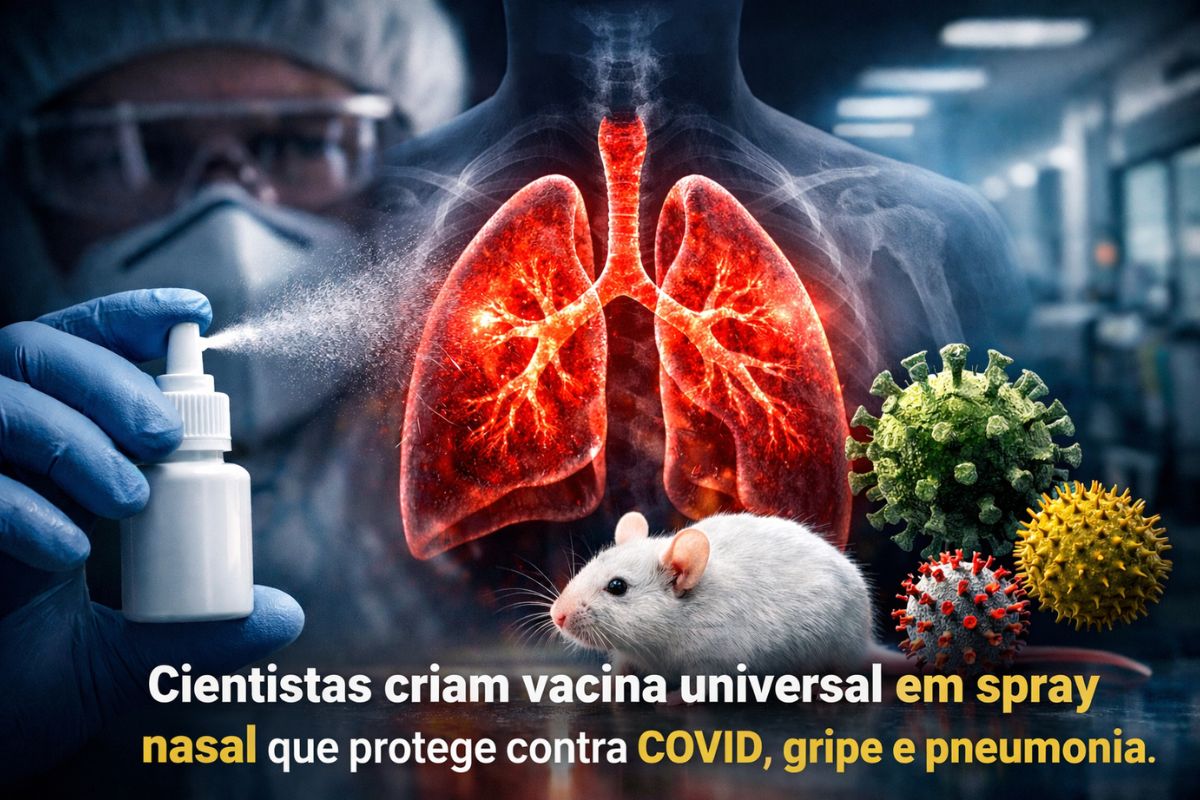
Scientists At Stanford Medicine Tested A “Universal” Intranasal Vaccine That Does Not Target A Specific Pathogen: It Trains Lung Immunity To Respond Quickly And Broadly. In Mice, It Reduced Viral Load, Avoided Severe Disease, Protected Against Hospital Bacteria, And Weakened Allergies For Months, With Results Published In February In Science.
Scientists Have Been Pursuing The Idea Of A Universal Vaccine That Protects Against Very Different Respiratory Threats For Decades, But This Goal Has Almost Always Seemed Distant Because Most Vaccines Need To “Recognize” A Specific Target. The Novelty Here Is The Attempt To Strengthen The Readiness State Of The Lungs Themselves, Instead Of Betting Everything On A Single Antigen.
Scientists At Stanford Medicine And Collaborators Reported That Their Conclusions Were Published On February 19 In Science. In A Study With Mice, A Formulation Administered Nasally Provided Protection For Months Against Respiratory Viruses, Bacteria Associated With Hospital Infections, And Even Allergens. The Finding Is Still Experimental And Restricted To Animals, But It Revives A Realistic Debate About What Would Be Possible If The Same Logic Were To Be Confirmed In Humans.
An Old Dream That Seems Concrete Again
Scientists Describe The Idea Of A “Universal Vaccine” As Something That Goes Beyond Updating Formulas Every Year: It Would Be A Protection Capable Of Covering Multiple Respiratory Threats All At Once, Including Those That Do Not Yet Exist. The Central Point Is Breadth, Not Just Potency Against A Single Virus.
-
OpenAI wants to transform ChatGPT into a powerful super app with AI agents, enhanced Codex, and tools for businesses before a potential billion-dollar IPO.

-
Alibaba launches artificial intelligence for robots in China and reveals why big techs now want machines that do much more than just talk
-
150 scientists from 40 countries warn of a silent reversal in rivers: data from 550 watercourses show that agricultural and urban pollution accelerate the decomposition of aquatic organic matter, transforming ecosystems that should absorb carbon into emitters of CO2 and methane into the atmosphere.
-
Google releases Android 17 with a Pixel Drop packed with AI, Gemini Omni for videos, Lyria 3 for music, and Wear OS 7 to make phones and watches more connected than ever.



Scientists At Stanford Medicine Pointed Out That, In Mice, The Protection Was Broad Enough To Include SARS-CoV-2 And Other Coronaviruses, As Well As Bacteria Such As Staphylococcus aureus And Acinetobacter baumannii, Often Associated With Hospital Environments.
The Study Also Observed An Effect On House Dust Mites, A Common Allergen Linked To Conditions Such As Allergic Asthma, Suggesting That The Mechanism May Influence Th2-Type Reactions.
Why So Many Vaccines Need To Be Updated
Scientists Recall That Since The Turn Of The 18th Century To The 19th, Vaccination Has Consolidated Into A Paradigm: Presenting A Recognizable Part Of The Pathogen (An Antigen) To The Immune System So That It Learns To React Quickly Later.
This “Antigenic Specificity” Worked Very Well, But It Depends On The Target Not Changing Too Quickly.
Scientists Point Out The Practical Problem: Many Pathogens Evolve Quickly.
When Surface Structures Mutate, A Vaccine That Was Once Effective May Lose Part Of Its Efficacy, Requiring Boosters Or Updates As Occurs With Updated Doses For COVID-19 And Annual Flu Vaccination.
This Scenario Pushes Research In Two Directions: Either Find Parts Of The Virus That Change Less, Or Think Of A Response That Does Not Depend So Much On A “Specific Face” Of The Invader.
The Strategy That Combines Two Defenses Of The Body
Scientists From The Team Led By Bali Pulendran Proposed A Different Approach: Activate Integrated Immunity, Connecting Innate And Adaptive Immunity In A Coordinated And More Durable Response In The Lungs.
Instead Of “Copying” A Piece Of The Microorganism, The Formulation Seeks To Imitate Communication Signals That Arise During An Infection.
Scientists Explain That Adaptive Immunity Tends To Produce Antibodies And Specialized T Cells, With Longer Memory And Focus On Specific Targets.
Innate Immunity Reacts Quickly, In Minutes, With Cells Such As Neutrophils, Macrophages, And Dendritic Cells, Acting More Broadly But Generally For A Few Days.
The Study’s Bet Is To Extend This Innate State Of Vigilance For Weeks Or Months, Without Abandoning The Adaptive Capacity To “Target” A Pathogen When It Appears.
The “Clue” Came From An Unusual Behavior Of The BCG
Scientists Cite Evidence That Innate Immunity Can Sometimes Last Longer Than Expected. One Example Discussed Is The BCG Vaccine Against Tuberculosis, Administered To About 100 Million Newborns Each Year, Associated In Some Studies With Reduced Childhood Mortality From Other Infections, Although With Variable Results And Mechanisms Not Always Clear.
Scientists From Pulendran’s Group Reported That, In Mice, BCG Triggered Innate And Adaptive Responses, But With A Rare Detail: The Innate Response Remained Active For Months.
The Interpretation Is That The T Cells Recruited To The Lungs (Part Of The Adaptive Response) Would Send Signals That Keep Innate Immune Cells Activated, Extending An Effect That Would Normally Last Days To Something Like Three Months. This “Bridge” Between T And Innate Became The Design Of The Experimental Nasal Spray.
What Is Inside The Experimental Nasal Spray
Scientists Named The Formulation GLA-3M-052-LS+OVA And Described It As An Attempt To Synthetically Reproduce Signals That Activate Pathogen Detection Receptors (Toll-Like Receptors) In Innate Immune Cells.
The Proposal Is To Keep Lung Tissue “Prepared” To React Quickly, Even Before The Adaptive System Completes Its Classic Cycle.
Scientists Also Included A Harmless Antigen: Ovalbumin (OVA), An Egg Protein. Its Role In The Model Is To Attract T Cells To The Lungs And Help Sustain The Activated State Of Innate Immunity For Weeks Or Months.
This Choice Does Not Mean That Protection Depends On A Specific Virus, But Rather That The Model Uses A Safe Antigen To “Position” T Cells In The Right Place And Maintain Alert Signals.
What The Mice Showed, Step By Step
Scientists Administered The Vaccine As Drops In The Noses Of Mice; Some Received Multiple Doses With A Week Interval. With Three Doses, The Animals Were Protected Against SARS-CoV-2 And Other Coronaviruses For At Least Three Months.
The Timeframe Is Important: It Is Not “Immunity Forever”, But A Prolonged Window Of Respiratory Protection In The Animal Model.
Scientists Observed Clear Differences Between Vaccinated And Unvaccinated Mice After Exposure To Respiratory Viruses.
Unvaccinated Mice Experienced Severe Weight Loss (A Sign Of Disease) And Often Died, With Their Lungs Showing Extensive Inflammation And High Levels Of Virus.
Among Vaccinated Mice, There Was Much Less Weight Loss, All Survived And Their Lungs Contained Little Virus. Pulendran Described This As A “Double Blow”: The First Layer Reduces Viral Load, And What Survives Is Faced By A Faster Adaptive Response.
The “Up To 700 Times” And Why This Is Notable
Scientists Reported That Sustained Innate Activity Reduced Viral Levels In The Lungs By Up To 700 Times. Practically, This Suggests That The Organism Is Not Just Reacting After The Infection “Gains Ground”; It Is Already In A High State Of Local Vigilance, Able To Limit Replication Early.
Scientists Highlighted Another Piece Of Data: The Pulmonary Immune System, In This State Of Alert, Would Have Been Able To Trigger Typical Adaptive Responses Of T Cells And Specific Antibodies For The Virus In Just Three Days.
In Unvaccinated Mice, This Process Was Described As Taking About Two Weeks. It Is Not Just “Stronger”; It Is “Earlier” , And This Timing Is Often Decisive In Respiratory Infections.
When The Threat Is Not Viruses: Hospital Bacteria And Allergens
Scientists Also Tested Protection Against Respiratory Bacterial Pathogens, Including Staphylococcus aureus And Acinetobacter baumannii, Reporting That Vaccinated Mice Were Protected For About Three Months.
The Inclusion Of These Bacteria Changes The Weight Of The Hypothesis: It Is Not An “Anti-Coronavirus” Solution, But A Model That Attempts To Enhance Pulmonary Defense Against Different Invaders.
Scientists Advanced To Another Question: What Else Enters The Lungs Besides Microorganisms? Allergens. When Exposed To A Dust Mite Protein, Unvaccinated Mice Developed A Strong Th2 Response And Accumulated Mucus In Their Airways.
Vaccinated Mice Showed A Much Weaker Th2 Response And Kept Their Airways Unobstructed. This Suggests An Effect On The “Mode” In Which Allergic Inflammation Organizes, At Least In The Animal Model.
What Comes Next And What Is Still Unknown
Scientists Stated That The Next Step Is Human Testing, Starting With A Phase I Safety Clinical Trial.
If Safety And Initial Signals Are Positive, Larger Studies Could Potentially Include Controlled Exposure To Infections. Pulendran Estimated That Two Doses Via Nasal Spray May Be Sufficient For Humans, But This Is A Projection, Not A Confirmed Result.
Scientists Also Conditioned A Timeline For Availability On Funding And Results: With Adequate Support, A Universal Respiratory Vaccine Could Be Available In Five To Seven Years.
This Is The Most Delicate Part: Results In Mice May Guide Directions, But Do Not Guarantee The Same Performance In People, Where Dosage, Duration, Adverse Effects, And Consistency Of Response Need To Be Demonstrated.
Scientists Have Launched An Idea That Seemed Improbable: An Intranasal Vaccine That Does Not Choose A Single Target, But Strengthens The “Readiness State” Of The Lungs For Months, Reducing Viral Load By Up To 700 Times In Mice And Also Expanding The Scope To Hospital Bacteria And Allergies.
If This Logic Holds In Humans, It Could Change The Standard Of Respiratory Vaccination And Preparedness For New Pandemics, But For Now, The Solid Data Is What Was Observed In Animals And What Still Needs To Be Proven Clinically.
With This In Mind, I Want To Hear From You In A Direct Way: If There Were An Annual Nasal Spray That Reinforced The Lungs Against Various Viruses While Also Reducing Allergic Crises, Would You Be Willing To Use It?
And What Would Make You More Confident, Seeing Safety Results First, Duration Of Protection, Or Tests Comparing With Traditional Vaccines?





-

1 person reacted to this.