






 Portuguese
  Spanish


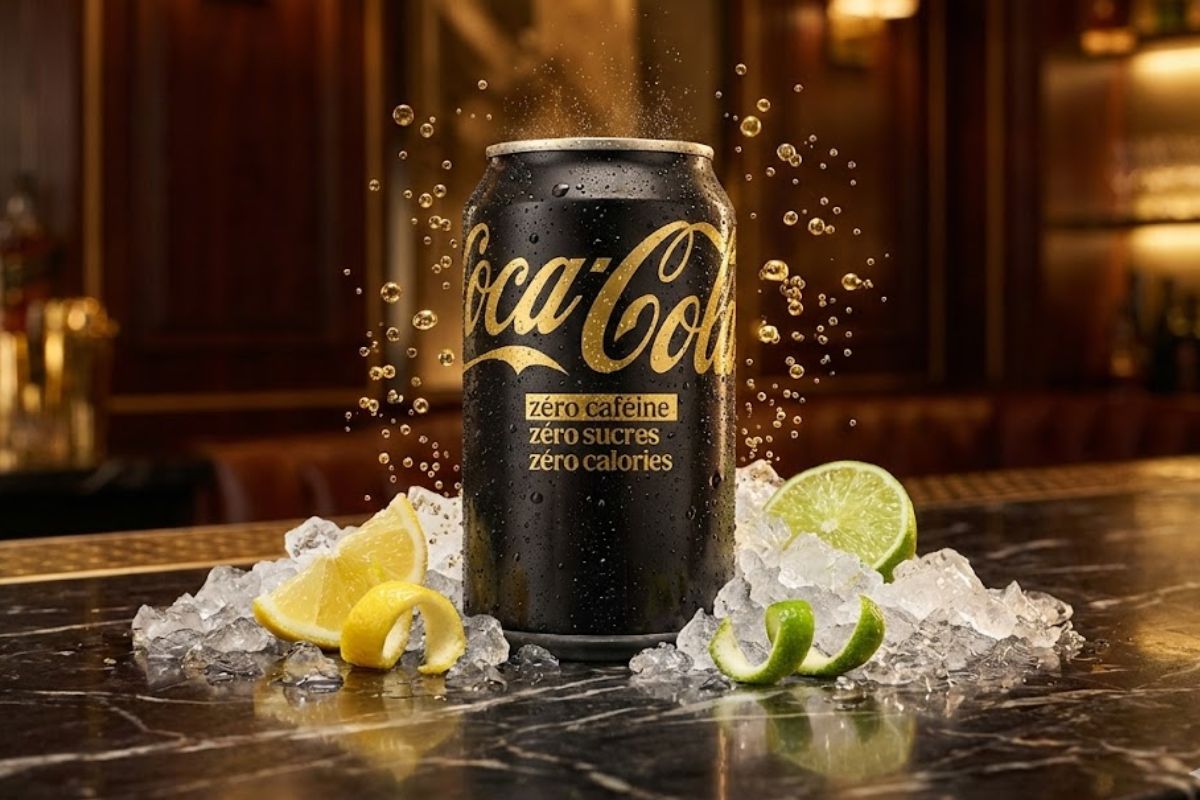


Outside, Coca-Cola Triple Z arrives as the can “three times zero”: zero sugar, zero caffeine, and zero calories, but with a promise to maintain the flavor. Sold in selected supermarkets in Europe for now, it targets label-conscious consumers and may expand to other markets if accepted.
Coca-Cola has launched a new variation in Europe that catches attention for its name and combination of “zeros”: Coca-Cola Triple Z. The proposal is straightforward and, at the same time, provocative: maintain the classic flavor with zero sugar, zero caffeine, and zero calories.
Even in a portfolio that already includes “zero” versions, Coca-Cola chose to establish its presence with a product that eliminates caloric components and, on top of that, aligns with a routine where labels and nutritional choices have become part of the buying ritual. What changes, in practice, when a can claims to be “three times zero,” and why is this gaining traction now?
What Does “Three Times Zero” Mean in the Proposal of Coca-Cola Triple Z

When Coca-Cola refers to Triple Z as “three times zero,” it is summarizing, in an easy-to-remember label, what differentiates it within its own family of “zero” beverages. The central message is the sum of three absences: zero sugar, zero caffeine, and zero calories, a package that attempts to simplify consumer reading at the point of sale.
-
Australian Executive’s Rare Earth Discovery in Poços de Caldas Gains Priority from Minas Gerais Government

-
Professor Discovers Neodymium, Niobium, and Tantalum in Sergipe’s Granite; Partner Represents Northeast Brazil in U.S. Rare Earth Mission
-
Coconut Harvester Leading Agroindustry for 11 Years in a Community Where 90% of Families Depend on Babaçu Travels to Fortaleza with Embrapa to Transform the Nut into Cheese and Beverages, Returning with 35 New Products

-
Paraguayan Player Who Tore Right Knee Ligament in Supercup Match Underwent Three Surgeries and Saw Contract End Just Three Days After Clearance—Entitled to 12 Months of Stability


This type of promise usually generates two simultaneous interpretations: the first is functional, as it signals what is not present; the second is sensory, as it creates an expectation on the palate by stating that the classic flavor would be preserved.
In the case of Coca-Cola Triple Z, the very narrative of the launch already anticipates the main test: whether the consumer perceives any difference compared to other “zero” cans.
It is also worth noting that “zero” has become a broad umbrella in the market. By introducing Triple Z, Coca-Cola reinforces that there is room for segmentation even within “zero” and not just a single option.
In practice, Triple Z positions itself as an even “lighter” version, precisely by removing not only sugar but also caffeine, in addition to containing no calories.
Why Coca-Cola Bets on an Even “Lighter” Version Within Zero Cans
Coca-Cola presents Triple Z as an alternative to expand its portfolio and reach consumers who want to maintain their soda habits but with a different type of control over what they consume.
The idea of “lighter” here is not about can size, but about composition and perception of consumption, especially in contexts where sugar, stimulants, and calories are points of attention.
There is also a behavioral component: Coca-Cola Triple Z is described as aligned with an active and healthy lifestyle.
This does not mean that the product “promises health,” but rather tries to resonate with a routine where food choices are compared more frequently, often through visible information on the label and in the “zero” categories on shelves.
Another important detail is that Coca-Cola recognizes, through this launch, a broader trend: consumers in different markets are becoming more attentive to nutritional information.
Triple Z serves as a portfolio response to this more critical perspective, offering an immediate understanding of what has been removed, without requiring the person to compare several “zero” options in seconds at the supermarket.
Where Coca-Cola Triple Z Is Being Sold and How Market Expansion Typically Works
So far, Coca-Cola Triple Z is being sold in selected supermarkets in Europe. This point, while seeming simple, is strategic: starting with a limited distribution allows them to observe public acceptance before placing the product in more regions, with more volume and exposure.
In practice, this type of launch is often treated as a thermometer.
Coca-Cola introduces the novelty, observes repeat purchases, comments, restocking, and consumer interest, and based on that, evaluates expansion to other countries. In the case of Triple Z, the very signaling of the plan is conditional: if there is acceptance, it may advance to other markets.
It is in this context that the question many people automatically ask appears: “And in Brazil?”. For now, what exists is the possibility of expansion, not a confirmation.
Coca-Cola, by positioning Triple Z as a product already circulating in Europe, suggests a gradual growth path: first consolidate the novelty where it is, then analyze other countries according to public response.
Labels, Habits, and Choices: What Changes When Coca-Cola Removes Sugar, Caffeine, and Calories
The strength of “three times zero” lies in transforming a complex decision into a quick one. For a portion of consumers, sugar is the main point; for others, caffeine weighs more; and there are those who prioritize calories.
Coca-Cola Triple Z tries to encompass these three criteria in a single can, reducing the need to mentally “negotiate” what is worth sacrificing.
In everyday life, this appears in very common situations. Those who avoid caffeine may seek alternatives that do not interfere with sleep or more sensitive times; those who limit sugar tend to look for “zero” versions out of habit; those who monitor calories usually use that information as a filter.
By combining everything, Coca-Cola creates a proposal that resonates with different motivations without needing to explicitly state “for this type of person.”
Still, this brings us to the most delicate part: expectation. When Coca-Cola promises to “maintain the classic flavor,” it places flavor at the center of judgment, and not just the list of what has been removed.
It is a promise that relies on individual perception because taste and preference vary widely, and comparisons with other “zero” versions happen inevitably.
What to Observe Before Concluding if Coca-Cola Triple Z “Maintains the Classic Flavor”
As Coca-Cola is communicating about Triple Z, consumers tend to evaluate two points simultaneously: the label and the experience.
The label, in this case, is objective: Coca-Cola Triple Z defines itself as zero sugar, zero caffeine, and zero calories. The experience of “maintaining the flavor” is subjective and often decided in just a few sips, with immediate comparisons in memory.
A realistic way to look at this is to separate promise from perception. Coca-Cola is expanding its portfolio within the “zero” segment by eliminating caloric components, but acceptance does not only depend on the list of absences; it depends on habit, context, and what each person considers “the same” as the classic flavor.
In other words: it is not just about being “lighter,” but about being “acceptable” for those who already have a preference standard.
Finally, there is a market aspect that cannot be ignored: Coca-Cola is testing a simple and strong narrative that fits in one sentence (“three times zero”) and spreads easily in conversations and on social media.
When a product becomes a topic because the name already explains the proposal, the discussion accelerates and this type of debate tends to influence whether the novelty remains limited to a few supermarkets or expands to new countries.
Coca-Cola Triple Z enters the scene with a combination that draws attention precisely because it goes beyond traditional “zero”: zero sugar, zero caffeine, and zero calories, with a promise to maintain the classic flavor, at a time when labels and nutritional choices are more present in daily life.
Currently sold in selected supermarkets in Europe, the novelty seems to follow a testing path with possible expansion, depending on public acceptance.
If Coca-Cola Triple Z appeared on your shelf tomorrow, what would weigh more in your choice: removing sugar, giving up caffeine, or the curiosity to discover if the “classic” flavor really holds up?
And for you, in what situation does it make the most difference to have a caffeine-free Coca-Cola: at night, at work, during training, or never?


