Portuguese
  Spanish


The section is not new: the same railway carried people on the so-called litorinas from 1906 to 1991, before becoming a grain-only corridor towards the port. Now the tracks cross the region with more than 1.6 million inhabitants, and the next stop of the articulation is a meeting with ANTT scheduled for June 10.
Five cities in the North of Santa Catarina may once again be connected by a passenger train after about 35 years. The possibility gained momentum with a mobilization that brings together municipal associations, the Joinville City Council, and the Intermunicipal Urban Mobility Consortium, CIMU, around a common goal: to reactivate passenger transport on the EF-485 railway and, with that, remove some cars from the busy BR-280 and BR-116 highways.
The most recent step was taken in Brasília, on Thursday, May 21, 2026, when representatives of the associations were in the federal capital to request the inclusion of the EF-485 section in the national studies of technical, economic and environmental feasibility, known by the acronym EVTEA, aimed at passenger rail transport. The request seeks to put Santa Catarina on the map of the country’s railway projects, currently concentrated in other regions, and marks the advancement of a regional articulation for the return of the train.
Which cities would be connected by the passenger train

The backbone of the project is the EF-485, a railway of about 170 kilometers that connects the municipality of Mafra, in the Northern Plateau, to São Francisco do Sul, on the coast. Along the way, the line passes through strategic cities such as Rio Negrinho, São Bento do Sul, Corupá, Jaraguá do Sul, Guaramirim, Joinville, and Araquari, connecting the plateau to the coast and crossing some of the main industrial and urban centers of the state.
-
Trans-Siberian Railway’s New Sister Line, BAM, Stretches 4,300 km Through Permafrost and Seismic Zones in Northern Russia

-
180-Year-Old Bridge Disappears from Brazilian Farm, Found 180km Away, Sparks Investigation into Illegal Sale of Historical Heritage

-
Brazil’s Defunct Railway Network Leaves Over 100,000 Properties Abandoned for Nearly 30 Years, Facing Neglect and Safety Risks as Government Struggles to Regulate Assets Amid Degraded Stations and Unlawful Use

-
Belo Horizonte’s Beltway Project Risks Losing $5 Billion to Metro Expansion if Court Doesn’t Act Soon; State Government Plans New Lines with IDB Support


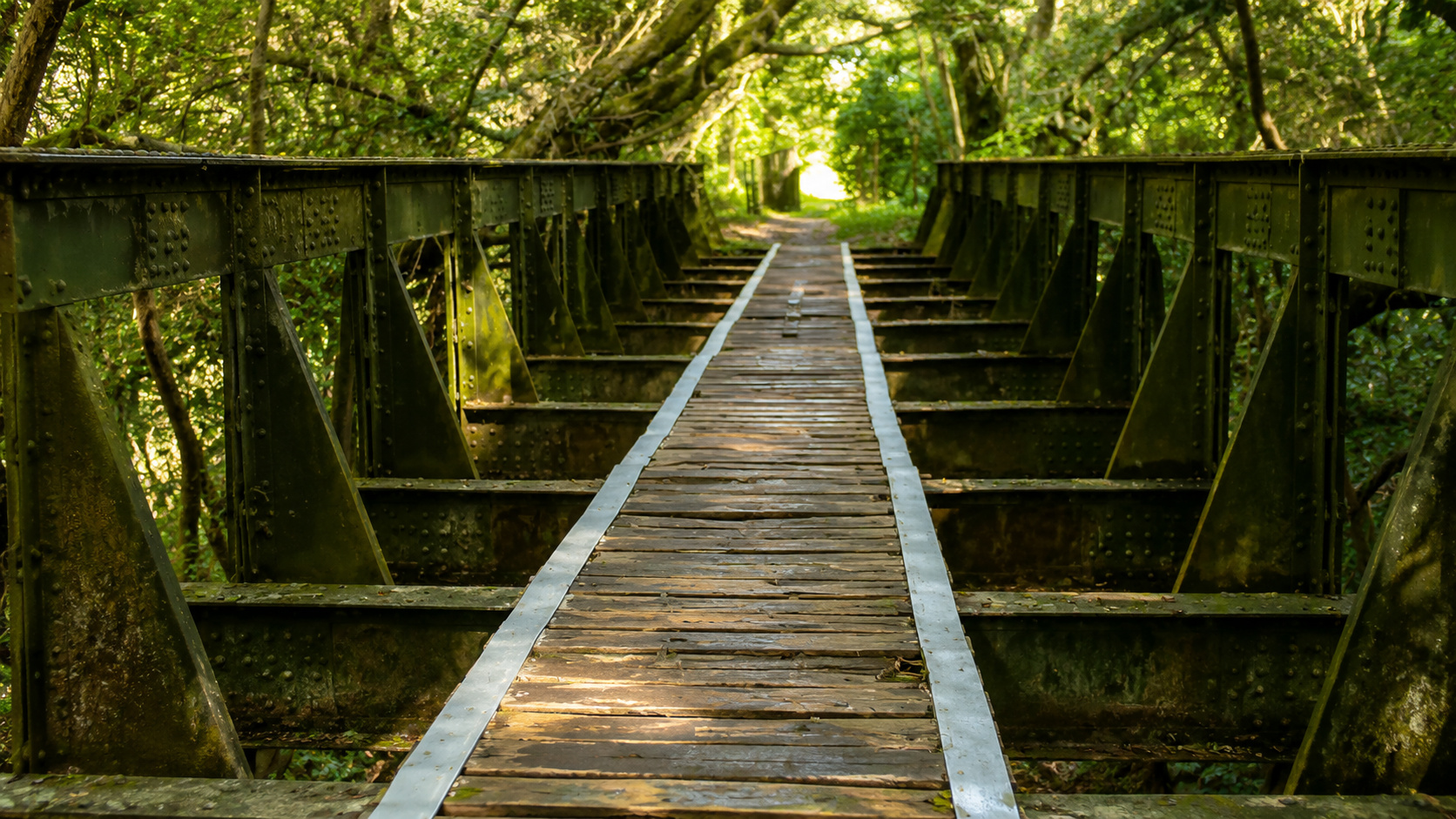


The region served by the railway has more than 1.6 million inhabitants and concentrates an important part of Santa Catarina’s industrial production. For the entities involved, this combination of factors, population, industry, and direct connection to the Port of São Francisco do Sul, gives the corridor enormous potential for passenger transport, currently wasted, as the tracks exist and are in use, but only for freight.
A train that existed for 85 years
A point that deserves attention, and that significantly changes the framing of the story, is that this would not be an unprecedented train. The EF-485 regularly transported passengers between 1906 and 1991, that is, for about 85 years. In the last times of this service, the route was made by the so-called litorinas, a model of passenger train widely used at the time, which connected the cities before the transport was deactivated.
Therefore, more than creating something from scratch, the current proposal is to resume a service that was part of the region’s daily life for more than eight decades and was interrupted about 35 years ago. This history strengthens the associations’ argument, as it shows that the passenger railway connection between the plateau and the coast of Santa Catarina is viable and has already been part of the lives of generations of residents in Northern Santa Catarina.
Today the tracks carry grains to the port
Currently, the EF-485 is not abandoned, but it has a very different function. The tracks are used almost exclusively for freight transport, mainly grains destined for the Port of São Francisco do Sul, one of the most important in the South of the country. The line is today the only one in operation of the so-called Southern Network in Santa Catarina territory, besides receiving, in some sections, occasional tourist rides.
This coexistence between the current freight use and the passenger transport proposal is one of the points that feasibility studies will have to address. After all, it will be necessary to evaluate how to organize schedules, infrastructure, and safety so that the two types of transport can coexist on the same railway, without hindering the flow of production that already goes to the port and has great economic weight in the region.
The Railway Bypass and the relief of highways
There is also a physical project underway on the same EF-485 that directly relates to the idea of the passenger train: the Joinville Railway Bypass. Managed by the National Department of Transport Infrastructure, DNIT, it is a stretch of about 17 kilometers whose objective is to remove the tracks from the densely urbanized central area of Joinville, part of which has been environmentally licensed since 2019.
The main argument behind all this mobilization is mobility. According to the entities, the return of the passenger train can reduce the overload on the BR-280 and BR-116 highways, improve daily commuting between municipalities, and offer a more sustainable transportation alternative. Councilman Henrique Deckmann, author of the motion approved in Joinville, highlighted that the train can benefit those who commute daily between cities like Araquari, Joinville, Jaraguá do Sul, and São Francisco do Sul for work or study.
The next steps of the project
The articulation already has concrete developments in the institutional field. On Tuesday, May 19, 2026, the Joinville City Council approved Motion No. 407/2026, presented by Councilman Henrique Deckmann, from MDB, requesting priority for studies for the implementation of passenger rail transport in the region, with support from the Ministry of Transport and ANTT, the National Land Transport Agency.
The next important step is scheduled: a meeting between the entities and ANTT will take place on June 10. During the agenda in Brasília, the representatives of the municipalities reinforced their willingness to collaborate with the structuring of the project and to provide technical information to enable the studies. Still, it is important to remember that the project is in the initial phase, of studies and political articulation, and its implementation will depend on technical and financial feasibility and decisions from federal agencies.
The possible return of the passenger train to the North of Santa Catarina is one of those topics that unite nostalgia and future: it revives a service that marked the region for 85 years and, at the same time, points to a more modern and sustainable mobility, capable of relieving congested highways. The path is still long and full of technical stages, but the joint mobilization of associations, the City Council, and the consortium shows that the topic has returned strongly to the region’s agenda.
And you, who live in or know the North of Santa Catarina, would you use a passenger train to travel between cities like Joinville, Jaraguá do Sul, São Bento do Sul, Mafra, and São Francisco do Sul? Do you believe the project will materialize this time? Leave your comment, tell us how your commute is today, and share the article with those who also depend on the BR-280 and BR-116 highways daily.