






 Portuguese
  Spanish


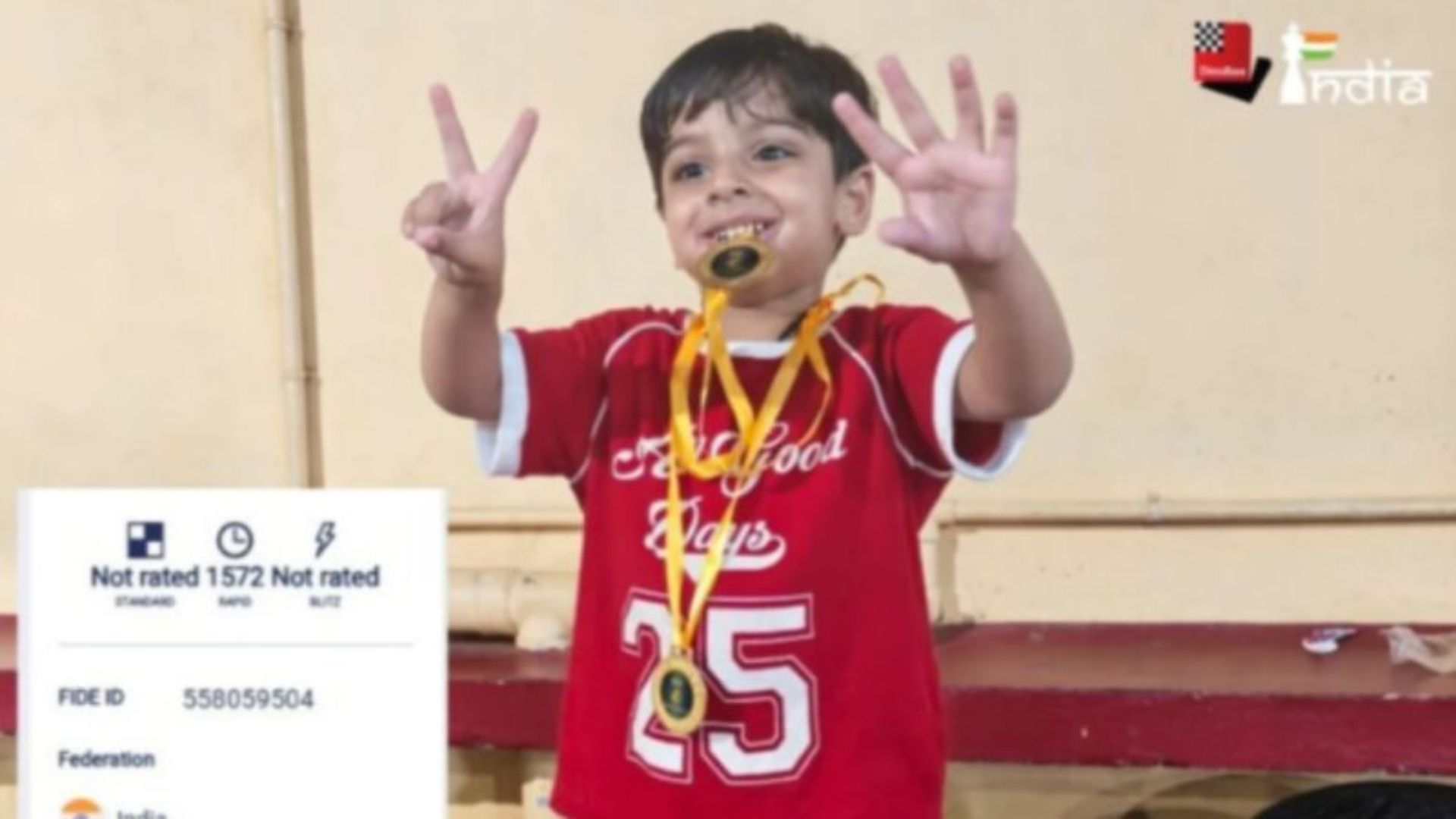


World Record in Chess Fuels Global Curiosity by Revealing Early Trajectory of Indian Child Who Already Faces and Defeats Ranked Players, Highlighting the Rise of the Country in Talent Development.
At three years, seven months, and 20 days, Sarwagya Singh Kushwaha became the youngest player in history to obtain an official ranking from the FIDE (International Chess Federation).
The achievement occurred after the boy defeated three opponents with international ratings in recognized tournaments in India, surpassing the previous record, which also belonged to an Indian prodigy.
World Record in Chess and Impact on the FIDE Ranking
According to FIDE, Sarwagya appears as the youngest player on the recently published rating list.
-
Award-Winning Japanese Restaurant Reveals It Has Preserved Part of the Same Frying Oil for 66 Years

-
American Youth Transforms from Severe Obesity to U.S. Air Force Enlistment, Losing 90 Kilograms in Two Years
-
11-Year-Old Entrepreneur Sells 60 Homemade Sweets Daily, Mastering Cost Calculation, Social Media Promotion, and Client Negotiation Since Age 7

-
Peruvian Mountain’s 5,200 Aligned Holes May Unveil Ancient Indigenous Market for Corn and Cotton


He debuted with a score of 1572 points in rapid chess, a number considered high for someone his age.
The federation states that he met the minimum requirement by defeating the necessary number of ranked rivals in valid competitions.
This feat breaks the record set in 2024 by Anish Sarkar from Kolkata, who debuted on the official list at three years, eight months, and 19 days, with a rating around 1555 to 1556 points.
At that time, Anish’s performance had already surprised coaches by anticipating the usual entry age into the international list by almost two years.

Origin and Routine of the Young Indian Chess Player
Sarwagya lives in Sagar, in the state of Madhya Pradesh, central India.
He still attends preschool and, in some competitions, needs to climb on chairs or stand to reach the board.
His interest in chess began around two and a half years old, when he started watching his father play.
Soon after, he caught the family’s attention and began structured training with coach Nitin Chourasia, who is responsible for guiding his development and preparing for competitions.
Today, Sarwagya devotes several hours a day to studying openings, practicing tactics, and analyzing games.
His father, Siddharth Singh Kushwaha, a farmer and amateur chess player, states that seeing his son achieve this feat is a great source of pride, and he emphasizes his desire for him to advance to the title of grandmaster.
In interviews, he described the achievement as an honor for the family and said he will continue to encourage the boy’s development.
Victories Against Professional Players and Entry into the Ranking
To appear on the official list, FIDE requires that the athlete score points against already ranked opponents.
Sarwagya met this requirement and defeated three players with FIDE ratings in tournaments held in Madhya Pradesh and other Indian states.
These victories secured the necessary points for his name to be included in the international ranking.
The matches were played at a rapid pace, a reduced time format where the boy demonstrated the ability to calculate positions and convert advantages even against adult opponents.
With this, he became one of the most talked-about prodigies in contemporary chess.

The Trajectory of Anish Sarkar, the Former Record Holder
Before Sarwagya’s rise, the record was held by Anish Sarkar, trained in Kolkata.
He obtained his first classical FIDE rating at three years, eight months, and 19 days, after defeating older rivals in official tournaments.
Since then, Anish has continued to raise his rating and has established himself as one of the most visible prospects of the new Indian generation.
His evolution has helped reinforce India’s prominence in talent development, alongside young masters who have already emerged on the international scene.
Growth of Chess in India and Emergence of New Talents
The emergence of Sarwagya and Anish accompanies a movement of chess expansion in the country.
The popularization of the sport, driven by figures like Viswanathan Anand and by recent results from young grandmasters, has increased the number of schools, tournaments, and study platforms.
Local reports state that Sarwagya’s routine includes hours of daily study and little screen time.
He does not watch TV frequently and does not use a mobile phone, focusing almost all of his free time on exercises and matches suggested by his coach.
The combination of discipline, family support, and training structure helps explain the speed of his development.
Debates on Early Talents and Limits in Sports Training

Experts highlight that an early start can enhance technical performance, but it also requires attention.
Coaches recommend balance to avoid excessive pressure on such young children, advocating schedules that respect physical and emotional limits.
Even with discussions about expectations and childhood protection, the chessboard is already part of the routine of Sarwagya and many other young Indians who see chess as a possibility for growth in sports and education.
Amid the emergence of increasingly younger records, the lingering reflection is another: what new challenges arise when a sports career begins even before a child turns four years old?


