





 Portuguese
  English
  Spanish
  5 min of reading
  0 comments


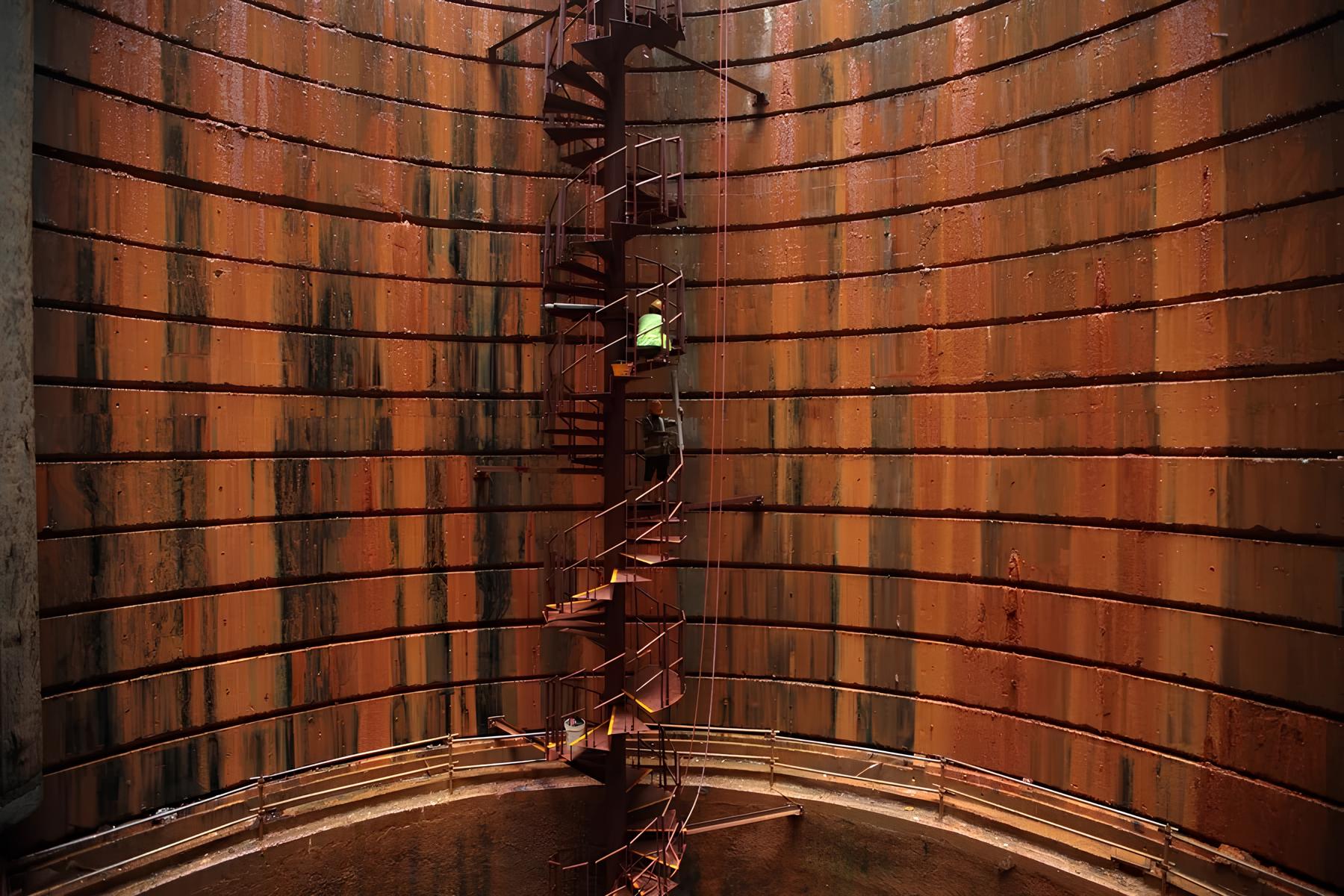
Singapore Created Caverns 150 M Below Sea Level with 1.47 Million M³ to Store Fuels and Release Urban Land, Becoming a Global Reference in Underground Infrastructure.
Singapore has a problem that few people imagine: territory. With only about 728 km² to accommodate airports, ports, financial centers, residential neighborhoods, military bases, and one of the largest petrochemical clusters in Asia, the country simply has nowhere to expand its strategic activities. This physical limit is not an environmental issue, but a geographical one, while at the same time the Singaporean economy has never ceased to depend on the petrochemical hub of Jurong Island, which has been home to refineries, crackers, and associated industries since the 1990s.
It was in this context that the project now considered Asia’s first commercial underground fuel storage infrastructure was born: the Jurong Rock Caverns (JRC).
The Origin of the Jurong Rock Caverns (JRC) Project
The concept of the Jurong Rock Caverns began being discussed in the 2000s when the government identified that industrial growth in Jurong Island would require more storage tanks. The issue is that each tank occupies a valuable fraction of surface area, and expanding to new artificial islands would be extremely costly.
-
Giant geotextile bags filled with sand have become flexible barriers against erosion in America, Europe, Asia, and Oceania; the technology replaces tons of concrete and rock with permeable tubes that dissipate waves and protect beaches, dunes, and riverbanks.

-
The largest bridge in Finland has just been inaugurated and cars simply cannot pass on it; only trams, bicycles, and pedestrians are allowed to cross the 1.2 km giant with a 135-meter pillar over the Baltic Sea.
-
A spaceship-shaped building that cost around 1 billion marks and was once the largest congress center in Europe has been abandoned in Berlin since 2014, and now the city is looking for someone willing to renovate and operate it for 99 years almost for free.
-
Finland hides entire cities underground with gyms, playgrounds, and sports fields 25 meters deep, and now the whole world is lining up to learn how to build bomb shelters like the Finns.


The state agency JTC Corporation, responsible for industrial planning, evaluated three alternatives: building traditional tanks on the surface, creating additional islands dedicated to storage, or moving storage underground. The third option was not the most obvious, but it proved to be the only one capable of freeing urban and industrial space without displacing strategic industries.
In 2007, after geological and financial studies, the government officially approved the construction of Phase 1 of the Jurong Rock Caverns, with excavations starting in the same year. The chosen location is immediately below the eastern extension of Jurong Island, where the underground is formed by the so-called Jurong Formation, a set of dense and metamorphosed rocks with adequate strength for deep underground chambers.
The Geology That Enabled the Project Focused on Fuel Storage
Underground projects of this type do not work in unstable soils. This is why almost all major underground deposits in the world are in artificial caves carved into hard rock.
In the case of Singapore, studies conducted by the Building and Construction Authority (BCA) and international geotechnical consulting firms showed that the region had dolomites and silicified sedimentary rocks capable of maintaining large spans with controlled deformation.
This allowed for the planning of chambers with around 340,000 m³ each, arranged in large lateral corridors and interconnected by technical galleries.
Another essential factor was the ability to excavate approximately 150 meters below the seabed, which provided thermal insulation, natural confinement, and additional protection against fires. The depth also minimized interferences with surface installations.
The Underground Construction
Between 2007 and 2014, the initial phase of the project undertook the excavation, stabilization, waterproofing, and instrumentation of five large industrial caverns, as well as access tunnels and vertical shafts.
It is estimated that more than 1.3 million m³ of rock were removed, creating internal volumes that total 1.47 million m³. For comparative purposes, this is equivalent to about 580 Olympic-sized swimming pools.
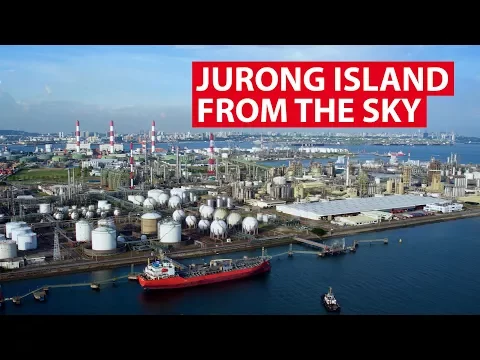
The construction process involved drilling, controlled blasting, mechanical excavation, selective lining, and deep drainage systems to control infiltrations.
The access to fuels is achieved through pipelines connected to the maritime terminal of Jurong Island, eliminating truck traffic on highways and reducing logistical risks.
Why Moving Fuel Underground Makes Sense in Singapore
Unlike the United States, which uses caverns to store strategic oil, the Jurong Rock Caverns was primarily designed to store naphtha, condensates, and other intermediate petrochemical products used as raw materials for refineries and crackers.
The benefits are clear:
- release of surface land for industries that cannot operate underground
- reduction of fire risks in densely populated urban areas
- better thermal control for flammable liquids
- elimination of visual interferences in port areas
- saving industrial space, a scarce resource in the country
According to official data released by JTC at the time of the inauguration, Phase 1 would allow for the release of dozens of hectares of surface area that would normally be occupied by metal tanks and external pipelines.
The Logistical Role Within Jurong Island
Jurong Island is now one of the largest integrated petrochemical hubs in the world. Companies like ExxonMobil, Shell, Chevron Oronite, Lanxess, BASF, and Mitsui Chemicals operate plants interconnected by underground pipelines, forming an industrial chain that functions almost like a “single chemical complex.”
The Jurong Rock Caverns added a new level to this integration: the underground level. It allows the storage of inputs and intermediate products without occupying surface levels, which can be used for compact chemical plants, logistical systems, port facilities, and industrial expansion.
The pumping operation is fully automated and has electrical and mechanical redundancy. Sensors monitor flow rates, temperature, pressure, and mixture composition, while drainage systems ensure that any infiltration is isolated and treated.
Operational Safety and Environmental Advantages of the Jurong Rock Cavern Project
Storing flammable liquids on the surface involves risks: fires can radiate heat to adjacent tanks, explosions can impact urban areas, and thermal failures can damage structures. Underground, the risk is reduced by three physical factors:
- natural thermal insulation of the rock
- mechanical confinement of high pressures
- less exposure to external impacts

In the event of a fire on the surface, the underground chambers remain isolated. Additionally, the evaporation of volatile compounds is lower due to the natural temperature of the underground, reducing VOC emissions.
From an urban perspective, another advantage is the elimination of the “industrial landscape.” The project removed enormous metal tanks, safety towers, and exposed pipelines from the surface, better integrating Jurong Island into the port landscape.
Created Urban and Industrial Value
The impact of the Jurong Rock Caverns is not only in the petrochemical sector but also in the relationship between infrastructure and urban planning.
In Singapore, freeing land means an immediate economic opportunity, as each square meter can be allocated to science parks, residential areas, logistical centers, or higher-value-added industries.
As the country moves towards biotechnology, semiconductors, and fintech sectors, underground storage allows for relocating heavier sectors to lower layers, keeping surface areas for talent-intensive and innovative sectors.
Future Version of the Project
Phase 1 was inaugurated in October 2014. The Phase 2, expected to double the storage capacity, was studied between 2016 and 2018, with an expansion projected for more 1.3 million m³, but the schedule was slowed down due to the global restructuring of the petrochemical sector and changes in Asian industrial demand.
Even so, the Jurong Rock Caverns has established itself as a project that brings together geology, engineering, logistics, and urban planning in a country that cannot expand its boundaries anywhere.
Below refineries, terminals, ships, and skyscrapers, there are colossal chambers of fuel flowing silently, taking up not a single centimeter of surface.




-

-

2 people reacted to this.