






 Portuguese
  Spanish


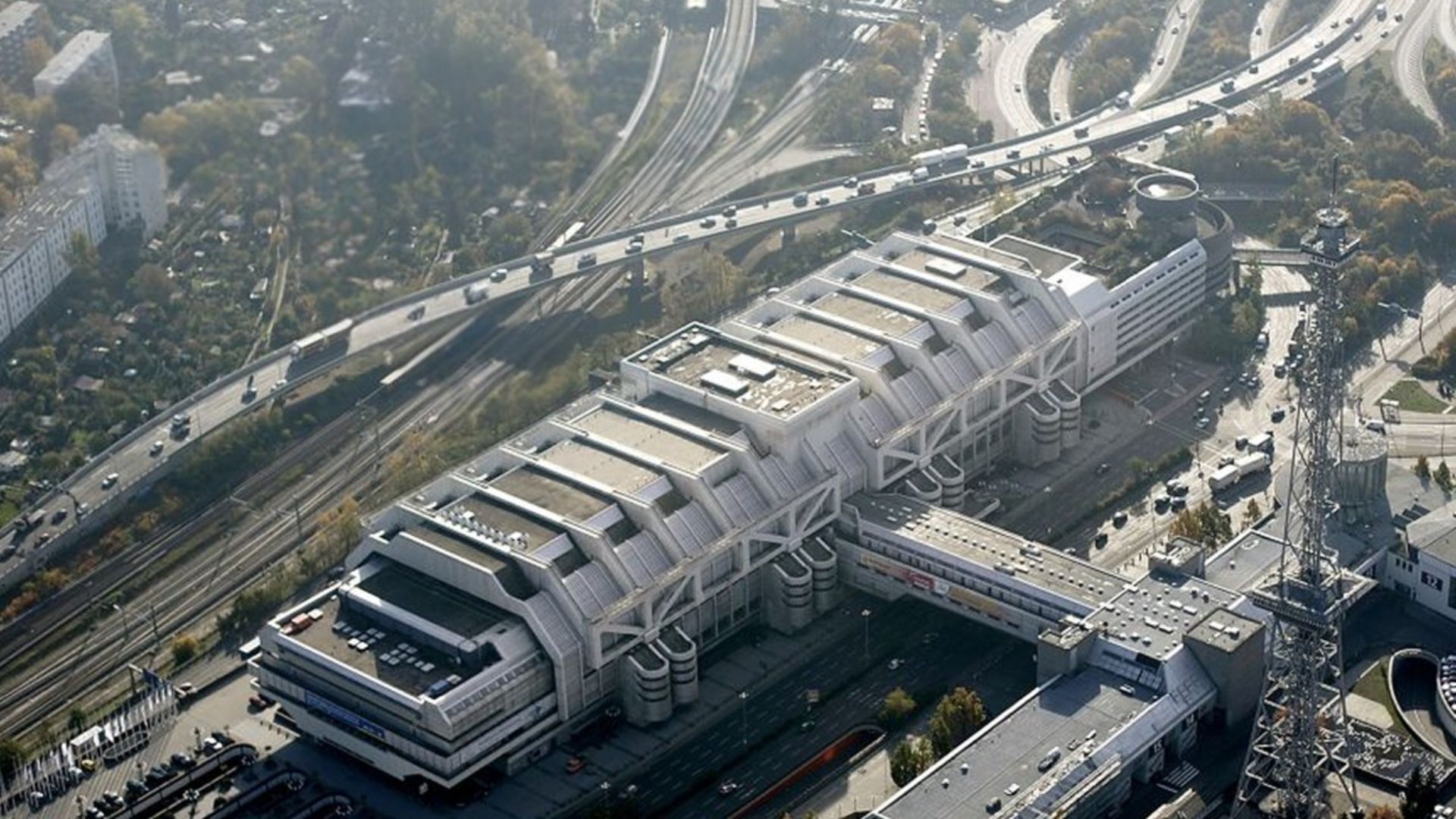


The contract that Berlin offers is symbolic, 1 euro rent, but with a heavy requirement: the investor will have to finance the renovation and the removal of asbestos that closed the place in 2014 alone. Built during the Cold War as a capitalist showcase against the socialist side, the 320-meter colossus is today a beautiful sleeping beauty.
A spaceship-shaped building that cost about 1 billion German marks and was once one of the largest congress centers in Europe has been abandoned in Berlin since 2014, and now the city is looking, through an international tender, for someone willing to renovate and operate it for 99 years paying only a symbolic amount. This is the ICC, the International Congress Center, an icon of Cold War architecture that remains closed due to asbestos contamination.
Inaugurated in 1979 in former West Berlin, the building was designed by the architect couple Ralf Schüler and Ursulina Schüler-Witte, winners of a competition back in 1965. At the time of its opening, it was the most expensive building constructed in West Berlin since World War II, a symbol of technological optimism and the ideological struggle that marked the divided city. Today, this sleeping giant awaits a new life.
A building born from the Cold War

In that scenario of competition between the capitalist and socialist blocs, every gesture became a demonstration of strength, including architecture. East Germany had erected the Palace of the Republic, a luxurious showcase of the communist regime, and the West felt it needed to respond with something even bigger and more impressive.
-
Mother Who Called Herself a ‘Pinterest Failure’ Learned Wood Furniture Restoration from Videos, Now Earns Around $15,900 Monthly

-
Denmark Constructs World’s Largest Immersed Tunnel to Connect with Germany, Sinking 217-Meter Concrete Sections in the Baltic Sea
-
Low-Cost Concrete Panel House Goes Viral: Investor Reveals Prefabricated Kit Structure for Around $1,500, Assembled in 30 Days, with Plans for Rental and Resale Income

-
Polymeric Mortar Revolutionizes Brazilian Construction with Efficient, Clean Application and Uniform Finish




The response was this monumental building, designed to be the largest congress center in Europe, a kind of capitalist amusement park aimed at conferences, fairs, and international events. More than just an event space, the building was conceived as a political statement: to show that West Berlin was a business and cultural hub capable of thriving, even surrounded by territory controlled by the Soviet side.
The engineering of the spaceship

About 320 meters long, 80 meters wide, and 40 meters high, the building is so large that it would be possible to lay the Eiffel Tower next to it, and it would almost fit the length of the structure. Its futuristic look, with exposed steel beams, sharp angles, and mechanical appearance, mixes brutalism with high-tech architecture, earning the building the nickname of a spaceship, both inside and out.
The engineering offers ingenious solutions. As the site is surrounded by busy highways and radio antennas, the architects created a building-within-a-building concept: the internal concrete structure was isolated from the external steel shell to block noise and vibration. The two largest halls, with capacity for thousands of people, are literally suspended by steel rods attached to the enormous roof trusses, ensuring exceptional acoustics and allowing multiple events simultaneously without interference.
The peak and decline of an icon

In total, the ICC once had about 80 rooms and a capacity for up to 20,000 people, with a main auditorium for 5,000, making it one of the largest congress centers in the world. For decades, it hosted major conferences and international events and became such a beloved landmark that, even dividing opinions, it gained an almost cult status among architecture enthusiasts.
Over the years, however, keeping the building operational became increasingly difficult. Besides the high operating costs and the size challenging to economically utilize, especially after the end of the Cold War, a decisive problem emerged: asbestos contamination, a material used in construction now recognized as hazardous to health. This contamination was the central cause of its closure in April 2014, not just the fact that the building was too large.
Abandoned, but Listed and Contested
Since 2014, the ICC has remained officially closed, but far from forgotten. During this period, it has served as an emergency shelter for refugees, a vaccination center against COVID-19, and a venue for art exhibitions, including a show that sold out tickets and demonstrated the enormous popular appeal of the space. In 2019, the building was officially listed as a historical heritage site, precisely to protect it from potential demolition.
The listing reflects the affection Berliners have for this structure. Whenever there was talk of demolishing the building to construct something new, there was strong opposition from the population, who see the ICC as one of the city’s most symbolic locations. This attachment has turned the building into an emblematic case of what to do with aging architectural giants that lose their original function but remain laden with emotional and historical value.
The 99-Year Lease That Isn’t Quite Free
To try to revive the sleeping beauty, as the building has been nicknamed, the Berlin government launched an international tender inviting investors and architects to present ideas for renovation and use. The big attraction is the 99-year lease charging only a symbolic amount, cited as 1 euro, which makes many people think the city is practically giving away the building.
But here is the clarification: it isn’t quite free. In exchange for the symbolic rent, the investor will have to single-handedly finance the entire renovation of the building, including the costly removal of asbestos, structural updates, and the installation of an almost entirely new technical infrastructure, without financial support from the State of Berlin. The only additional requirement is to preserve the listed structure and keep the space open to the public, making the challenge as great as the opportunity.
What the Future Holds for the Building
The process is led by Berlin’s Senator of Economy, Franziska Giffey, appointed as a sort of ICC ambassador, who has compared the building’s potential to a Berlin Centre Pompidou, referring to the famous cultural center in Paris. The proposal is that the choice is not imposed but results from a dialogue between the city and whoever presents the most innovative and viable concept for the space.
The expectation is that a decision will be made by the end of 2026, determining the fate of this colossus. Located in a Berlin that is now a capital of startups and a hub of innovation, the ICC could be reborn as a cultural center, event space, or something entirely new. The case symbolizes an increasingly common dilemma in large cities: how to repurpose mega-structures from the past instead of simply demolishing them.
The ICC in Berlin is simultaneously an engineering feat, a portrait of the Cold War, and a warning about the costs of keeping monumental buildings alive over time. From a capitalist showcase to an abandoned spaceship, the building now bets on a reinvention that will depend on the courage of some investor willing to tackle the renovation of a listed giant. Its future, which should be decided soon, shows how 20th-century heritage challenges 21st-century cities.
Would you be willing to visit or were you already familiar with this spaceship-shaped abandoned building in Berlin? Do you think it’s worth spending fortunes to renovate old megastructures, or would it be better to demolish them and build something new? Leave your comment, share what you think about the fate of the ICC, and share the article with those interested in architecture, history, and large constructions.


