Portuguese
  Spanish


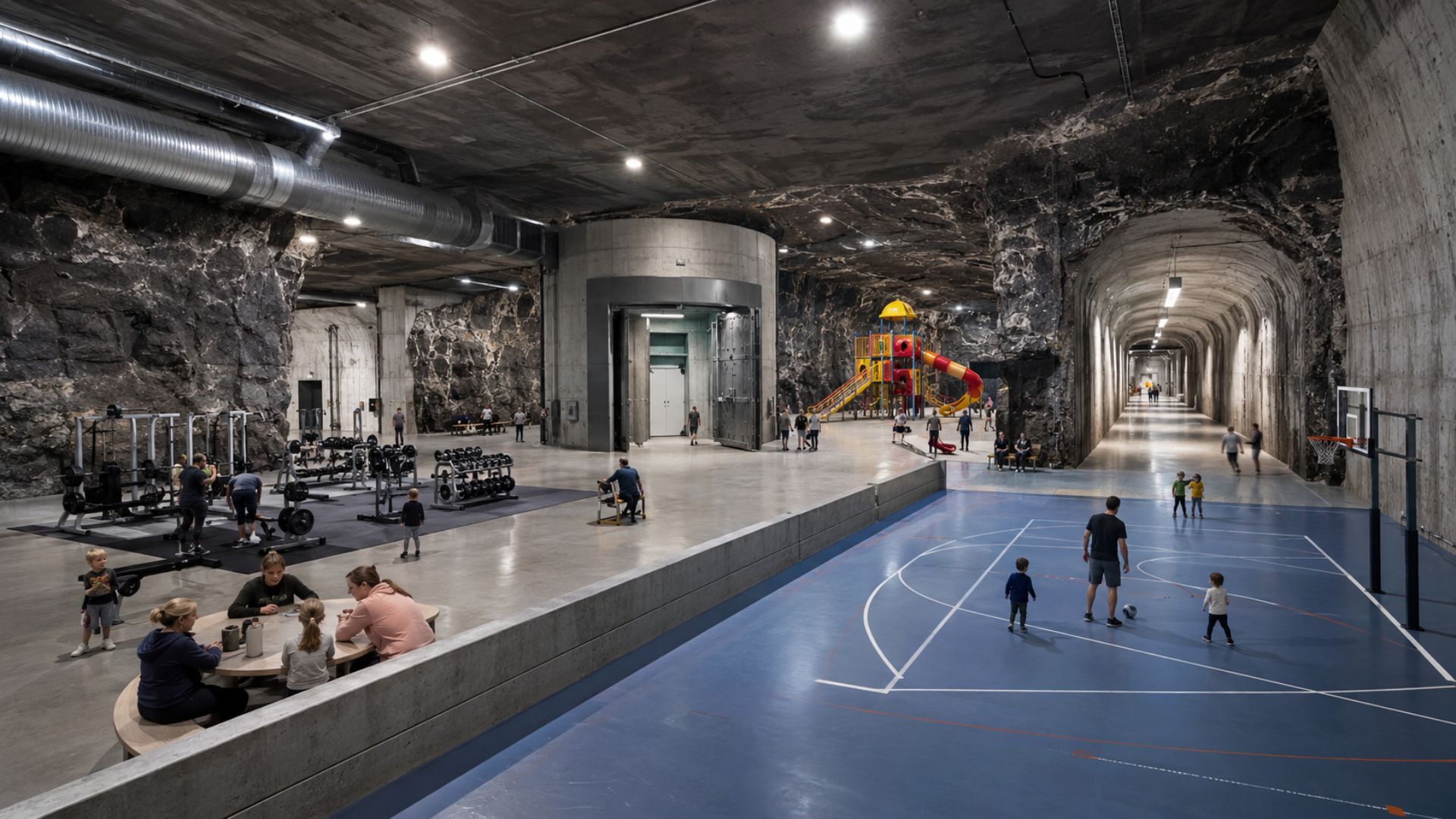

Finland has 50,500 bomb shelters spread across the country, with 48 large ones and 5,500 smaller ones just in Helsinki. The largest, Merihaka, has 71,000 cubic meters, accommodates 6,000 people at 25 meters deep, and functions as a dual-use space: gym, playground, and sports fields. About 800 foreign delegations have visited the facility, including the presidents of Ukraine, Poland, and the President of the European Commission.
Finland has built a network of bomb shelters beneath its cities that functions as civil infrastructure in peacetime and as massive protection in case of emergency. The Merihaka shelter in Helsinki is the largest in the country: a cave carved into the rock with a volume of 71,000 cubic meters, equivalent to a seven-story office building, located 25 meters below the surface. In daily life, the space houses sports fields, a gym, and a playground used by the population. According to CNN Brazil, in case of emergency, it can be adapted with bunk beds, water tanks, and portable toilets within 72 hours.
What has made Finland a world reference in this area is not just the number of shelters, but the dual-use concept that the country has perfected over decades. The construction of bomb shelters is mandatory in Finland for all residential and commercial buildings with more than 1,200 square meters of built area. This requirement, born from the traumatic experience of the Soviet invasion attempt during World War II, has created an entire industry of companies specializing in radiation-proof doors, ventilation systems, emergency power, communication networks, and underground sewage.
Merihaka and the Numbers That Impress the World

The Merihaka civil shelter was built in 2003 and is today Finland’s main showcase for foreign delegations wanting to understand how a country of 5.5 million inhabitants managed to build underground protection for the entire population. The space accommodates 6,000 people and is among the 48 large shelters and 5,500 smaller ones that make up the civil protection network just in Helsinki.
-
Engineering Feat in Brazil: 6.4 km Tunnel and Powerful Pumps Overcome 200-Meter Elevation to Save São Paulo’s Cantareira Water System

-
Engineering Students Build Off-Grid Tiny Home with Sustainable Features and Offer Free DIY Guide
-
Historic Brazilian Championship Stadium Demolished for New Supermarket and Shopping Center Development

-
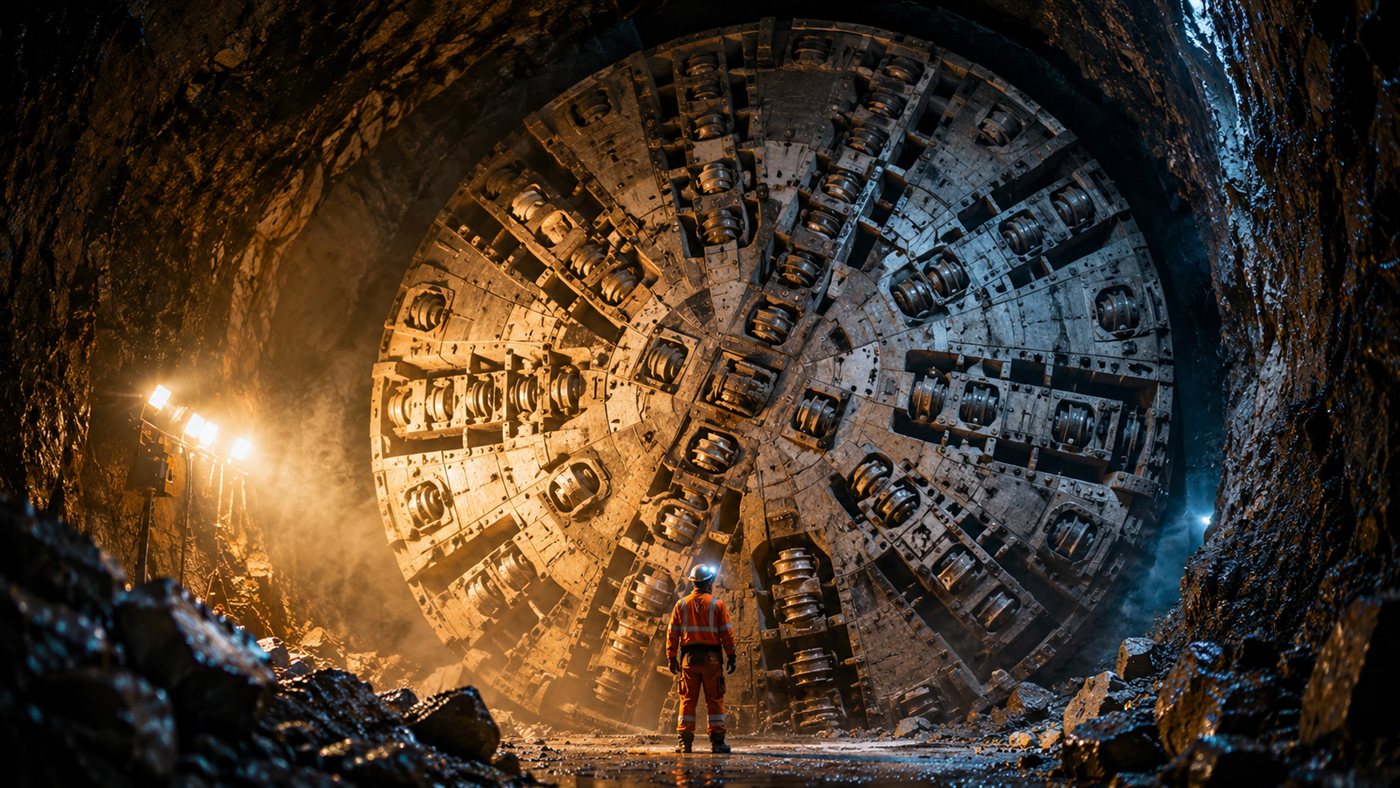
Workers excavate one of the world’s longest railway tunnels beneath the Alps between France and Italy, stretching nearly 60 km, 600 meters deep, with an investment of 11 billion euros.


In total, Finland has 50,500 shelters distributed throughout the national territory, with a combined capacity to shelter virtually all its inhabitants. The Finnish model attracts attention because the shelters are not dead spaces locked away waiting for a catastrophe. They are sports centers, parking lots, warehouses, and leisure areas that generate value for the community every day and can be converted into refuges in a matter of hours. The dual-use concept, a trademark of Finnish engineering, is what transforms protection shelters into productive urban infrastructure.
The 800 delegations that came to learn from Finland

About 800 foreign delegations have visited Merihaka, and interest surged after Russia’s invasion of Ukraine in 2022 and the conflicts in the Middle East. The presidents of Ukraine, Volodymyr Zelensky, and Poland, Karol Nawrocki, as well as the President of the European Commission, Ursula von der Leyen, have personally visited the shelter in recent years.
Mayors of Ukrainian cities visiting Helsinki photographed the interior of the cave with amazement, observing a space that could protect thousands of people while their inhabitants lived under daily drone and missile attacks. Tetiana Grunska, deputy head of the Military Administration of Balakliia, Ukraine, stated that the delegation came to acquire the experience available in Finland and that the dream is to build an underground sports complex like that of Helsinki.
The shelter industry that Finland exports

image: Alessandro Rampazzo/ AFP
Finland’s expertise in underground shelters has generated an export industry that is booming. The Resilience Center Finland, an export body created in March 2026, reported that Finnish security and defense exports have already reached tens of billions of euros, with sales of shelters totaling around tens of millions of euros and showing significant growth potential.

Ilkka Kivisaari, CEO of the Finnish-Swiss owned Verona Shelters group, stated that in two years the company will not need to compete fiercely for contracts because demand will exceed production capacity. High demand comes from countries like Poland and Germany, as well as great interest from the Middle East. The company Temet, with 70 years in the market, expects that 80% of its sales in the coming years will come from exports and is already building a factory in the United Arab Emirates to meet Gulf demand.
The Gulf interest and the war that accelerated everything
The war between the United States, Israel, and Iran dramatically increased interest in bomb shelters in the Middle East. Juha Simola, CEO of the Temet group, revealed that he received an urgent phone call from Abu Dhabi asking him to travel immediately to discuss projects. Saudi Aramco, the world’s largest oil exporter, also requested information and technological demonstrations of Finnish shelters.
Finland has become the natural reference because it combines three factors that no other country offers simultaneously: decades of experience in dual-use underground construction, a mature industry of specialized suppliers, and a regulatory model that mandates the construction of shelters in all significant buildings. The cost of including a shelter in a new apartment building in Finland ranges between 1.5% and 4% of the total construction cost, according to Kivisaari.
Poland rebuilding from scratch and Ukraine seeking balance


Poland allocated 5.8 billion zlotys, about R$ 7.97 billion, to rebuild its collective defense facilities in 2025 and 2026. Robert Klonowski, deputy director of the Polish Ministry of the Interior, admitted that the situation was critical: the last shelter had been built in the mid-1990s, and for 30 years nothing was done.
Ukraine and Poland have already introduced laws that make it mandatory to build shelters in certain new buildings, following the Finnish model. But the Ukrainian experience revealed a side effect: private investors canceled projects due to increased costs. Finland, which has lived with this requirement for decades, absorbed the cost as a normal part of construction. For countries starting from scratch, the challenge is to find the balance between safety and economic viability, adopting the dual-use concept that Finland masters.
Did you know that Finland has gyms, playgrounds, and sports fields 25 meters underground, ready to become bomb shelters in 72 hours? Do you think Brazil should invest in underground civil protection or is this a concern exclusive to countries in war zones? Tell us in the comments.