






 Portuguese
  Spanish
  5 min of reading
  1 comment




Practical Solutions Show Why Water Loses Pressure in Showers and Faucets, as Well as Reveal Quick and Efficient Adjustments to Restore Pressure at Home
Getting home and trying to take a relaxing shower can turn into frustration when the water starts to come out weak from the showerhead. The same goes for turning on the faucet to wash dishes or brush teeth and realizing that the pressure is not adequate.
This situation delays tasks and causes irritation, as everything takes longer than it should.
In some cases, low water pressure can even damage equipment like showers, electric faucets, or heaters.
-
Survivor of 1966 SS Daniel J. Morrell Shipwreck in Lake Huron Recounts 38-Hour Ordeal in Extreme Cold

-
The Greatest Hoax in World Cup History? The Film That Denied Brazil’s 1958 Victory and Exposed How Fake Evidence Can Seem Convincing on TV
-
Fake South Korean Online Stores Offer Shopping Thrill Without Spending Money or Receiving Products
-
The War of Jenkins’ Ear: How a Severed Ear Sparked One of the 18th Century’s Most Unusual Conflicts


Additionally, when using more than one water point at the same time, the flow can decrease even more and compromise the first point that was in use.
Why Pressure Decreases and How to Start Understanding the Problem
Pressure loss can have various causes, and the first step is to understand where it happens and how to fix it. Among the most common factors is the height of the water tank.
The shower is used as a reference because it is usually the highest point and closest to the reservoir. If it is served by the ideal height, all other points will also have adequate pressure.
The recommended distance between the water level in the tank and the shower is 2 meters. The greater this drop, the higher the pressure. In buildings, for example, the pressure tends to be high precisely because the distance between the reservoir and the usage points is greater.
How to Position and Install the Water Tank
The tank can be placed on a masonry base on the slab, under the roof, or even hidden among structures. In places without a slab, it is possible to create a mezzanine or elevated structure to keep it above the usage points. A masonry tank can also be built on the facade, functioning as a tower.
Another useful practice is to position the tank above the largest possible number of bathrooms, creating more direct lines of piping. This reduces bends, elbows, and long paths that decrease pressure. Whenever possible, long bends are preferable to traditional elbows, as they facilitate flow.
Correct Installation of the Reservoir
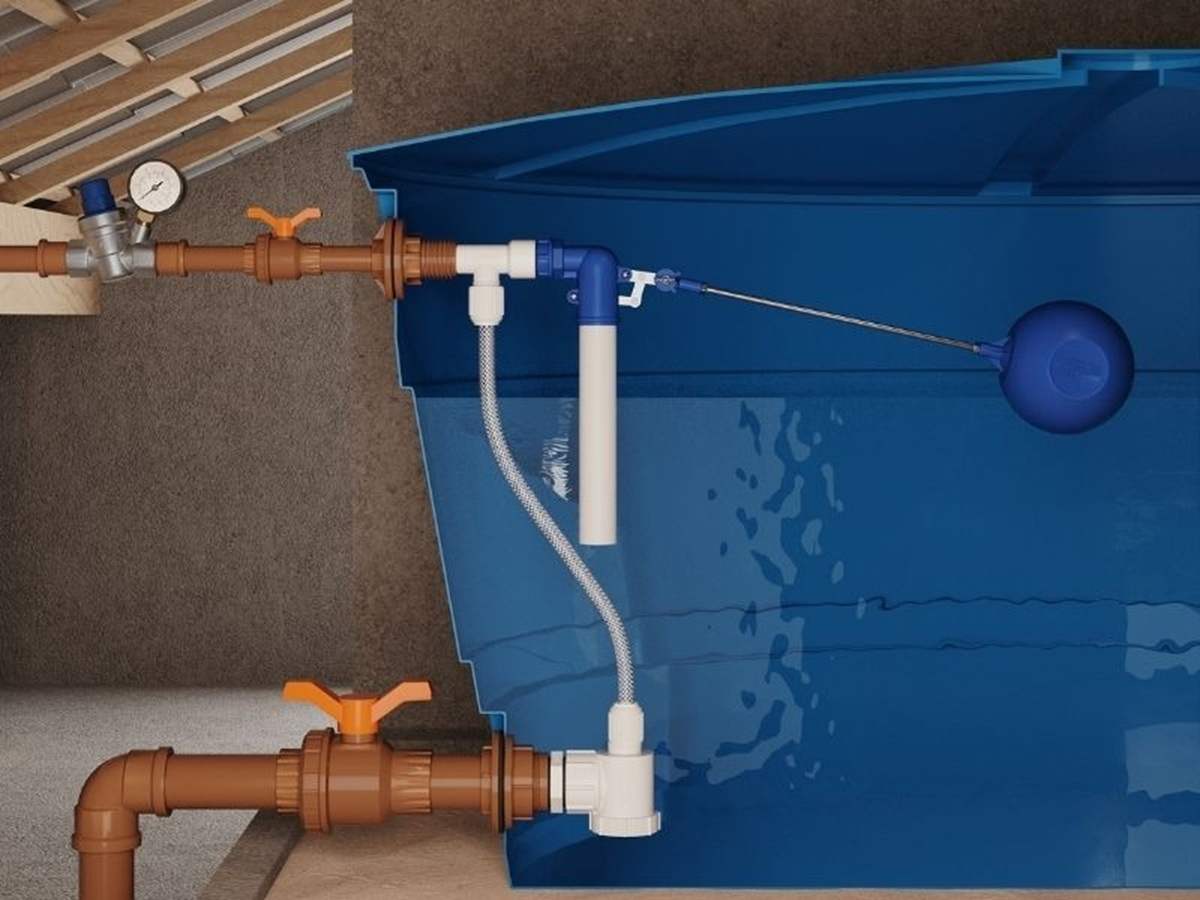
The water tank has five essential holes. The first is the water inlet, controlled by the float that prevents overflow. Just below is the outlet, which delivers water to the house points. It needs a valve right in front to allow for maintenance.
Another point is the air vent, also called a ventilation pipe. When it is absent, air bubbles get trapped in the pipes and impede adequate flow, causing pressure loss. The vent releases this air directly into the tank, preventing it from interfering with water circulation.
There is also the lower hole used for cleaning the tank and the overflow, responsible for draining water if the float fails. The main outlet for supply needs to have 50 mm to ensure the basic necessary flow.
When Air Gets Trapped in the Pipes
Air can accumulate in the pipes and generate pressure loss. If the house does not have an air vent installed, this air can be released by opening all the faucets. The shower should be opened last and with the device turned off to avoid damage.
When Street Supply Interferes
Some homes receive water directly from the public supply. If the distributor has low pressure or supply failures, this affects both the arrival of water in the tank and the internal pressure of the house. One solution is to install a cistern at ground level. It can receive water from the network or treated rainwater.
From the cistern, a pump sends water to the upper reservoir. Although it addresses the lack of pressure, the pump increases energy consumption. Even so, the solution significantly reduces the effects of fluctuation in the supply.
Pump Problems and Maintenance Needs
Even with a cistern, pressure may remain low if the pump is not properly sized. Installation failures or defects in the equipment can also reduce performance. In this scenario, it is necessary to repair or replace the pump.
Impurities That Block the Flow
Impurities accumulated in the faucet aerator or in the small holes of the shower can reduce flow. Periodic cleanings are essential. In faucets, the internal cartridge should be cleaned to allow water passage. Additionally, some economical models require a higher tank height to provide adequate performance.
The Importance of Professional Evaluation
When there are doubts about issues in the network, it is useful to check the meter to confirm if supply is normal. It is also important to identify improperly interconnected pipes, as some points can affect others.
The toilet, for example, can decrease pressure if there is a continuous leak. Faulty or leaking pipes also interfere throughout the house. The clogging of the flush does not relate to pressure but to the model of the toilet and its internal efficiency.
Two Quick Solutions to Improve Pressure
After analyzing all possible causes, there are two practical solutions that can resolve the pressure issues in the house.
The first is to install an alternator valve or a pressure-regulating valve. It directs street pressure into the house and is easy to install without construction. However, it makes the residence dependent on the quality of external supply.
The second is to install a pressurizer at the outlet of the water tank. It does not depend on street pressure and offers more consistent performance. There are three main types: the pressurizer with a pressure switch for cisterns, the pressurizer with a flow switch for upper tanks, and the model with a frequency inverter, which combines features of both.
Other Complementary Alternatives
Some showers already come with an integrated pressurizer. Specific showers also help, as long as the installation is adequate. Aerators on faucets can improve the sense of pressure in a simple way.
How to Ensure an Efficient System
Pressure problems often start in the house’s design. The inadequate height of the tank, poor distribution of pipes, and lack of maintenance are recurring factors. Guidance from a plumber or hydraulic engineer is essential to identify the specific cause and apply the correct solution.
Building a house involves architectural, structural, as well as hydraulic, electrical, and sewage projects. When these projects work together, the final operation is more efficient and avoids problems such as low water pressure.





Esse aparelho pode usar em cx d’água de poco artesiano?