






 Portuguese
  Spanish
  3 min of reading
  0 comments


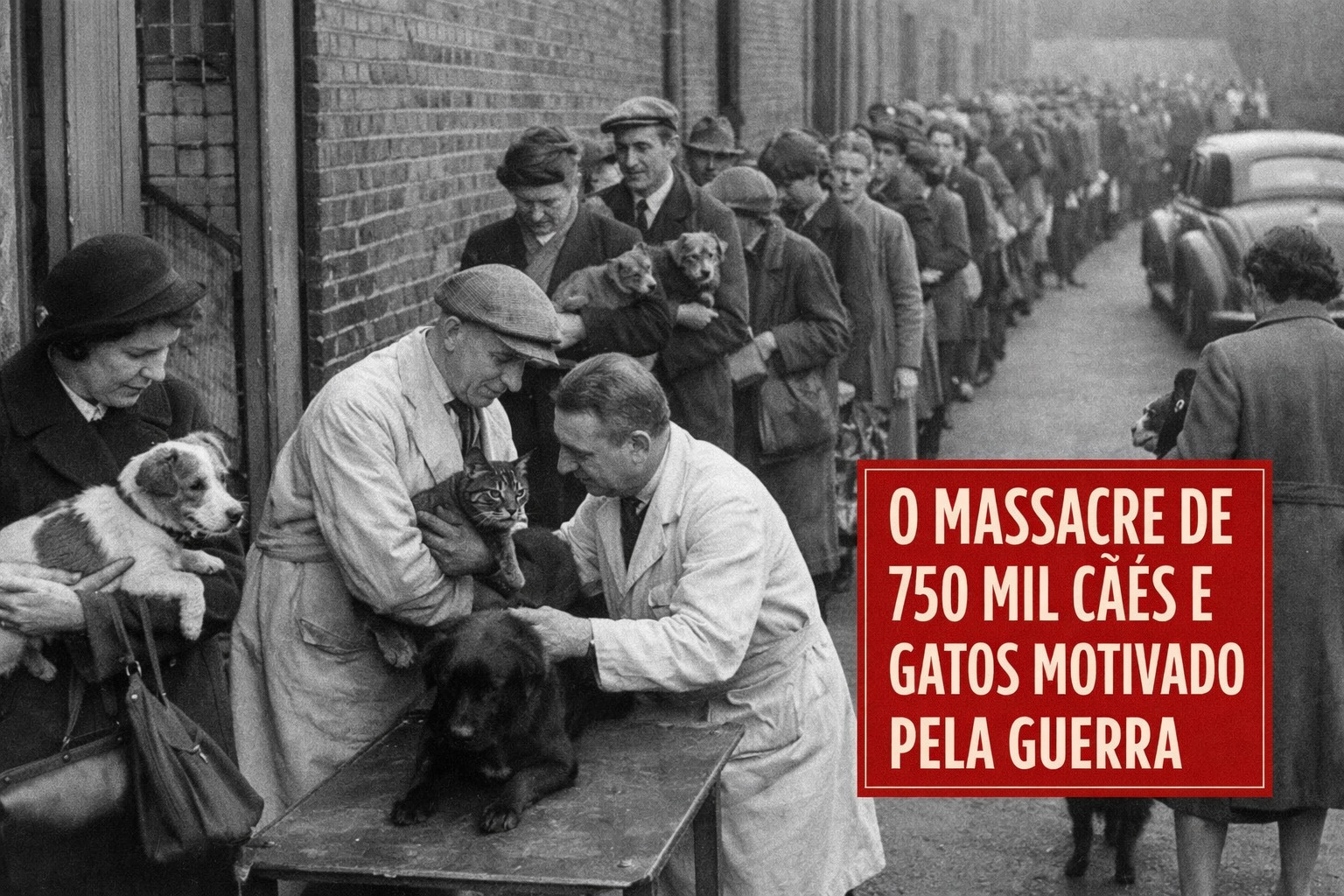
Episode Occurred at the Beginning of World War, When Ambiguous Recommendations, Collective Fear and Evacuations Led English Families to Sacrifice Animals Without Proven Need, Generating Lasting Social Impact Across the Country
The massacre of British pets occurred in 1939, when around 750,000 cats and dogs were euthanized in England following official recommendations during evacuations, in a context of social panic related to the onset of the war and hasty decisions.
A Collective Panic at the Beginning of the War
The episode involved approximately a quarter of the pet population of England, sacrificed in the early days of the conflict, despite the measure being considered unnecessary almost immediately.
The decision was driven by widespread fear of the impending war, social conflicts over the role of pets, and the absence of concrete threats at that time.
-
Israel finds Hezbollah militarized tunnel over 200 meters long under village, with 4 missile launch shafts, 12 chambers, anti-tank missiles, drones, and weapons depots at a depth of 25 meters.

-
Ukraine launches largest drone attack on Moscow since 2022, Russia claims to have intercepted nearly 200 aircraft near the capital, Kapotnya refinery targeted again, and offensive reignites alert about war reaching the Russian energy heart just a few kilometers from the Kremlin.

-
Truck drivers, freight, and fines from 2022 take center stage in politics: Chamber approves MP with amnesty, mandatory tracking by CIOT, million-dollar penalties, and new minimum wage for those who spend more than 24 hours on the road.

-
China off the radar: US plans mega $30 million weapons depot in Australia, out of reach of most Chinese missiles, with full capacity expected by 2028





Previous Experiences and Fear of Repetition
During World War I, abandoned animals in London became a significant problem, influencing authorities to avoid a similar scenario in 1939.
With this aim, the British government created the National Air Raid Precautions Committee for Animals, known as NARPAC, before the war began.
The Brochure That Triggered Fatal Decisions
NARPAC published the brochure “Advice for Pet Owners,” prioritizing evacuation and suggesting taking animals to the countryside whenever possible.
At the end of the text, a sentence stated that if there were no alternative, it would be “more humane” to euthanize the animals, a remark that had a decisive impact.
The Official Announcement and the Rush to Clinics
When Neville Chamberlain announced, on September 3, 1939, the declaration of war against Germany, many pet owners immediately took their animals to veterinary clinics.
Hospitals and shelters were overcrowded in the first days, despite opposition from veterinary organizations like PDSA and RSPCA.
Professionals’ Reports and Urban Impact
The founder of PDSA, Maria Dickin, described the tragedy experienced by the technicians, stating that they would never forget those days marked by suffering.
According to historian Hilda Kean, queues in London reached nearly a kilometer, creating shortages of chloroform and waste management problems.
The panic that led to mass euthanasia proved unfounded, as there was no shortage of supplies, no imminent bombings, nor confirmation of the initial fears.
Kean noted that the episode also reflected the deep boredom of the population, seeking ways to feel actively involved in the war effort.
The Repetition of Behavior in 1940
One year later, in September 1940, with the bombing of London, new episodes occurred when owners again sacrificed animals out of fear and insecurity.
The perception that keeping a pet was an inappropriate luxury in wartime reinforced drastic choices, even without real proven need.
In contrast to the movement, Battersea Dogs & Cats Home managed to feed and care for 145,000 dogs during the war.
The institution maintained a field in Ilford as a cemetery, where about 500,000 animals were buried, many dying in the first week of the conflict.
Individual Opposition to Slaughter
Among the opposing voices was Nina Douglas-Hamilton, who campaigned against the culling and created her own sanctuary for animals.
Her initiative provided shelter in a heated hangar, symbolizing moral resistance in the face of the prevailing climate of collective fear.
Historical Recognition and Legacy
The massacre has come to be recognized as an unnecessary episode, marked by decisions made under emotional pressure and a lack of adequate information.
In 2017, Hilda Kean published the book The Great Cat and Dog Massacre, consolidating the event as a subject of historical analysis and social memory.
The case remains an example of how panic, haste, and the illusory sense of contribution can generate lasting consequences, even when motivated by intentions considered humane.
With information from Wikipedia.





-

1 person reacted to this.