





 Portuguese
  English
  Spanish
  4 min of reading
  1 comment


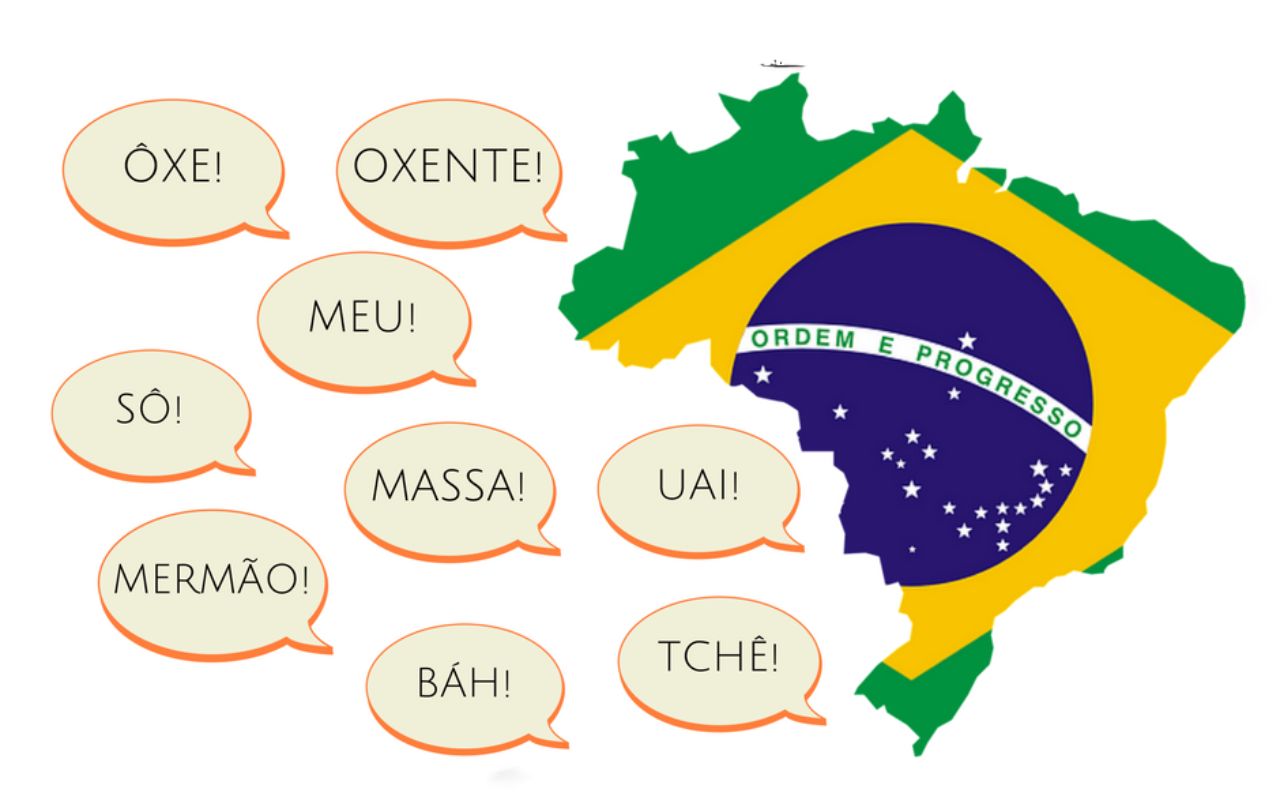


Understand How Brazilian Accents Appeared, Why They Vary Between Regions, and How They Reflect Historical, Geographical, and Cultural Factors.
The accents of Brazil translate, in the form of sounds and rhythms, the very formation of the country. Resulting from centuries of cultural encounters, geographical isolation, and social transformations, these variations are present in all regions.
What differentiates the speech of a gaúcho, a nordestino, or a nortista is not just the pronunciation, but a set of historical and local influences.
Understanding the accents is, therefore, understanding how Brazil built its linguistic identity over time.
-
The Brazilian natural phenomenon that makes water fall “from bottom to top” and remained unexplained to many meteorologists for decades.

-
September 11 Trauma May Affect Children and Grandchildren, Study on Transgenerational Effects Shows

-
Sleeping with your pet seems harmless, but research reveals the nighttime detail that can turn comfort into sleepless nights.
-
World Cup paintings can result in fines and even legal action in some cities, but many people still ignore this rule before the tournament.



Regional Vocabulary: When Accents Appear in Words
The differences between Brazilian accents also manifest in the choice of words.
Depending on the region, the same object can have completely different names.
This phenomenon does not represent error or informality, but rather cultural richness. The language adapts to the historical and social experiences of each community.
Among popular examples, the following stand out:
- The culinary root known as mandioca, aipim, or macaxeira
- The cold dessert called geladinho, sacolé, or dindim
- The traffic equipment referred to as semáforo, sinal, or sinaleira
- The fruit identified as abóbora, jerimum, or moranga
These variations expand the national linguistic repertoire. Additionally, they reinforce regional belonging.
How Does Pronunciation Differentiate Brazilian Accents?
The phonetic differences are one of the most visible marks of the accents. Small changes in sounds completely alter the musicality of speech.
In some regions, the “S” takes on a hissing sound. In others, it remains sibilant and drier. The same happens with the letter “R.” It can be reflected in the interior or guttural in capitals.
The accents are also distinguished by the rhythm of the sentences. The speed of speech varies according to cultural habits and lifestyles.
There are regions where the speech is more measured. In others, sentences flow quickly and continuously. This musicality reflects local social dynamics. The language follows daily life.
Continental Dimensions and Diversity of Accents
The territorial extension of Brazil is a central factor in the variety of accents. For centuries, many regions remained relatively isolated.
Without rapid communication, communities developed their own speech patterns. Sounds and expressions evolved locally.
Consequently, striking linguistic variations emerged. Geography helped shape the national voice.
Historic isolation allowed for the preservation of ancient linguistic traits. Phonemes that disappeared in urban centers remained alive in rural areas.
This explains why some accents retain pronunciations considered archaic. The distance reduces external influences. Each region, thus, solidified its own sonic identity.
Historical Roots of Brazilian Accents
The accents of Brazil were born from intense cultural encounters. European Portuguese met indigenous and African languages.
Each group contributed sounds, rhythms, and linguistic structures. Over time, these influences mixed.
This fusion shaped the intonation, pronunciation, and vocabulary. Brazilian Portuguese gained its own characteristics.

Influences That Left Marks on Speech
The diversity of Brazilian accents did not arise by chance. It is the result of historical encounters between peoples, languages, and customs that left deep marks on the way of speaking.
The Portuguese presence established the basis of the language, while indigenous languages contributed sounds and patterns of intonation.
At the same time, African languages influenced the rhythm, cadence, and even the musicality of speech.
As the centuries passed, new migratory waves expanded this scenario. Immigrant communities from Europe incorporated their own traits into regional pronunciation, creating variations that still distinguish different parts of the country today.
Accents as Expression of Identity
Much more than language, the accents represent belonging. They connect individuals to their cultural and social origins.
The way of speaking carries historical memory. It also expresses regional ties.
Valuing accents is recognizing Brazilian diversity. It is respecting individual trajectories.
When Do Linguistic Prejudices Arise?
Despite the cultural richness, the accents still face discrimination. In formal contexts, certain variations are stigmatized.
Frequently, accent is associated with social stereotypes. This view ignores the historical complexity of language.
Combating linguistic prejudice is essential. It is about promoting inclusion and respect.
Education and Media in Valuing Accents
Schools play a strategic role in valuing accents. Education can show that variations are natural and legitimate.
The media also influences collective perceptions. Representing different ways of speaking broadens social acceptance. Thus, linguistic plurality gains cultural recognition.
The accents are not static. They change as migrations, cultural transformations, and technological advances occur.
Large urban centers mix regional characteristics. At the same time, communities preserve traditions.
This dynamic reinforces that language is alive. And that Brazil’s sonic identity remains in constant transformation.
Source: Correio Braziliense






ÉGUA!