






 Portuguese
  Spanish


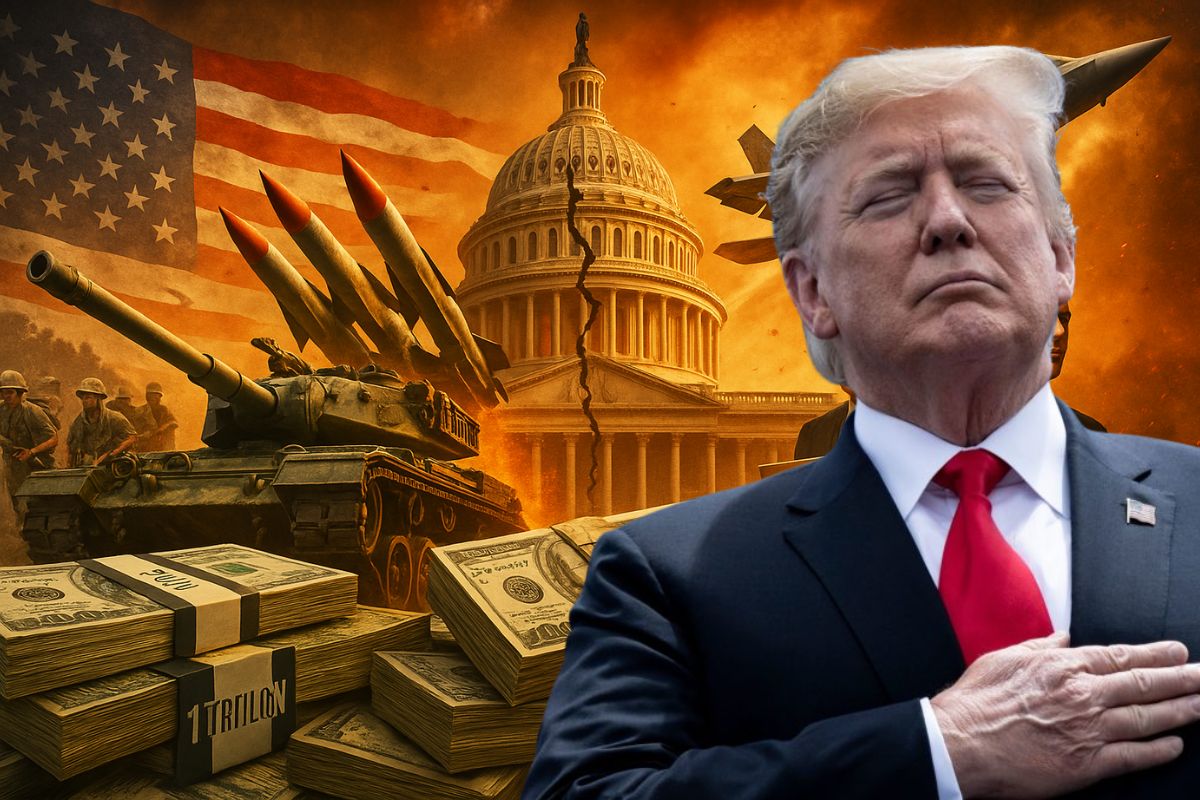


Decisions Since the Vietnam War and the Cartelization of the Defense Industry Explain How U.S. Debt Became Unsustainable, According to Experts Like Commander Robinson Farinazzo.
The warning about the U.S. debt is not recent, but the current numbers draw attention: over US$ 37 trillion accumulated, while the military-industrial complex consumes about US$ 1 trillion annually. According to Commander Robinson Farinazzo, the structural collapse began during Vietnam and was exacerbated by the concentration of power in a few defense companies.
This model drains resources from essential areas such as health, education, and infrastructure, creating a paradox: the world’s greatest military power coexists with pockets of misery, crumbling cities, and citizens without adequate medical coverage. The central question is whether the U.S. will be able to sustain this cycle without compromising its internal stability.
The Warning Ignored Since Eisenhower
As early as 1961, President Dwight Eisenhower warned about the risks of the “military-industrial complex”: the fusion of government, armed forces, and private defense corporations.
-
Plastic Packaging Drives Santa Catarina Industry to 230% Growth, Aiming for R$ 500 Million by 2030 Amid Sector Crisis, with New Gearless Line Expanding in Southern Brazil to Compete in South America

-
Flamengo Star Invests in Brazilian Coastal Luxury Real Estate as Itapema Surpasses Balneário Camboriú in High-End Market Growth
-
Brazil to Issue “Panda Bonds” in China, Aiming to Raise Up to 5 Billion Yuan at Lower Interest Rates Than Dollar Debt
-
NATO Faces Internal Tensions as U.S. Pushes for Increased Defense Spending, Targeting 5% of GDP by 2035, with Warnings for Countries Near 2% Level


According to Robinson Farinazzo, the warning was not merely rhetorical — it anticipated the capture of the state by military and economic interests.
In the 1960s, Lyndon Johnson escalated the Vietnam War, raising military spending to nearly 10% of GDP.
This effort compromised social investments and marked the beginning of the continuous indebtedness trajectory of the U.S.
The Turn with Reagan and the War Cartel
In the 1980s, Ronald Reagan accelerated the arms race, further increasing the debt.
When the Cold War ended, a reduction in spending was expected, but the opposite occurred: the Pentagon concentrated strategic suppliers.
Of more than 200 defense companies, only five giants remain that currently share approximately US$ 1 trillion annually.
According to Farinazzo, this cartelization made the military sector immune to cuts and dependent on powerful lobbies, reinforcing the cycle of indebtedness.
Social and Economic Consequences
While the U.S. debt explodes, the country’s infrastructure deteriorates.
Roads, bridges, and transportation systems suffer from lack of maintenance.
In states like Mississippi, communities live in conditions comparable to developing countries, without basic sanitation and with high poverty rates.
At the same time, the American healthcare system shows fragility: many citizens face the risk of bankruptcy due to medical emergencies, in contrast to universal public systems like SUS in Brazil.
This contrast highlights the burden of policies prioritizing military spending over social services.
The Role of the CIA and Geopolitics
Another controversial point raised by Robinson Farinazzo and critical authors like Oliver Stone is the indirect link between the CIA and international drug trafficking operations.
The suspicion is that cartels would lack the technical capacity to operate without some level of logistical support or tolerance from intelligence services.
This shows how geopolitics, parallel economies, and military interests intertwine in a power game that transcends borders.
The Silent Collapse


The reality is that the current American scenario is not the result of an isolated event, but of decades of massive transfer of public resources to the military complex.
The U.S. debt is the tip of the iceberg of a model that prioritizes external wars and corporate profits, while compromising the internal well-being.
The challenge now is to determine whether this model can be reversed or if social and economic collapse is merely a matter of time.
In your view, is the U.S. debt an inevitable result of military power, or could this situation be reversed with cuts and deep reforms? Do you believe this model could lead to internal collapse? Leave your opinion in the comments — we want to hear from those experiencing this debate in practice.






Parece que o centrão estadunidense se fortaleceu e parasita o erário em torno da indústria bélica, por isso os presidentes TEM QUE DESOVAR equipamentos bélicos fazendo alguma guerrinha, direta ou indireta.
A **** da vez está parecendo ser a Venezuela
As indiretas seguem sendo Netanyahu x hamas e putin X Ucrânia
Boa tarde!!
Esse investimento maciço na indústria bélica e um caminhão perigoso, onde o mundo está cada vez mais perigoso!!
Jesus Cristo está voltando!!
Interessante é observar um grande grupo de subservientes ignorantes que finge desconhecer tais peculiaridades da realidade dos caras com miséria exposta, total desprezo pelos mais humildes e acreditando no que lhes mostra a fantasia divulgada por Hollywood. Guilherme