






 Portuguese
  Spanish


The Amazing Nissan Engine: 3 Cylinders, 40 Kg and 400 Hp. Small As A Suitcase, Powerful As A V8
Imagine an engine that you could carry under your arm as if it were a carry-on bag, but has enough power to push a race car at 300 km/h. Sounds impossible? Well, Nissan made this a reality with one of the boldest projects in recent automotive engineering history.
We are talking about a 1.5L 3-cylinder engine, weighing only 40 kg, capable of delivering an impressive 400 hp. A power-to-weight ratio so absurd that it left even engines from Formula 1 of that time behind.
But how did Nissan achieve this feat? The story begins with an ambitious vision for the 2014 24 Hours of Le Mans, and a completely unconventional approach.
-
New York removed the tracks from over 2,500 subway cars and dumped everything at the bottom of the Atlantic, and what seemed like trash turned into an artificial reef teeming with fish and divers.

-
A Japanese governor single-handedly stalled the construction of the world’s fastest train for nine years, and only now has he agreed to allow a tunnel excavated at a depth of 1,400 meters.

-
Almost 1 billion euros, two gigafactories, and a million-dollar public investment, Chinese company aims to turn Spanish city into Europe’s new battery hub.

-
From matches sold by bicycle at age 5 to a global furniture empire: the lumberjack’s son founded IKEA at 17 in his uncle’s kitchen and transformed a small company into the largest furniture retailer on the planet.



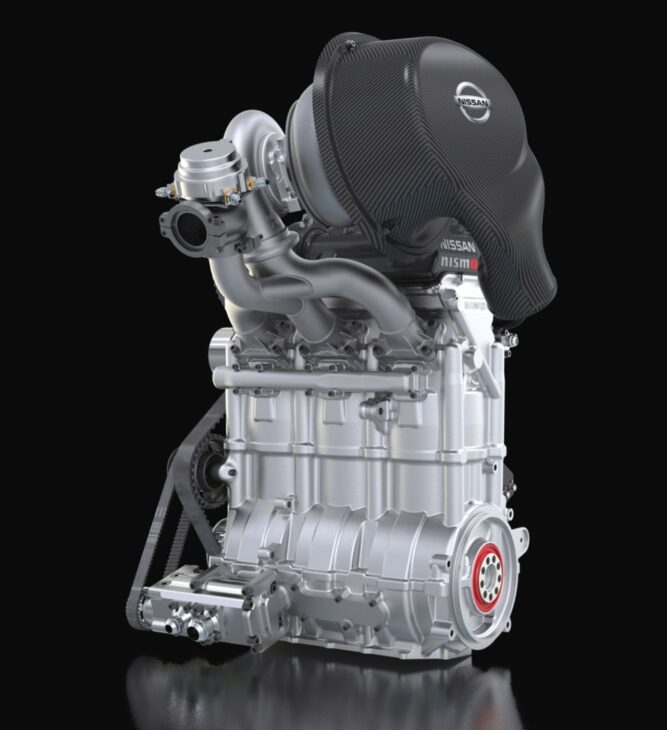
The Size Of A Suitcase, With The Strength Of A Giant
In 2014, during the presentation of the ZEOD RC project, NISMO CEO Shoichi Miyatani appeared smiling while holding the engine in his hands, as if it were a mere accessory. But what he carried was a true gem of technology.
With just 50 cm in height, 40 cm in length and 20 cm in width, the engine was the size of a carry-on bag. But its soul was that of a giant: 400 hp at 7,500 rpm and a maximum torque of 380 Nm.
According to Nissan itself, the engine was designed from scratch, without sharing components with other engines in the group. It featured a configuration of four valves per cylinder and a massive turbo, capable of spinning at an impressive 100,000 rpm, with a pressure of 2 bars.
Designed To Shine At Le Mans
Nissan’s goal was not merely to win races. The engine was designed to explore new mobility solutions and efficiency within the special Garage 56 category at Le Mans, aimed at technological experiments.
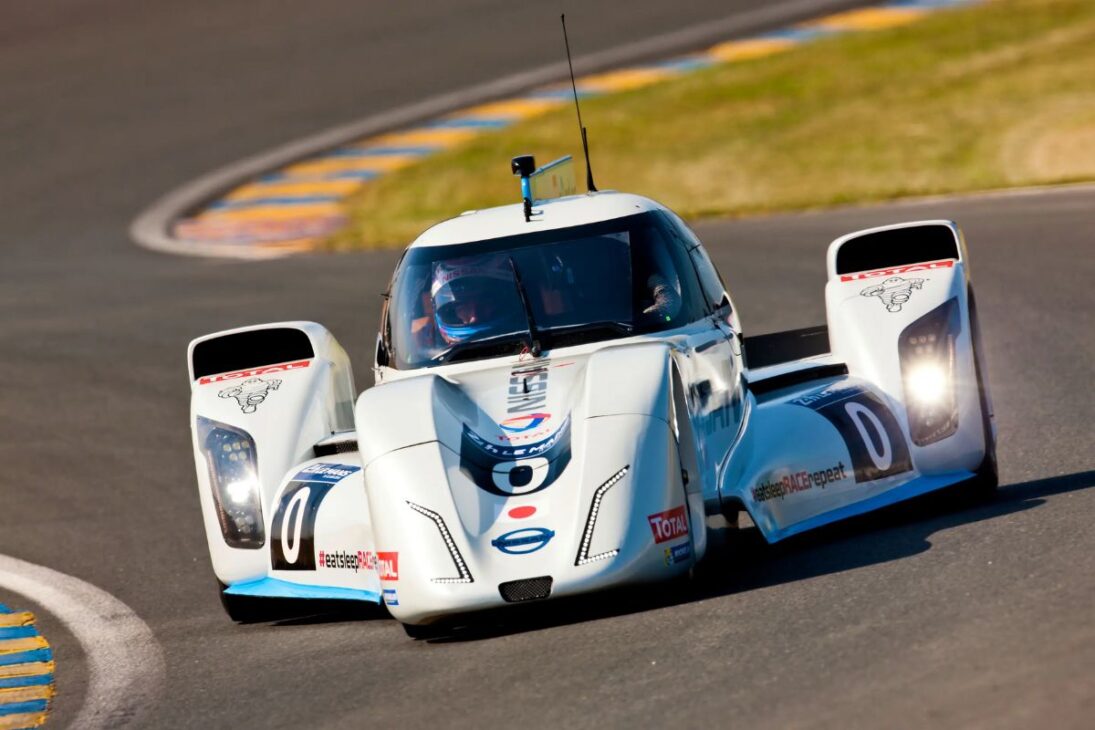
The ZEOD RC used this engine in a hybrid configuration: two electric motors of 110 kW completed the setup, allowing the car to run in both 100% electric and combustion modes.
During testing and the Le Mans race, the car achieved a historic feat: a full lap in fully electric mode, in 4 minutes and 22 seconds on the La Sarthe circuit, with speed peaks of up to 300 km/h.
An Out Of This World Power-To-Weight Ratio
What was most impressive about this project was the ratio of power to mass of the engine. With only 40 kg, the unit delivered over 10 hp/kg, a number that left the more sophisticated engines of the Formula 1 of that time in the dust.
As a comparison, a 2014 F1 engine weighed around 145 kg and delivered something between 600 to 700 hp—meaning a much less extreme power-to-weight ratio.
Additionally, the project served as a true laboratory on how to build ultra-compact and high efficiency engines, something that could be applied in future concepts of street or competition vehicles.
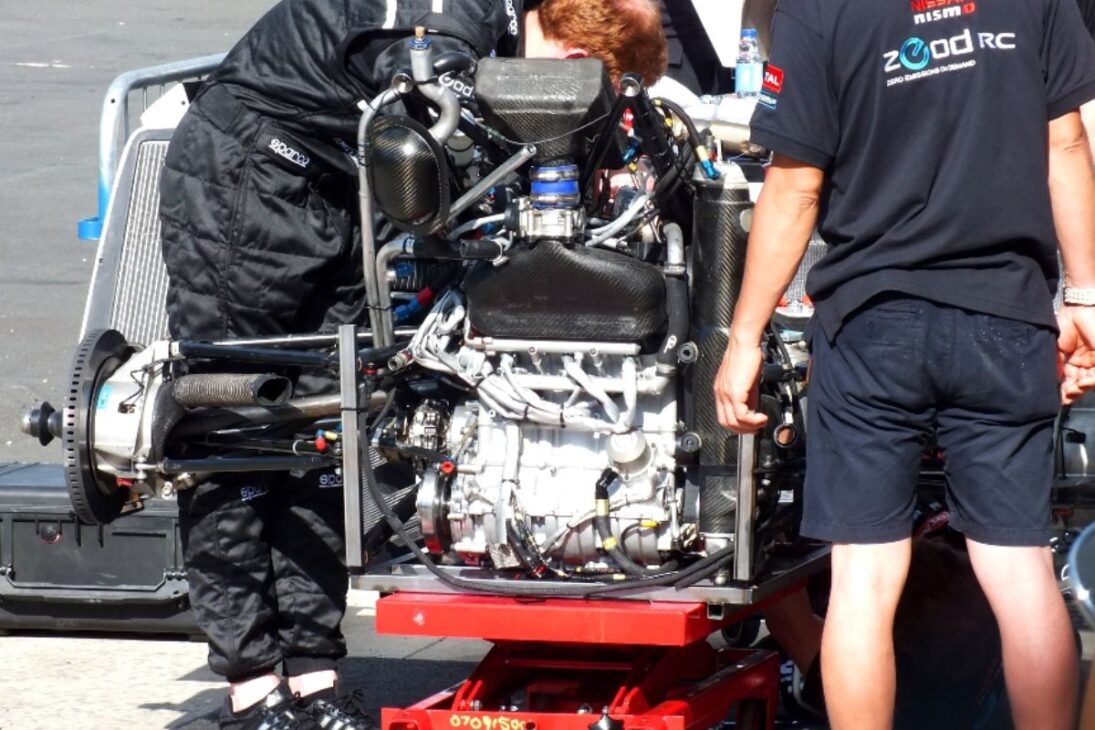
Why It Never Hit The Streets?
At the time, many fans of the brand—and the sports division NISMO—dreamed of the possibility of a streetcar equipped with this insane engine. But as Nissan itself explained, turning this project into a viable engine for daily use was practically impossible.
The main challenge was not just the power, but ensuring durability, fuel efficiency, and, mainly, emissions that met environmental standards.
Another critical factor was the production cost. Such projects, made for the extremely controlled and short environment of a race like Le Mans, require very expensive components and custom development.
Moreover, Nissan highlighted the importance of lubrication in the engine: the partnership with Total was essential to ensure that the engine could handle the high levels of friction and thermal stresses generated by such an extreme setup.





Cada anúncio desses é uma compra a menos.
Enfim, me pareceu um grande avanço desperdiçado.
Impossível ler a matéria com tanto anuncio.
Concordo plenamente!!!! Tem algumas publicações de alguns editores que eu já nem começo mais a ler… Isto está ficando um ABSURDO DE TANTA PROPAGANDA, elas entram no meio da página cobrindo totalmente a sua leitura, você apaga e instantaneamente outra… Uma TOTAL FALTA DE RESPEITO COM OS LEITORES!!!
Em outras propagandas colocam um “X” bem minúsculo, com muito custo você aperta para tirar a propaganda, mas mesmo assim elas abrem pelo menos uma vez cobrindo tudo!!! Resumindo:
Material e leitura que muitas vezes seriam interessantes, seriam um momento de relaxamento para os leitores, acaba se revelando em stress por conta do EXCESSO ABUSIVO DE PROPAGANDAS E A TOTAL FALTA DE RESPEITO COM SEUS LEITORES!!!
Por este motivo, eu e alguns amigos já estamos deixando de seguir ou abrir matérias de determinados editores, e temos constatado em nossas redes sociais, que vários leitores tbm vem agitando adotando esta prática de não acompanhar mais determinados sites e editoriais!!!
Boa tarde, infelizmente por enquanto temos que utilizar os anúncios para financiar nossa INFRAESTRUTURA, mas se você desejar uma experiência mais fluída e com pouco anúncios, experimente o APP do blog: https://en.clickpetroleoegas.com.br/aplicativo