






 Portuguese
  Spanish


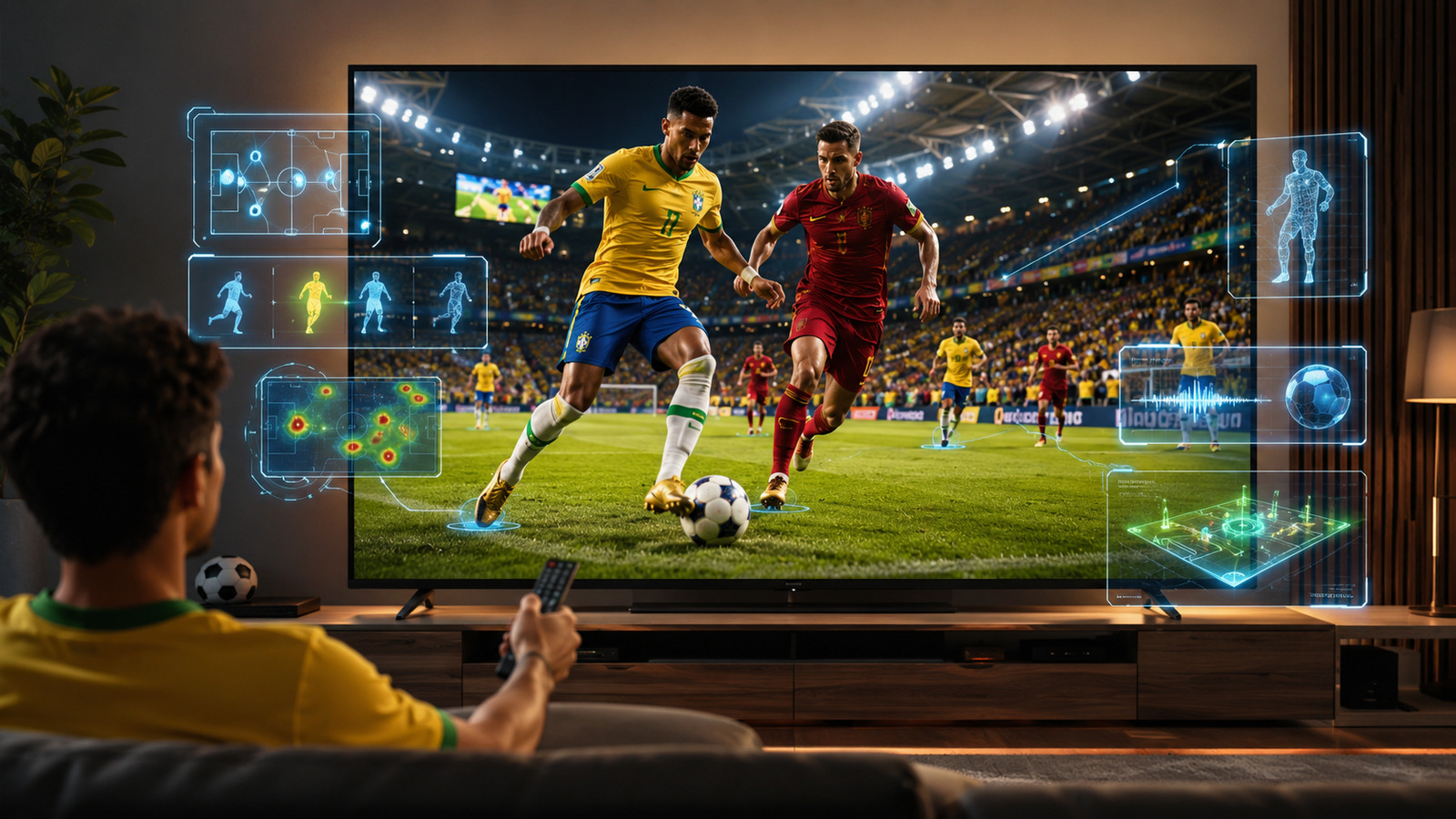

Globo announces the debut of DTV+ in Brazil in June 2026, with interactivity on open TV, 4K transmission, low latency on Globoplay, and multiplatform coverage in three capitals during a major sports event
Globo will debut the DTV+ standard in Brazil in June 2026, initially in Rio de Janeiro, São Paulo, and Brasília, bringing digital interactivity to open TV during one of the world’s largest sports events.


DTV+ arrives first in three capitals
The technology adds a digital layer to the traditional open television signal. On compatible devices, the audience will be able to access extra information about teams and players directly on the screen, without relying solely on conventional broadcasting.
In the initial phase, the novelty will be restricted to households in the three announced cities. Globo has not disclosed when the system will be extended to the rest of the country, keeping the expansion pace undefined.
-
General Motors Halts Self-Driving Car Service After $10 Billion Investment Following Pedestrian Incident in San Francisco

-
Scientists Discover Mysterious Black Fungus Thriving in Chernobyl for Nearly 40 Years, Challenging Extreme Radiation and Potentially Revolutionizing Space Missions

-
Antarctica’s Blood Falls: Scientists Uncover a 1.5-Million-Year-Old Isolated Ecosystem, Shedding Light on Potential Ice Changes
-
Mati Carbon Wins $50 Million Prize for Boosting Harvests and Capturing Carbon by Distributing Free Basalt Dust to Small Farmers in India and Africa





Launch accompanies major sports event
The arrival of the standard was announced close to one of the world’s largest sports tournaments. The broadcaster used this moment to present the advancement as part of the technological preparation for the coverage.
The operation planned for the championship totals a thousand hours of live coverage. More than five hundred professionals will be dedicated to the event in North America, in a structure designed for different platforms.
Broadcasts include National Team, final, and half of the games
Globo claims that its operation will ensure access to the Brazilian National Team’s games, the grand final, and half of the matches on the schedule. The distribution will occur across multiple platforms.
The strategy involves open TV, closed channels, streaming, and news portal. With this, the broadcaster seeks to concentrate various forms of following the event, including matches, highlights, and updates.
Closed channels will have 4K image at 60 frames
On closed channels, sports programming will have a 4K signal at 60 frames per second. The resolution matches that of CazéTV and the frame rate promises to surpass that of the competitor.
This combination indicates a transmission with smoother image during the tournament. The highlight is the technical delivery aimed at those who will follow the matches through paid services.
Globoplay will have low latency and portal will show highlights
Globoplay will receive investments in low latency technology. The intention is to reduce image delay and bring the streaming experience closer to the sensation of watching the game live.
On the news portal, coverage will have real-time tracking, goal highlights, and free broadcast of matches aired by the open network, expanding options for those following digitally at home.
With information from Tudo Celular.


