Portuguese
  Spanish


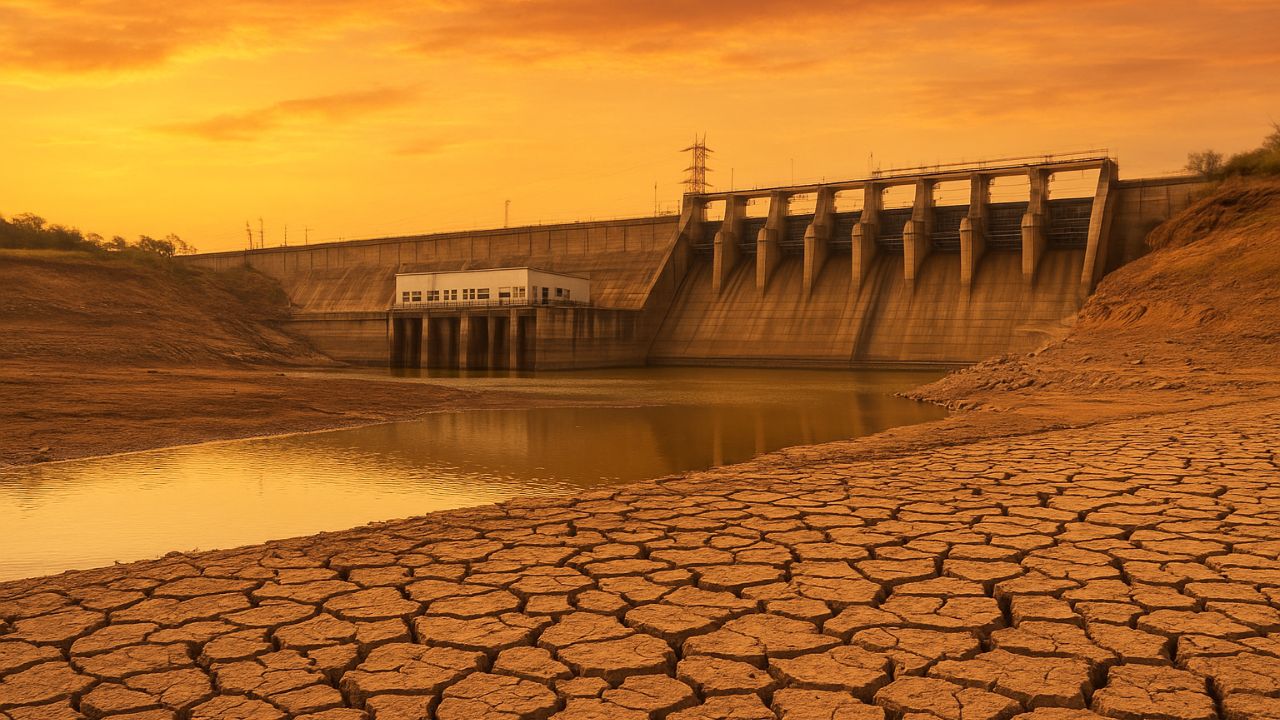

Main River Basins in Brazil Face Drought for 10 Years, Compromising Hydroelectric Plants and Raising Electricity Bills.
Brazil is facing a silent crisis that is already affecting consumers’ wallets. The main river basins in the country, responsible for supplying the largest hydroelectric plants, have been experiencing prolonged drought for over ten years.
The water deficit compromises energy generation, exposes failures in the electricity sector’s forecasting model, and results in higher tariffs on electricity bills.
According to data from the National Disaster Monitoring Center (Cemaden), obtained exclusively, strategic regions such as Paraná, São Francisco, and Tocantins are undergoing an increasingly severe drought sequence.
-
Itaipu Dam Stuns Visitors with First Spillway Opening in 2026, Showcasing the Power of Water Once Again

-
USP researcher creates thesis to attract international funds for the country’s electric energy sector
-
Trafigura receives authorization from ANEEL to trade electricity in Brazil and expands its operations in the largest energy market in Latin America.
-
Mobile solar panels promised to share space with corn crops, but the 20% to 25% shade reduced production by an average of 7.7% and opened a new dispute between energy and food.


These reservoirs supply hydroelectric plants like Furnas, Sobradinho, Itaipu, Tucuruí, and Três Marias, which together account for about 60% of national energy.
Outdated Model Does Not Consider Climate Change
The National Electric System Operator (ONS) acknowledges that the current forecasting method is outdated.
Created decades ago, the system is based on historical series of rainfall and flow rates dating back to the 1930s, but does not take into account the recent effects of the climate crisis.
“Historical flow data needs updating to truly account for climate change and extreme events,” admits the ONS in a statement.
In practice, estimates still project optimistic scenarios, masked by old records of rainy periods.
This way, the reservoirs tend to be operated in a risky manner, consuming more water than will effectively be replenished by rainfall.
Direct Impacts on Electricity Bills
With reservoir levels increasingly low, Aneel triggered the red flag level 2 in August, the highest tariff rate.
This means that the prolonged drought in the basins is directly linked to the increase in electricity bills for millions of Brazilians.
Experts warn that if nothing changes, the risk of rationing is back on the horizon. Additionally, the trend is that thermoelectric plants, which are more expensive and polluting, will be activated more frequently to meet energy demand.
A New Pattern of Drought in the Basins
Historical data indicates a drastic change starting in 2014. Previously, there were regular cycles of floods and droughts.
Now, the scenario shows long dry periods interspersed with short and insufficient rains.
Serra da Mesa (GO): the largest reservoir in the country, with a capacity of 54.4 billion m³, has faced continuous drought since 2013;
Furnas (MG): essential for the Southeast and Midwest, experienced seven consecutive years of drought between 2015 and 2022;
Três Marias (MG): also entered the cycle of prolonged drought starting in 2015, reaching unprecedented levels.
For Cemaden researcher Adriana Cuartas, this situation represents a “new normal” climate.
“Since 2015, we have not returned to a cycle of alternation between floods and droughts. We have a hotter and drier country, a direct reflection of global warming and deforestation,” she states.
Experts Call for Urgent Review of the System
Former directors of Aneel and ONS, such as Jerson Kelman and Luiz Barata, emphasize that the forecasting system is a blind spot.
For them, the lack of updates puts not only energy generation at risk but also the country’s energy security.
“Current models overestimate the volume of available water and underestimate the impacts of drought. This can compromise contracts, raise prices, and weaken supply in the future,” Kelman explains.
Barata adds that he tried to modernize the model between 2016 and 2020 but encountered internal resistance. “The system needs to change urgently. The way it is, it reacts late and makes energy even more expensive.”
Brazil Facing a New Energy Challenge
Beyond the higher electricity bill, the scenario demands strategic planning. The electricity sector still primarily relies on hydroelectric plants, but experts argue that it is time to invest more in alternative sources and forecasting tools aligned with climatic reality.
In the meantime, consumers and companies face an increasing risk: that energy in Brazil will not only become more expensive but also more unstable in the coming years.