Portuguese
  Spanish


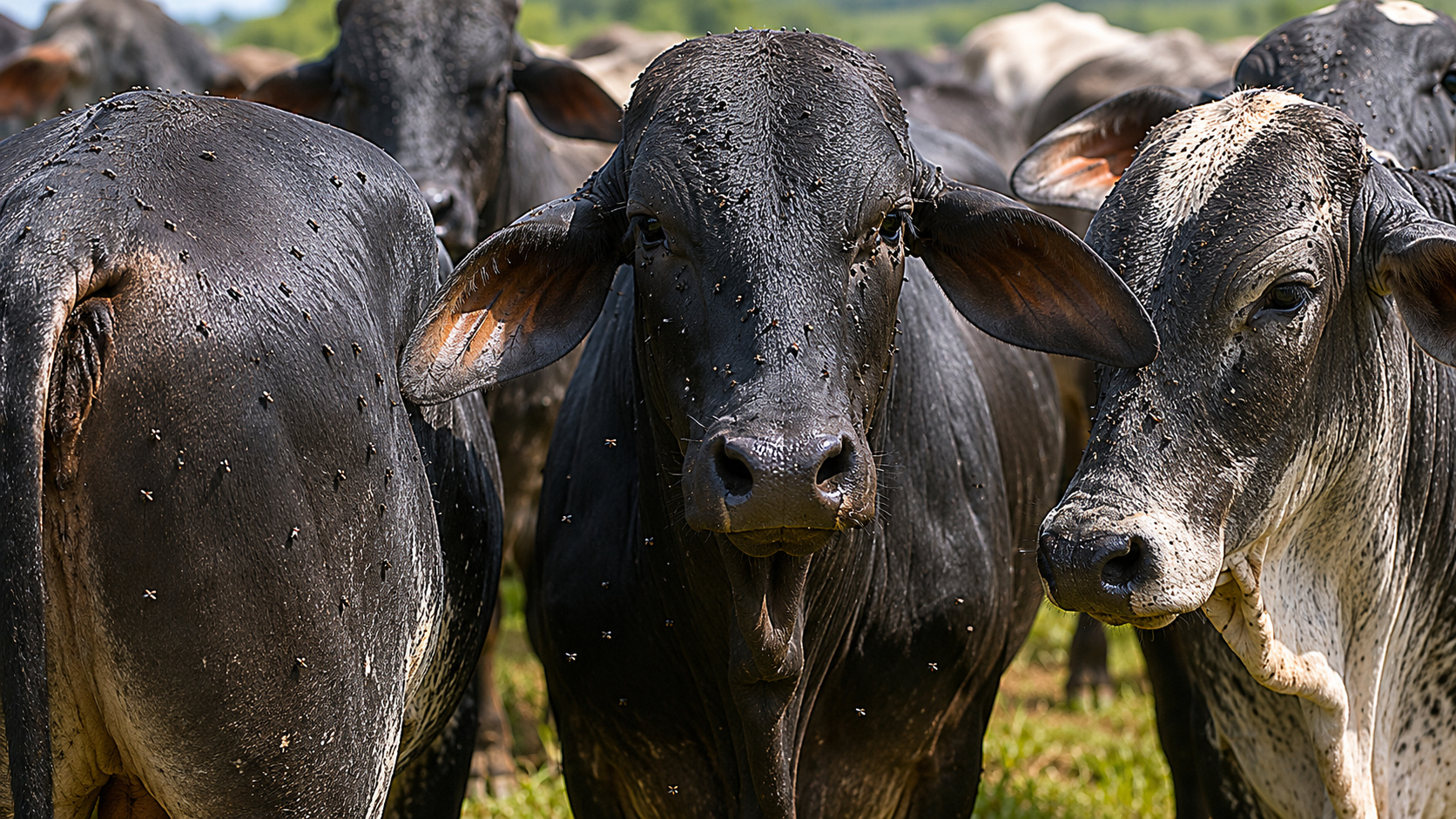

Attacks by the blood-sucking insect change herd behavior, reduce animal feeding, and pressure small producers in Mato Grosso do Sul
Small rural producers in Costa Rica, Mato Grosso do Sul, face increasing losses with the stable fly, an insect that attacks cattle and directly compromises milk production.
The infestation has intensified in recent years in the municipality, according to reports from the producers themselves. In one of the affected properties, the loss reached 30% of milk production.
Animals that used to be spread out in the pasture now remain grouped during the day. The change occurs as an attempt to protect against constant bites.
-
Bangladeshi Farmers Use Bamboo Levers to Pump Thousands of Liters of Water Daily Without Engines or Electricity

-
Brazilian Forests Could Expand by an Area Twice the Size of Switzerland by 2035, but Agricultural Sector Holds the Key, Study Finds

-
Brazilian Student Develops Solar-Powered Agricultural Machine Capable of Processing 250 Kilograms per Hour

-
Brazilian Farmer’s Viral Video on Onion Prices Opens New Income Opportunities Online


The herd eats less, expends energy trying to defend itself, and reduces productivity. For small producers, this decline directly affects monthly income.
Infestation changes cattle routine and affects milk production
The stable fly differs from the house fly because it has a structure adapted to bite and suck the blood of animals.
The constant attack causes stress in the herd. According to producer Manoel Rodrigues, the animals spend much of the day “huddled” and hitting each other.
The cattle can only feed better at night, according to the producer’s account. During the day, the pressure from the insects prevents the normal routine in the pasture.
Milk production falls, losses accumulate, and work in the field becomes more difficult. Manoel states that the situation has been repeating for several days.
Vinasse used in sugarcane comes under suspicion
Producers in the region point to a possible relationship between the infestation and the management of vinasse, a residue generated in the production of sugar and ethanol.
The material is used as a biofertilizer in sugarcane fields. However, management must follow technical standards to avoid liquid accumulation in agricultural areas.
Producer Vanderlei de Souza states that the presence of flies seems to decrease when the plant stops activities related to milling and vinasse application.
The producers’ suspicion gained strength because the industry operates near the municipality and is at the center of demands for answers.
Nearby plant has been operating for about 14 years in the region
The plant mentioned by the producers is approximately 10 kilometers from Costa Rica.
Producer Arionildo Nogueira states that the constant presence of the fly began after the industry’s installation in the region, about 14 years ago.
He has lived in the area for 30 years and reports that before this period, he did not face annual attacks of this type.
The infestation recorded this year is among the most severe in recent times, according to the producer. Despite ups and downs, the problem has never ceased to appear.
Control measures still do not solve the problem
The plant has applied control products in areas close to rural properties to try to reduce the presence of the insects.
The industry also installed traps on the fences. The devices consist of plastic strips with adhesive material to capture the flies.
Producers claim that the actions have not yet resolved the infestation. Therefore, they demand a definitive solution to prevent further losses.
Manoel Rodrigues emphasizes that no one is asking for the plant to be closed. The demand, according to him, is for the problem to be resolved so that producers can work.
Plant and Biosul cite protocols, monitoring, and environmental factors
The industry informed, in a note, that it manages the vinasse according to agronomic protocols, current legislation, and technical practices of the sector.
The company also stated that it maintains continuous monitoring of the areas, dialogue with rural producers, and contact with competent bodies.
The Association of Bioenergy Producers of Mato Grosso do Sul, Biosul, states that the stable fly represents a challenge for agriculture.
The entity relates the occurrence of the insect to different environmental and climatic factors, especially in periods of heat and rain.
Biosul also states that it has been working for over a decade with producers, plants, public agencies, and Embrapa Gado de Corte.
Small producers continue to demand answers to protect their income and maintain dairy farming. After all, how can one sustain a property when every lost liter weighs on the budget?