






 Portuguese
  Spanish


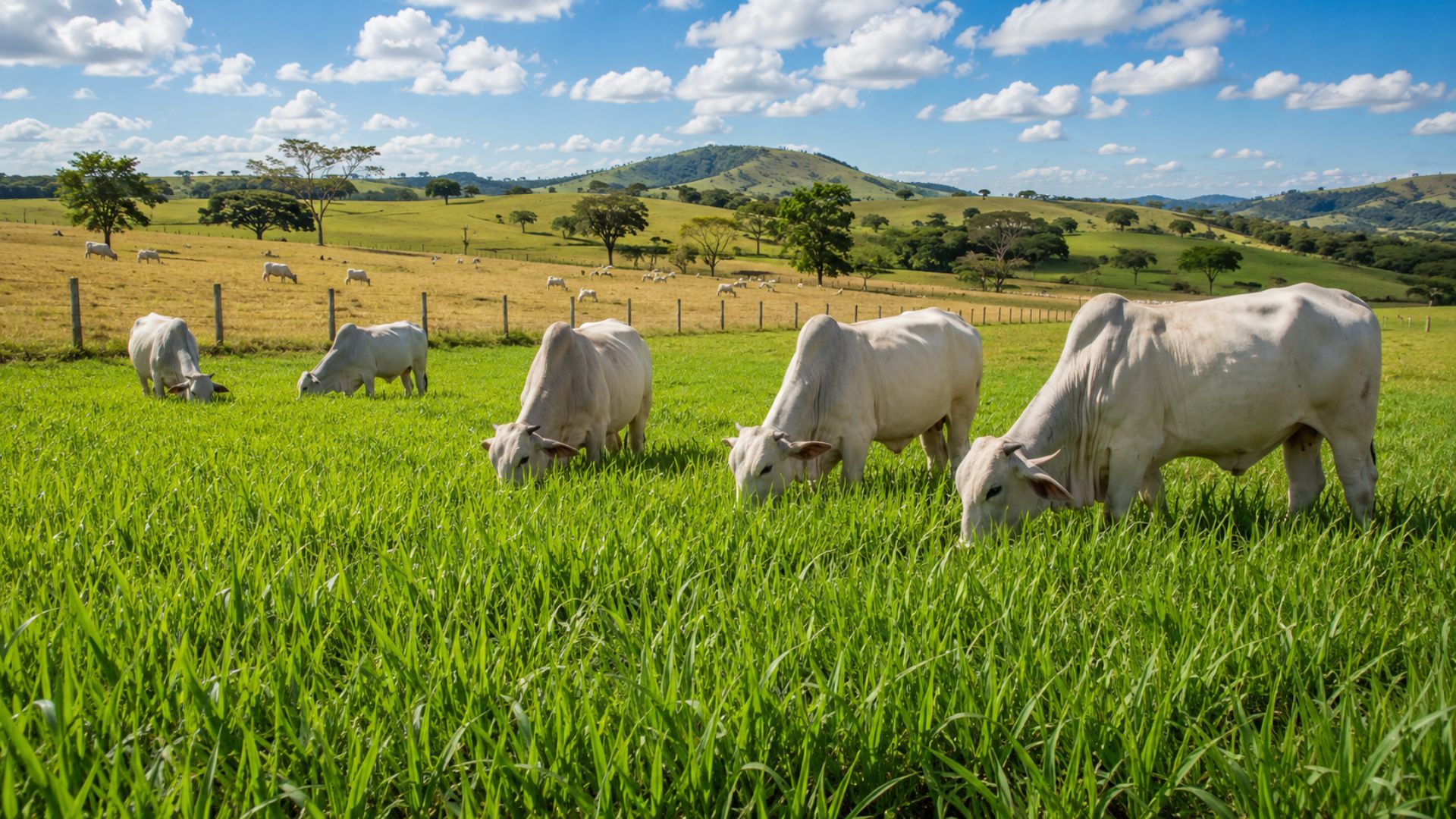


In April 2026, Embrapa launched BRS Carinás, the first Brazilian hybrid brachiaria of the species Brachiaria decumbens. The new grass yields 18% more forage in the rains, 30% more leaves, and up to 40% more pasture in the dry season, with adaptation to the acidic and poor soil of the Cerrado. The cultivar promises to increase the productivity of national livestock.
On April 15, 2026, Wednesday, the Brazilian Agricultural Research Corporation (Embrapa), in partnership with the Association for the Promotion of Forage Breeding Research (Unipasto), officially launched the BRS Carinás cultivar at the Embrapa Beef Cattle headquarters in Campo Grande, Mato Grosso do Sul. The first hybrid brachiaria of the species Brachiaria decumbens developed in Brazil, the new grass had been presented two days earlier, on April 13, during Expogrande, in the capital of Mato Grosso do Sul, and arrives on the market with the promise of increasing the productivity of national livestock by offering more forage, more leaves, and greater drought tolerance compared to the traditional Basilisk, known in the field as braquiarinha.
According to data released by Embrapa itself and replicated by sector outlets such as A Lavoura, Portal DBO, Rádio Itatiaia, and Broto Notícias, BRS Carinás can reach up to 16 tons of dry matter per hectare under suitable management conditions, with productivity up to 18% higher than Basilisk during the rainy season and up to 40% more live forage in the dry period. Researcher Jaqueline Verzignassi, from Embrapa Beef Cattle, highlighted that trials conducted over two years in Planaltina, in the Federal District, demonstrated good performance of the new cultivar in the weight gain of Nelore cattle in the rearing phase. The seeds of the new grass will be available to producers at the beginning of the second half of 2026.
Why the arrival of the new grass BRS Carinás is strategic for Brazil

Brazilian livestock farming is today one of the largest on the planet. The national herd is around 200 million heads, distributed over approximately 160 million hectares of pastures throughout the territory. For decades, the strategy to increase production was simple: expand pastures into new areas. This extensive model has lost momentum in recent years due to environmental pressure, the rising costs of opening new areas, and the real territorial limits of the country, which increasingly demand solutions for intensification in the same area.
-
Brazilian Honey Supplying U.S. Supermarkets Faces Price Hike and Job Threats Amid New Tariff Round

-
Drought in France Threatens Beet Crops, Raising Fears of Sugar Price Surge Across Europe
-
French village switches from oil to giant miscanthus for heating, cutting annual costs from €20,000 to €4,300

-
Brazilian Agribusiness Sets Record with $169 Billion in Exports in 2025


It was in this context that the quality of forage started to be treated as a priority, and no longer as a technical detail. More productive grass increases the stocking rate per hectare, raises animal weight gain, reduces dependence on supplementary feed, and lowers the total cost of production. The launch of BRS Carinás grass enters precisely into this movement, offering producers a national alternative for areas where Basilisk reigned alone for more than 50 years, especially in the Cerrado and other Brazilian biomes.
What makes BRS Carinás different from traditional brachiaria
BRS Carinás is a tropical forage grass, apomictic and tetraploid, with 36 chromosomes, according to the technical report published by Embrapa. In direct comparison with Basilisk, registered in Australia in the 1960s and introduced on a large scale in the Brazilian Cerrado in the 1970s, the new cultivar presents taller plants, longer and wider leaf blades, longer stems and floral axes, and a higher average number of racemes. This set of characteristics explains the productivity gains observed in Embrapa’s trials.
In practice, this means more food per area and better utilization by the animal. Embrapa studies have shown that BRS Carinás can deliver up to 30% more leaf blades than Basilisk at certain times, with crude protein varying between 7.5% and 12.5% and in vitro digestibility between 55% and 65%, depending on the phenological stage and season. The combination of more leaves and comparable nutritional quality makes this hybrid grass an interesting alternative for producers who want to increase productivity without radically changing the management system already adopted on the property.
Drought resistance and adaptation to the acidic soil of the Cerrado


One of the most celebrated points by Embrapa is the performance of the new grass during the dry period. According to data released by the research company itself, BRS Carinás can deliver up to 40% more live forage during drought compared to Basilisk, an essential characteristic in regions of the Cerrado, where prolonged drought usually drastically reduces food supply and forces expensive supplementation to maintain herd performance. The cultivar can be closed off at the end of summer and strategically reserved for use during drought, a function that approaches the concept of a forage bank.
Another highlight is the adaptation to low fertility soils. BRS Carinás tolerates soil acidity and low phosphorus levels well, characteristics very common in the Brazilian Cerrado. At the same time, it responds positively to phosphate fertilization, allowing the producer to adjust the investment according to the technological level of the property. For those working in marginal or recovering areas, this new grass offers a viable alternative without requiring heavy investments in soil correction right in the first cycle of pasture implementation.
More leaves and more weight gain per hectare
The ideal grass is not just the one that produces more mass: it is the one that produces leaves, precisely the most nutritious and digestible component for cattle. BRS Carinás stood out in Embrapa’s trials for its high production of leaf blades, with consistent gains compared to Basilisk. In terms of animal performance, this translates into a higher stocking rate and greater live weight gain per area, two indicators directly linked to the profitability of beef and dairy farmers in Brazil.
Another important factor is the regrowth speed. According to Embrapa, BRS Carinás accumulates about 4 tons of dry forage mass in just 60 days at the beginning of the rainy season, allowing the producer to anticipate the entry of animals into the pasture or use the pasture as a strategic reserve. This attribute is particularly valuable in rotational stocking systems, where rest time and controlled regrowth define the overall efficiency of grass use on the rural property.
Where BRS Carinás can be cultivated in Brazil
According to the product registration on Embrapa’s portal, BRS Carinás is indicated for the Amazon, Cerrado, and Atlantic Forest biomes, with cultivation recommended in states such as Mato Grosso, Mato Grosso do Sul, Goiás, Federal District, as well as Alagoas, Bahia, Ceará, Maranhão, Paraíba, Pernambuco, Piauí, Rio Grande do Norte, and Sergipe, in the Northeast. In the North, it covers Acre, Amapá, Amazonas, Pará, Rondônia, Roraima, and Tocantins. In the Southeast, Espírito Santo, Minas Gerais, Rio de Janeiro, and São Paulo. In the South, it is recommended for Paraná. This geographical range makes the grass accessible to producers in practically all livestock regions of the country.
The main focus, however, is the Cerrado and the so-called Matopiba, a Brazilian agribusiness hub that includes areas of Maranhão, Tocantins, Piauí, and Bahia. In these regions, the combination of acidic soils, low fertility, and prolonged drought fits exactly the adaptation profile of BRS Carinás. Embrapa’s expectation is that, in the medium term, the Brazilian grass will also reach Latin American countries where livestock based on Brachiaria decumbens is traditional, expanding the international presence of national agricultural research.
Application in crop-livestock integration and soil cover
Another distinguishing feature of BRS Carinás is its versatility. According to Embrapa, the cultivar can be used in single grazing, in consortium with legumes, or in crop-livestock integration systems (CLI), without negatively affecting the productivity of annual crops conducted in the same area. This performance is important because CLI systems have been gaining ground in Brazilian agriculture as a solution for income diversification, soil fertility improvement, and reduction of pests and diseases between harvests.
The cultivar also provides excellent ground cover, a characteristic that reduces the growth of invasive plants and protects the area against erosion during the dry period. In recovery areas, BRS Carinás can act as a tool for environmental and productive restoration at the same time. In greenhouse tests conducted by Embrapa, the new grass also demonstrated greater tolerance to soil flooding compared to another popular brachiaria, Xaraés, although the company emphasizes that additional field trials in poorly drained soils are still necessary to confirm this specific advantage on a commercial scale.
When and where to buy seeds of the new BRS Carinás grass
According to information released by Embrapa and Unipasto, BRS Carinás seeds will be available to Brazilian rural producers from the beginning of the second half of 2026, through Unipasto associates, which include companies specializing in tropical forage seeds. The list of official suppliers can be consulted on Unipasto’s institutional website, with direct contact available for orders and technical clarifications about the product.
The launch already has a significant initial offer, according to official communication from the involved bodies, which should allow for the rapid adoption of the technology in different regions. For interested producers, the technical recommendation is to evaluate the property’s technological level, soil fertility history, and the type of system used, whether extensive grazing, semi-intensive, or crop-livestock integration. This prior analysis helps determine if BRS Carinás grass is the best choice for each specific case or if another cultivar better meets the farm’s particularities.
The launch of BRS Carinás represents a milestone for the genetic improvement of forages in Brazil. It is the first time the country has managed to bring a national hybrid cultivar of the Brachiaria decumbens species to the market, after more than 50 years relying exclusively on the Australian Basilisk. For livestock farmers, it is a real chance to gain productivity, sustain the herd more securely during droughts, and reduce supplementation costs, especially in the Cerrado regions, where acidic soil and prolonged drought pose constant challenges.
Do you produce pasture in the Cerrado or another region of Brazil and have you considered replacing your current grass with BRS Carinás? Do you think this new brachiaria from Embrapa can change the competitiveness of national livestock against competitors like the United States and Australia? Leave your comment, tell us which cultivar you use today, and share the article with producers, technicians, and agribusiness friends who need to keep up with this news.








Also viel Erfolg bei der Einführung der neuen Grassorte doch sie hat aus meiner Sicht nur guten Erfolg wenn man sie mit Leguminosen mischt zum Beispiel mit Sonnenhanf ebenfalls schnell wachsend und noch mit einen höheren Eiweißgehalt auch trocken resistent aber es ist ein starker Stickstoffsamler was dem Gras wieder zu gute kommt und die Bodenfruchtbarkeit erheblich verbessert .