






 Portuguese
  Spanish


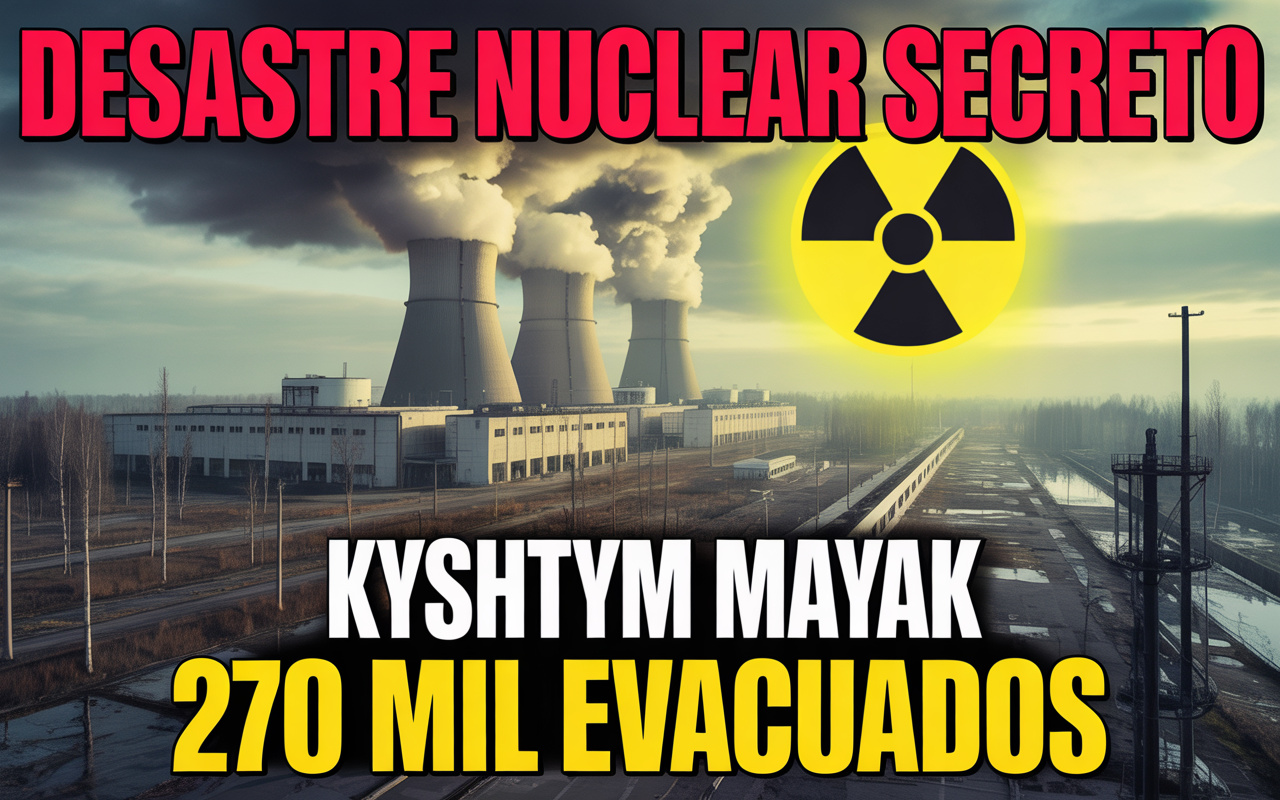


Nuclear Explosion Hidden by the Soviet Regime Contaminated 23 Cities, Forced the Silent Evacuation of 270,000 People and Was Classified as INES-6, Becoming More Severe than Three Mile Island and Unknown to the World for 30 Years.
On September 29, 1957, the Soviet Union faced one of the worst nuclear accidents in modern history. The episode became known as the Kyshtym disaster, named after the small town of the same name in the Ural Mountains region, although the accident occurred at the secret Mayak facility, one of the USSR’s most sensitive nuclear centers. Unlike Chernobyl, which shocked the world in 1986 with striking images, Kyshtym was completely erased from the official narrative. Only decades later did researchers and international agencies discover the true scale of the event.
The Explosion at Mayak and the Creation of the “Radioactive Route”
The origin of the disaster lay in a storage tank containing dozens of tons of high-level radioactive waste, a direct byproduct of plutonium processing for military purposes. The cooling system of the tank failed, and the internal temperature rose silently for months until the chemical solution underwent thermal decomposition, resulting in a powerful explosion. The detonation did not involve a nuclear reaction, but it released about 70 to 80 tons of highly radioactive material into the atmosphere, creating a cloud that spread over approximately 800 kilometers.
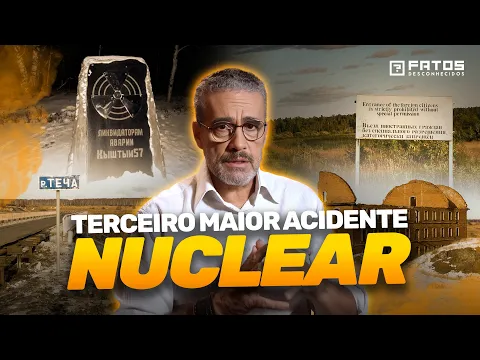

This contamination corridor later became known as the East Ural Radioactive Trace (EURT), a geographic band of high radioactivity that crossed dozens of villages, farms, and rivers, directly affecting populations that received no warning.
-
From Painting Houses in the U.S. to Producing Beyoncé and Paul McCartney Shows, Entrepreneur Opens Luxury Hotel in Brazil’s Trancoso with $8 Million Revenue Goal

-
Massive 109-Meter, 5,500-Ton Ship Built to Supply Energy in War Crossed the Atlantic, Powered Rio in the 1950s, and Was Sunk in Pará to Protect Tocantins Riverbank

-
Brazilian Domestic Worker Lived 55 Years Without a Salary, Had Welfare Benefits Controlled by Employer
-
Former PE Teacher Turns São Paulo Thrift Store into Online Sensation with 1 Million Followers, Now Earning $50,000 Monthly with Son and Plans to Expand Nationwide



Contaminated Cities, Removed Populations, and Military Silence
Historical studies by the Obninsk Atomic Energy Institute and the International Nuclear Safety Center confirm that 23 cities and towns were contaminated to some degree. The Soviet official response did not include sirens, public announcements, or protective equipment. The evacuation began days later, discreetly and selectively, often with authorities ordering residents to leave their homes with what they could carry in their hands, without explanations.
Records later released show that approximately 270,000 people were affected by contamination to varying degrees. A significant portion was quietly relocated to other regions, while others remained and only learned about the radioactive nature years later when diagnoses of cancer, hematological diseases, and syndromes associated with chronic exposure began to emerge.
An Accident Classified as INES-6 and Worse than Three Mile Island
After the opening of files and analyses conducted by international researchers in the 1990s and 2000s, the Kyshtym disaster was classified as level 6 on the International Nuclear Event Scale (INES), ranking only behind Chernobyl (level 7, in 1986) and Fukushima (level 7, in 2011). For comparison, the famous American accident at Three Mile Island in 1979 was cataloged as level 5, making Kyshtym more severe in terms of environmental radiological impact.
This elevated classification is due to a combination of technical factors: massive release of atmospheric radionuclides, soil and water body contamination, long toxic persistence, and large-scale population displacement.
The Role of the Cold War and the Concealment of Strategic Information
The chronology of silence was not a bureaucratic accident. In the 1950s, the Soviet Union was competing with the United States for dominance in plutonium and thermonuclear weapons. The Mayak complex was part of this strategic pillar. Admitting to an accident of this magnitude would mean revealing operational vulnerabilities and technological failures during the height of the arms race.
Only in the 1970s, through fragmented scientific reports and works by exiled Soviet researchers, did the West hear about the “radioactive region of the Urals.” The official confirmation only gained traction in the late 1980s during the political opening of Glasnost when Moscow began to admit internal accidents. However, the volume of technical data was only significantly released after the end of the USSR, when historians, nuclear physicists, and international institutions began to reconstruct the event.
Long-Term Environmental Impacts and Restricted Zones
Radiation did not disappear with the passing years. Part of the most contaminated region was converted into the East Ural Nature Reserve, a restricted-access park officially created for “scientific preservation,” but which in practice functions as a buffer zone to prevent human occupation. Research with isotopes still detects abnormal concentrations of strontium-90 and cesium-137 in soil layers and river sediments.
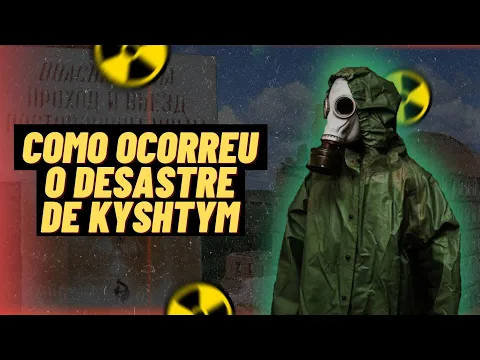
The impacts on flora and fauna continue to be studied. In some areas, vegetation has reclaimed the abandoned territory, creating a paradox already observed in Chernobyl: thriving ecosystems from an ecological standpoint but biologically marked by radiation.
The Disaster That the World Never Saw
Kyshtym remains a singular case in nuclear history not only for its technical severity but for its political invisibility. With no iconic images, no international headlines, and no global protests, the event almost disappeared in the shadow of the Cold War. When researchers finally connected the dots, some victims had already died, cities had been removed, and the Mayak complex continued to operate in secrecy.
Today, experts classify the accident as one of the most severe in the history of nuclear technology, alongside Chernobyl and Fukushima. However, it remains the “ghost nuclear disaster,” invisible to the general public and absent from global memory, despite its scale and impact.


