





 Portuguese
  English
  Spanish
  3 min of reading
  0 comments


Scientists Discover Hidden 3,000-Year-Old Pyramid in Central Asia, Revealing Historical Secrets
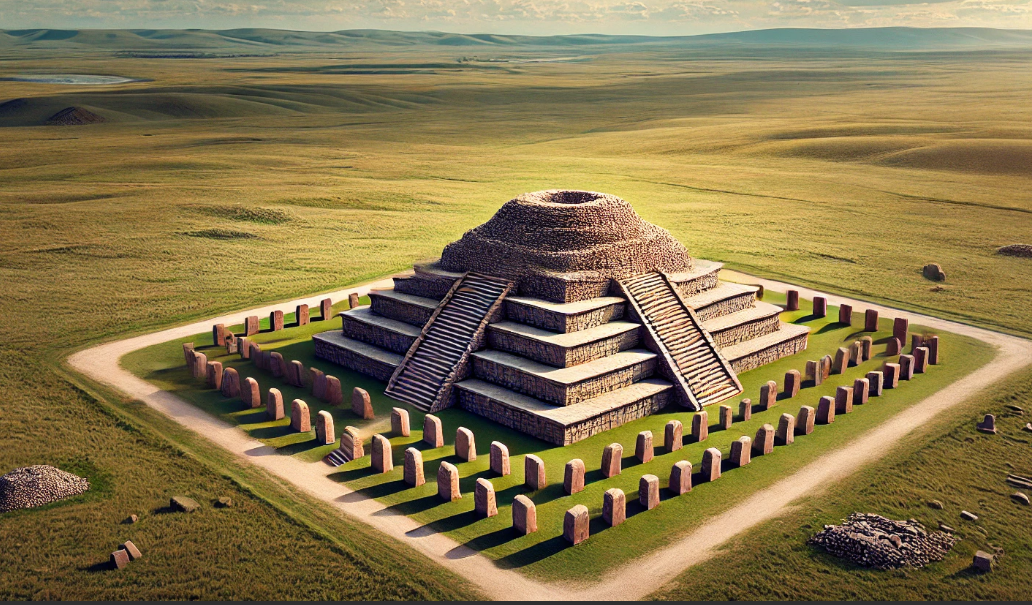
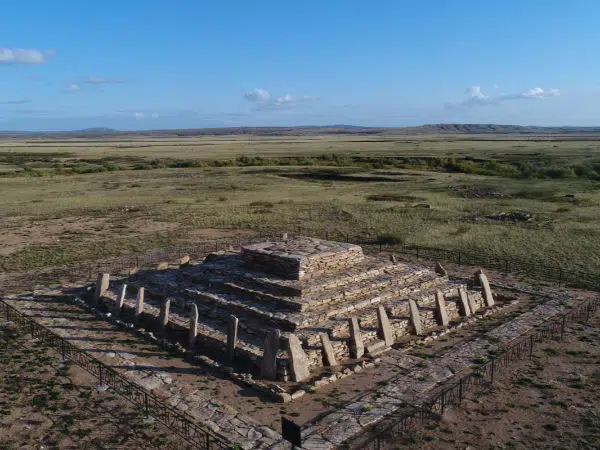
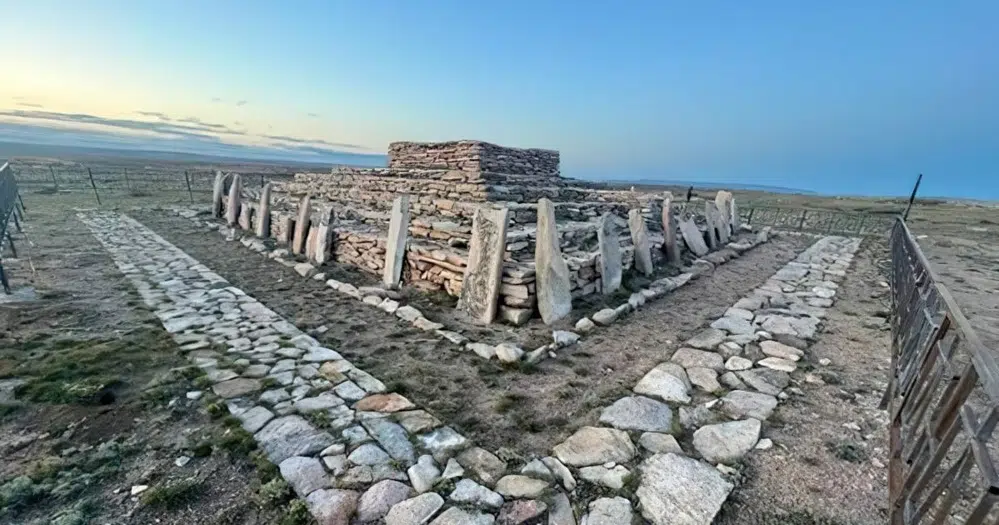
An archaeological discovery of great importance has been made on the steppes of Central Asia. It involves a pyramidal structure over 3,000 years old, known as the “Karazhartas Pyramid“.
Located in the Karaganda region of central Kazakhstan, this pyramid reveals much about the Begazy-Dandibay civilization, which thrived during the Bronze Age.
The Begazy-Dandibay Culture
The Begazy-Dandibay culture, which occupied the central region of Kazakhstan, was characterized by a semi-nomadic society with an economy focused on metallurgy and animal husbandry.
-
Robots learn from dogs to understand human gestures and can now locate objects with 89% success.

-
In a tomb in the ancient Egyptian capital of Tanis, in the Nile Delta, archaeologists found 225 funerary figurines that were meant to serve the deceased in the afterlife.

-
AI promises to revolutionize the world, but its data centers could create an invisible toxic crisis: a study by Nature estimates up to 5 million tons of electronic waste by 2030, with servers, GPUs, lead, cadmium, and rare metals that global recycling still cannot absorb.
-
11 African countries are racing against the advance of the Sahara with an 8,000 km green wall, billions of dollars in international support, and the nearly impossible mission of restoring 100 million hectares before the desert turns fertile lands into dead zones.



This civilization developed an aristocratic class due to the prosperity generated by metal trade across Eurasia.
Historians believe the Karazhartas Pyramid was constructed as a mausoleum for a member of this elite. The shape and complexity of the construction reflect the sophistication of the Begazy-Dandibay society and their advancement in both artistic and spiritual fields.
Characteristics of the Pyramid
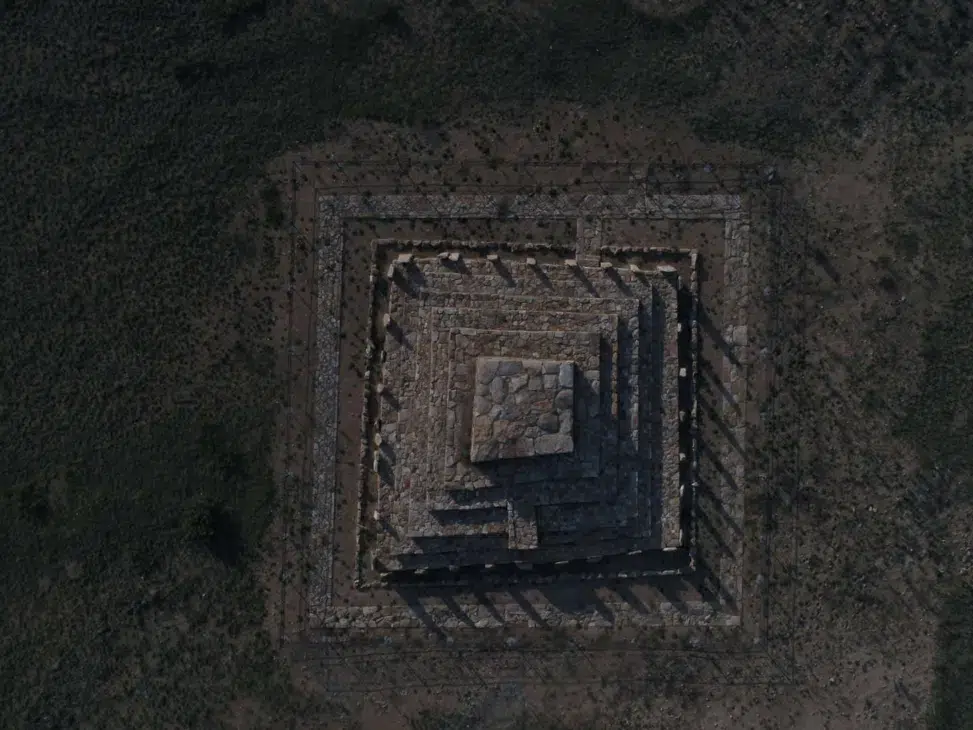
The Sary Arka Archaeological Expedition, led by Karaganda University, revealed that the pyramid features a square, stepped structure measuring approximately 65 by 98 feet and a height of 5 feet. This impressive size positions it as the largest funerary monument of the Begazy-Dandibay culture ever found.
Intriguing Discoveries Inside
Inside the pyramid, archaeologists uncovered a sarcophagus surrounded by granite stones, where remains believed to be of a local ruler were found.
Additionally, a bronze arrowhead, ceramic fragments, and animal bones were discovered, indicating tribal rituals associated with these burials.
Share this story
<strongDating and Antiquity of the Structure
Researchers from Queen’s University in the UK dated the pyramid to the period between the 15th and 14th centuries BC, firmly placing it in the Late Bronze Age. This detailed study also reinforces the historical significance of this civilization.
The Kent Settlement: In addition to the pyramid, a proto-urban settlement known as Kent was discovered nearby. The site, spanning 15 hectares, is notable for its urban organization which includes labyrinthine extensions, ditches, protective walls, and a well-planned street network.
This discovery highlights the organizational and urbanization capabilities of the Begazy-Dandibay culture.
Rituals and Religious Beliefs
According to archaeologists, the Begazy-Dandibay society performed religious rituals offering sacrifices to elements such as the sun, the moon, and fire, and worshiped protective spirits called “ongun”. These customs reflect the spirituality and cultural beliefs of this civilization.
The Karazhartas Pyramid and the Kent settlement reveal much about the identity, social organization, and spiritual values of the Begazy-Dandibay culture.
These discoveries mark a significant advancement in understanding Central Asia during the Bronze Age, opening doors for new insights into this ancient civilization.


Be the first to react!