






 Portuguese
  Spanish


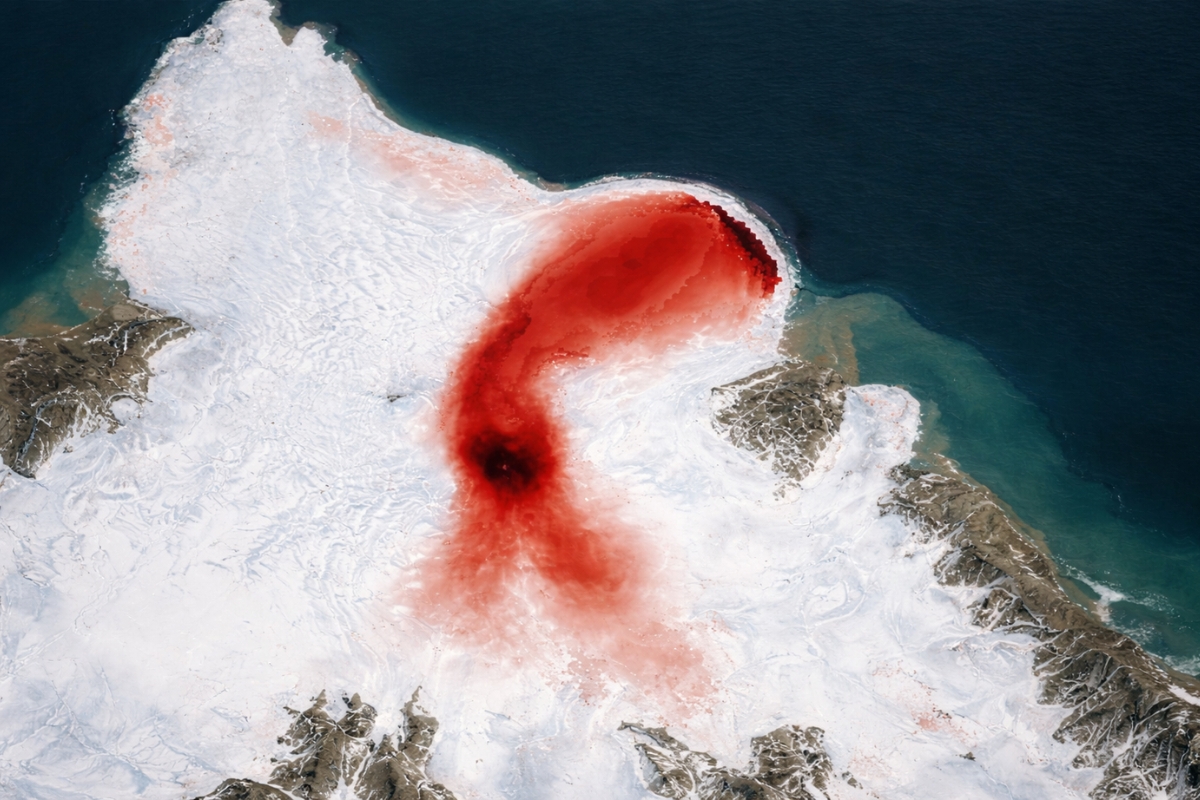


NASA Detects A “Pulsating Red Spot” In Norway: Stonebreen Glacier Accelerates In Summer And Decelerates In Winter, As If It Has A Heart
NASA captured a “pulsating red dot” in Norway from space — and it beats in rhythm with the seasons
What looks like a “living red spot” in the Arctic is neither blood, nor lava, nor a mysterious signal. It’s a gigantic glacier speeding up and slowing down throughout the year — and the visual effect is so striking that scientists compared it to a true “heartbeat.”
The Image That Caught The World’s Attention
While observing Norway from space, NASA highlighted an unusual phenomenon in the Svalbard archipelago, in the Arctic: a kind of pulsating red spot over the Stonebreen glacier. The “color” is not real — it appears in maps made with data from the ITS_LIVE project, which turns ice speed into colors.
-
Former Atacadão Employee Turns Online Cake-Baking Lessons into a Confectionery Brand with Factory, Store, Delivery, and Nearly $400,000 in Revenue

-
Brazilian Startup Sells Nearly 9 Million Surprise Bags of Near-Expiry Food, Prevents Thousands of Tons of Waste, Aiming for $42 Million Revenue by 2026
-
How to Prevent Brown Recluse Spider Bites: Common Hiding Spots and Free Tips to Reduce Risks

-
Natto: The Unusual Japanese Superfood Gaining Popularity on Social Media and Driving Record Exports




In other words: the faster the ice moves, the more intense the red becomes. When the movement slows down, the hue tends toward pink.


The “Bark” Of The Glacier: Why Does It Accelerate In Summer?
Stonebreen flows from the Edgeøyjøkulen ice cap toward the Barents Sea, on the Edgeøya island. In winter, ice movement is more confined and appears in softer tones. But at the end of summer, the story changes: in some areas, the speed can exceed 1,200 meters per year.
There was an even more extreme moment: in the summer of 2020, peaks of up to 2,590 meters per year were recorded. This up-and-down is exactly what creates the “pulsation” effect seen in the images.
The Explanation Is Simple — And Fascinating
The key lies in meltwater.
According to glaciologist Chad Greene from the Jet Propulsion Laboratory, when the base of a glacier receives a lot of meltwater, pressure builds up and the ice starts to slide more easily. It’s as if water acts as a “natural lubricant,” reducing friction between the ice and the rock.
In summer, more melting at the surface means more water infiltrating down to the base — and, as a result, the glacier accelerates. When temperatures drop, the process weakens and movement slows. Hence the seasonal “heartbeat.”
A Rare Type Of Glacier — And An Important Recent Change
Stonebreen is part of a small group of glaciers known as “surging glaciers,” which represent about 1% of the glaciers on the planet, although they are relatively common in Svalbard.
Prior to 2023, it underwent a prolonged phase of acceleration, maintaining its seasonal pattern within a generally elevated flow. But since 2023, data indicates a turnaround: the glacier entered a phase of “quiescence,” significantly reducing its movement — with the exception of some quick peaks in summer.
With series of images analyzed between 2014 and 2022 and subsequent monitoring, researchers can clearly see how Arctic glaciers respond to a changing environment.
Why Does This Matter?
Because this “pulsating red spot” is more than a visual curiosity: it is a direct indicator of the dynamics of ice in the Arctic — and how changes in temperature and meltwater can alter the behavior of an entire glacier.
And when a glacier changes its rhythm, it helps tell a bigger story: that of a planet where even the ice is “beating differently.”








Eu já cheguei a vê essas manchas em um lugar mas logo sumia tipo q fosse elaborado por raios magnéticos fiquei impressionada como aparecia tão ligueiro e logo sumia das vistas