Portuguese
  Spanish




Invisible mechanism allows plants to adjust energy consumption at night with surprising precision, using internal chemical signals instead of a brain, according to research that investigates plant metabolism and challenges traditional interpretations of intelligence in nature.
The idea that plants “know how to count” gained traction after experiments with Arabidopsis thaliana, a model species in plant biology, indicated that leaves regulate the speed of starch consumption at night so that the reserve lasts almost exactly until dawn.
In this context, the most accepted result in the literature does not describe thought or consciousness, but rather an extremely precise biochemical regulation mechanism, capable of integrating the amount of stored energy with the remaining time until light returns.
By observing this behavior, researchers highlighted that the central point of the discovery lies in how the plant avoids two opposing risks, balancing nighttime energy consumption without wasting reserves or facing scarcity before the start of the next day.
-
Why did a company that was already earning US$ 1 million decide to completely change its strategy? The answer begins with used bottles, worms, and an unexpected decision.

-
Where it almost never rains, residents hung giant nets in the desert mountains and started to ‘fish’ drinking water from the fog: the nets can collect thousands of liters per day directly from the mist.

-
Young people from Minas created a robot without screws or metal parts, betting on a strong and flexible structure to compete against a thousand teams in Houston and took Brazil to the top of world robotics for the first time; Sofia, 15, also made history with an unprecedented leadership award.

-
Detectorist found a 900-year-old silver coin


If starch is consumed too quickly, the plant faces scarcity before dawn and compromises nighttime metabolism, while a slow enough usage results in excess energy, reducing growth potential and cellular maintenance.
During the experiments, scientists observed that starch degradation occurs in an approximately linear manner throughout the night, with a rate adjusted to the available stock and the expected time for the return of sunlight.
How chemical calculation works in plants
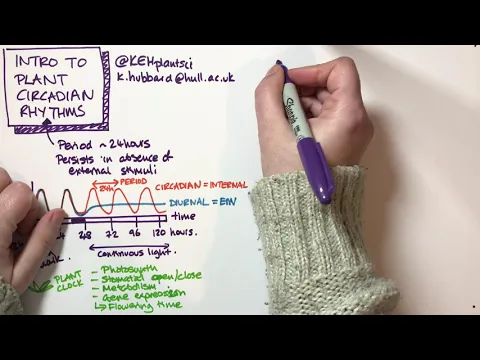

Published in the journal eLife, the study became a reference by proposing that the plant performs, through molecular means, something equivalent to arithmetic division, even without any nervous structure or cognitive processing similar to that of animals.
In simplified terms, the biological system would estimate how much starch is available and for how many hours this reserve needs to last, automatically adjusting the consumption speed to navigate through the darkness without compromising cellular function.
Additionally, the tests included unexpected changes in the environment, revealing that when night began earlier than expected, the rate of starch degradation was quickly recalibrated to match the new duration of the period without light.
In experimental cycles of 12 hours of light and 12 hours of darkness, the reserve was generally used in a balanced way until dawn, which contributed to the idea that plants can endure about 12 hours in the dark with high metabolic precision.
Still, this value directly depends on experimental conditions and should not be interpreted as a universal rule valid for all plant species or distinct environmental situations.
The role of the biological clock in energy consumption

Although the term “calculation” is used, it does not imply that the plant performs conscious mathematical operations, but rather that there is a network of chemical reactions capable of generating a functional result equivalent to a mathematical operation.
In this process, molecules associated with the circadian clock and starch metabolism work together, allowing the rate of nighttime consumption to respond simultaneously to the level of stored energy and the plant’s internal time.
Previous and subsequent research indicates that the biological clock anticipates dawn, regulating carbon mobilization based on this temporal prediction, which reinforces the efficiency of metabolic control during the night.
Even when genes related to the clock or metabolic pathways undergo changes, studies show that this synchronization with the light-dark cycle remains relevant for energy stability and plant growth.
Scientific debate on plant intelligence
Despite the consistency of the results, the interpretation of the phenomenon requires caution, especially when terms like “plant intelligence” are used to describe processes that, in practice, are biochemical and not cognitive.
While some scientists argue that the ability to integrate signals and respond adaptively can be described as a form of intelligence, others argue that this language improperly associates plants with organisms that have brains.
This divergence reveals more about the limits of scientific language than about how plants function, highlighting the need for precision when translating complex discoveries for a broader audience.
Impacts for agriculture and science

From the perspective of plant physiology, the discovery shows that nighttime survival depends not only on energy production during the day but also on the ability to precisely control when and how much of that energy will be used in the dark.
This fine control helps sustain processes such as respiration, cellular maintenance, and growth, while also reducing the risk of metabolic stress caused by a lack of carbon before dawn.
In the field of agriculture, the interest is focused on understanding how carbon metabolism influences productivity, adaptation to photoperiod, and response to environmental changes, opening possibilities for more efficient crops.
Although scientific reviews point to promising pathways, the practical application of this knowledge still depends on validation in different species and in real cultivation conditions, outside controlled laboratory environments.
Often, public repercussions amplify the meaning of the discovery, which can lead to interpretations that go beyond what has been experimentally demonstrated by researchers.
In practice, studies do not indicate that plants think in the traditional cognitive sense, but show that organisms without neurons can perform sophisticated internal regulations that produce results comparable to mathematical calculations.
Thus, the work remains relevant by providing concrete evidence of how chemical processes can generate highly efficient behaviors without resorting to nervous structures, while keeping the discussion open about the limits of human understanding of plant life.