Portuguese
  Spanish


Negotiations between Brazil and Russia put nuclear energy back at the center of the bilateral agenda, with Rosatom’s interest in generation projects, radioisotopes, and technical cooperation in the country.
Russia is negotiating a new nuclear energy cooperation agreement with Brazil and seeks to expand the role of the state-owned Rosatom in projects in the country, including the construction of new atomic generation units.
The information was provided by the Russian ambassador in Brasília, Alexei Labetsky, during a meeting of the Brazil-Russia Intergovernmental Commission on Trade, Economic, Scientific, and Technical Cooperation.
According to Labetsky, discussions between the two governments are ongoing but still depend on technical definitions.
-
A 17-year-old student created an artificial intelligent trash can that moves by itself through schools and parks, finds trash, separates waste with 90% success, and turns recycling into an automatic, mobile task that is harder to ignore in busy public spaces.

-
Detectorist finds 2,700-year-old bronze sword embedded vertically in forest in Poland; artifact may reveal ancient Bronze Age ritual
-
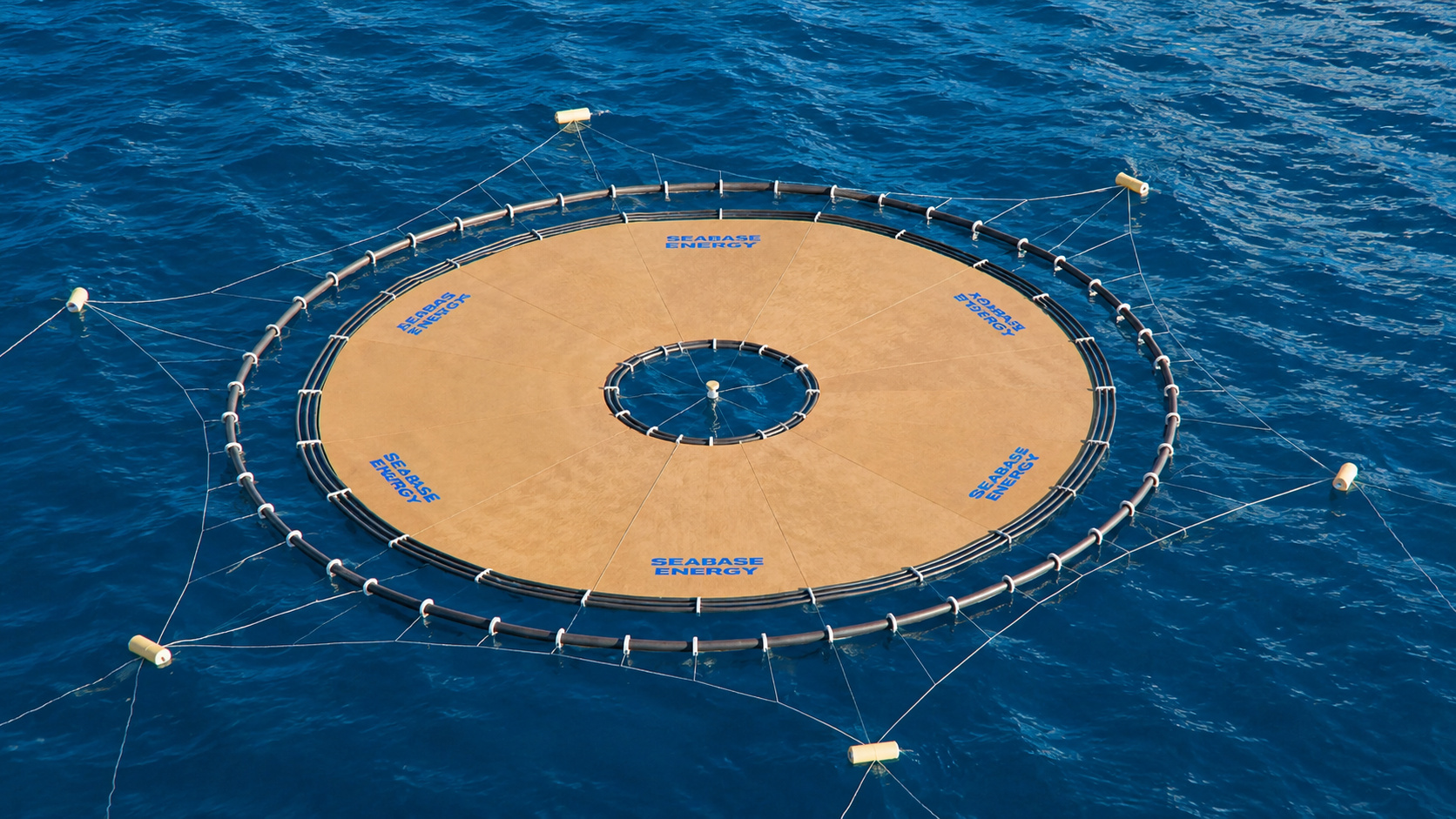
At the bottom of the Mediterranean, Italian engineers have sunk a “plant” in the shape of a giant donut that uses the ocean’s own weight to store energy, storing electricity generated by wind and sun at the sea floor and returning it to the grid without dams, mountains, or chemical batteries.

-
Scientists create robotic bird that uses articulated wings to maintain balance, mimicking hawks and flying with stability where common drones fail.



“Negotiations on the subject are underway, and there are many technical issues,” the diplomat told journalists in Brasília.
He also said that Rosatom “is active here and has good prospects,” commenting on the company’s presence in the Brazilian market.
The rapprochement comes at a time when Brazil is discussing the future of its nuclear program, with uncertainty about Angra 3, the evaluation of firm energy sources, and the debate on small modular reactors.
In the external scenario, Russia seeks to maintain contracts and open new fronts for Rosatom, even under sanctions imposed by Western countries since the invasion of Ukraine.
Nuclear cooperation between Brazil and Russia
Rosatom is the main Russian state arm in the nuclear sector.
The company operates in different stages of the chain, such as reactor projects, fuel supply, uranium enrichment, radioisotope production, plant operation, and waste management.
The Russian Minister of Economic Development, Maxim Reshetnikov, stated that the state company can meet the demands of Brazilian plants and supply radioisotopes used in scientific research and in the health sector.
According to him, Moscow sees the possibility of participating in energy units designed by Russia, both large and small capacity.
In Brazil, the nuclear sector involves electricity generation, medicine, industry, research, mining, technology, and stages of the fuel cycle.
For this reason, agreements in this area undergo technical, regulatory, economic, and diplomatic analysis, in addition to national rules and international commitments assumed by the country.
So far, there is no announcement of a contract for the construction of Russian plants in Brazil.
What is underway is the negotiation of a new cooperation agreement and the public expression of interest by Russia in participating in future projects in the Brazilian nuclear sector.
Agreements between Brazil and Russia in the nuclear sector
The topic was already part of the bilateral agenda before the most recent statements by the Russian ambassador.
On May 9, 2025, during a meeting with Vladimir Putin in Moscow, President Luiz Inácio Lula da Silva said that Brazil was interested in expanding relations with Russia in the energy area, especially in small nuclear plants.
On that occasion, Lula stated that the Brazilian government had “great interest” in the Russian experience with this type of technology.
The statement occurred during an official visit to Moscow and reinforced the willingness of both countries to address the topic within the energy, science, and technology agenda.
On February 5, 2026, Brazil and Russia signed, in Brasília, the Joint Declaration of the VIII Meeting of the Brazil-Russia High-Level Cooperation Commission.
The document cites the interest in intensifying joint projects in areas of science, technology, and innovation, including nuclear studies.
The declaration also mentions cooperation in the peaceful use of nuclear energy.
Among the recorded points are medicinal radioisotopes, nuclear power generation, fuel cycle, and updating the bilateral legal basis for partnership in the sector.
The text also reaffirms the commitment to the Treaty on the Non-Proliferation of Nuclear Weapons.
Angra 3 and small nuclear reactors
The Russian movement occurs while Brazil evaluates alternatives to expand or reorganize its nuclear structure.
The country operates Angra 1 and Angra 2, located in Angra dos Reis, on the coast of Rio de Janeiro.
The two plants form the Brazilian nuclear generation in commercial operation.
Angra 1 has 640 megawatts of power and began commercial operation in 1985.
Angra 2, with 1,350 megawatts, started commercial operation in 2001.
Combined, the two units have 1,990 megawatts of installed capacity.
The main pending issue in the sector is Angra 3.
The project, started decades ago and marked by interruptions, remains without a final decision on completion or abandonment.
The Federal Court of Accounts reported, in February 2026, that it was analyzing documents for the resumption of works and estimated R$ 20 billion as the cost to complete the plant.
Other estimates cited in recent studies and reports point to similar values between completing and abandoning the project.
In February 2026, Reuters reported that the Brazilian government expected to decide by mid-year whether to resume the construction of Angra 3 or abandon the project, based on calculations indicating R$ 24 billion for completion and between R$ 22 billion and R$ 26 billion for withdrawal.
In addition to Angra 3, small modular reactors have entered the debate about the future of nuclear generation in the country.
This technology has been discussed for applications in isolated areas, industrial projects with high energy demand, and systems that require a continuous electricity supply.
Rosatom and Nuclear Energy in Brazil
The possible participation of Rosatom in new projects in Brazil also has a diplomatic dimension.
The Russian state company is involved in nuclear projects in countries such as China, India, Egypt, and Turkey, according to published information about the company’s international portfolio and its presence in the global market.
At the same time, Russia faces economic sanctions from Western countries since the beginning of the war in Ukraine.
In the nuclear sector, however, Moscow continues with international contracts and maintains a presence in projects and agreements outside Western Europe and North America.
For Brazil, the discussion involves technical, financial, and regulatory aspects.
The potential hiring of foreign technology for new plants would require feasibility studies, environmental and nuclear licensing, financing definition, tariff analysis, and alignment with national energy planning.
The Brazilian Constitution establishes that all nuclear activity in the country must have peaceful purposes and be under state control.
Therefore, any international cooperation must observe national security, oversight, and safeguard rules, in addition to Brazil’s commitments in international agreements.
Negotiation Still Depends on Technical Definition
Russian statements indicate political and business interest, but do not represent a Brazilian decision on new reactors.
Any progress would depend on formal steps between governments and evaluations by the bodies responsible for the nuclear sector and energy planning.
Another point to be defined is the scope of cooperation.
An agreement may address the supply of radioisotopes, fuel, research, training, and technical exchange, or advance to electricity generation projects.
Each of these fronts requires different procedures and different levels of investment.
The construction of nuclear plants, in particular, demands long-term contracts, specific safety rules, high financing, and continuous regulatory oversight.
It also involves decisions about ownership, operation, fuel supply, maintenance, and waste management.
For now, the concrete fact is that Brazil and Russia are maintaining negotiations to update nuclear cooperation and that Rosatom was presented by Russian authorities as a potential provider of technology and services.
The decision on new projects, however, still depends on decisions from the Brazilian side.