






 Portuguese
  Spanish


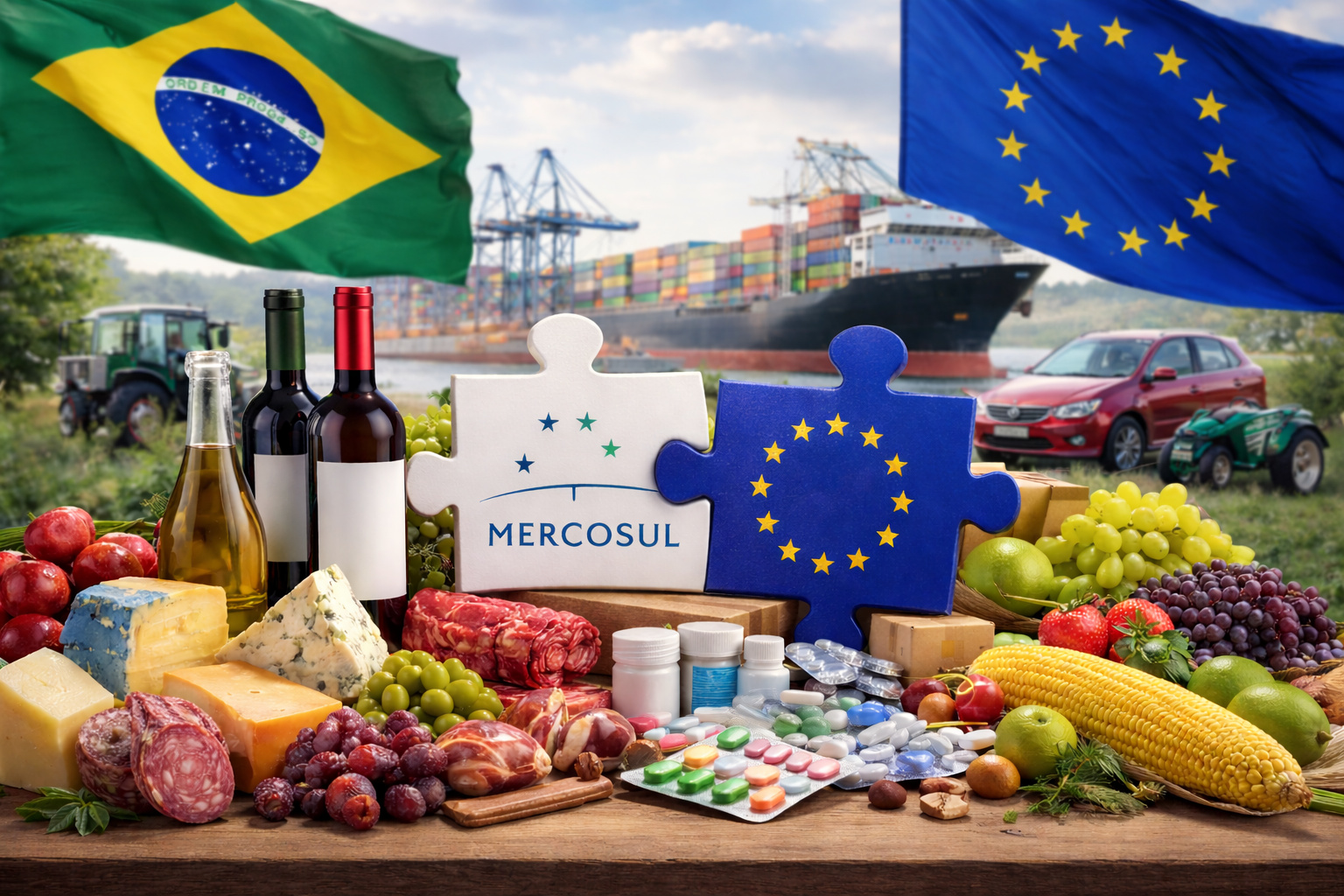


Treaty Between Mercosur and European Union Enters the Final Stretch After More Than 25 Years, Expands Trade, Gradually Reduces Tariffs and Generates Direct Impacts on the Pocket, Industry and Agriculture Until 2040
After more than 25 years of negotiations, the trade agreement between Mercosur and the European Union entered, in 2026, the decisive phase. Since then, analysts have begun to anticipate significant changes in the flow of goods between the blocs. In Brazil, the effects are likely to reach daily consumption. At the same time, they impact strategic sectors such as industry and agriculture.
According to Professor Regiane Bressan from the Federal University of São Paulo, one of the most noticeable transformations should directly affect the consumer. According to her, commercial integration broadens the presence of traditional European products in the Brazilian market. Thus, it is likely to stimulate competition and reduce prices over time.
The treaty’s central goal is to facilitate trade exchanges between the 27 countries of the European Union and the members of Mercosur. This group includes Brazil, Argentina, Paraguay, and Uruguay. To achieve this, the agreement provides for the gradual reduction of customs tariffs. The measure applies to both European products sold in Brazil and South American goods exported to Europe.
-
At 14 years old, she worked in a factory in Hong Kong, studied economics abroad, and then entered the Chinese real estate market, which helped change the landscape of Beijing.

-
While NATO secured more than $10 billion in missiles and space surveillance at a single forum, Brazil still spends 1.1% of its GDP on defense and is stalling its own anti-aircraft system.

-
Corn ethanol attracts R$ 23 billion in 21 new plants and prepares for a nearly 50% jump in Brazilian production by 2027, even with high interest rates.
-
A newly opened terminal in the middle of the Amazon has begun transporting soy and corn through Amapá, eyeing the queue of ships that is congesting the ports in the South.


The agreement encompasses a market estimated at around 720 million consumers. Of this total, approximately 450 million are in Europe. Another 270 million live in South America. According to projections from the Institute of Applied Economic Research, Brazil is likely to be the main beneficiary. By 2040, Brazil’s GDP may record a 0.46% increase. This growth surpasses projections for other countries in the Mercosur and for the European Union itself.
Imported Products Are Expected to Gain Ground in the Brazilian Market
Among the items that are expected to gain more presence in Brazil are wines, cheeses and dairy products. These products will have differentiated access. Thus, there will be room for a gradual reduction in prices. Additionally, items such as olive oil, chocolates, and distilled beverages may also become cheaper. This trend is expected to occur in the medium and long term, according to consultant Rodrigo Provazzi.
The reduction in prices occurs primarily due to the progressive elimination of tariffs. One example is European automobiles, which are currently taxed at 35%. This rate is set to be eliminated within 15 years. Still, experts emphasize that the decline will be gradual. This is due to the complexity of global production chains. These chains involve inputs from various countries, including China.
While food and vehicles gain prominence, medicines and pharmaceutical products remain the main items imported from the European Union. This group includes veterinary products. Data from the Ministry of Development, Industry, Commerce and Services indicate that these items account for more than 8% of Brazilian imports from the European bloc.
Production Costs and Investments Are Also Expected to Be Affected
The impacts of the agreement are not limited to final goods. Access to cheaper European machinery, equipment and technologies tends to reduce production costs. Additionally, it may stimulate new investments. According to Leonardo Munhoz, a researcher at the Getulio Vargas Foundation, items such as tractors, fertilizers, drones, and precision agriculture systems are expected to become more accessible to rural producers.
In the industry, the effect is similar. The increase in the importation of manufactured goods and technologies can enable productive modernization. For Regiane Bressan, exporting products with higher added value to the European Union can generate more jobs. This impact is expected to be greater than that of simply selling commodities.
Exports Grow, But Inflationary Impact Is Expected to Be Limited
The agreement also paves the way to expand Brazilian exports of footwear, fruits and agricultural products. In 2025, Brazil’s sales to the European Union reached US$ 49.8 billion. In the same period, European exports to Brazil totaled US$ 50.3 billion.
According to the Brazilian Agency for Export Promotion and Investment, the treaty creates a commercial network valued at US$ 22 trillion. This scenario has the potential to add R$ 7 billion to Brazilian exports. Despite this, experts assess that the risk of significant increases in domestic prices is low. The inflationary effects are expected to be limited in the short term. Furthermore, they vary by sector.
For agriculture, the gains can spread throughout the production chain. This movement benefits large exporters. It also reaches small and medium producers who operate through trading companies.
Given this scenario, the question that remains is: Is Brazil prepared to turn the EU-Mercosur agreement into lasting gains for consumers and producers at the same time?








