Portuguese
  Spanish


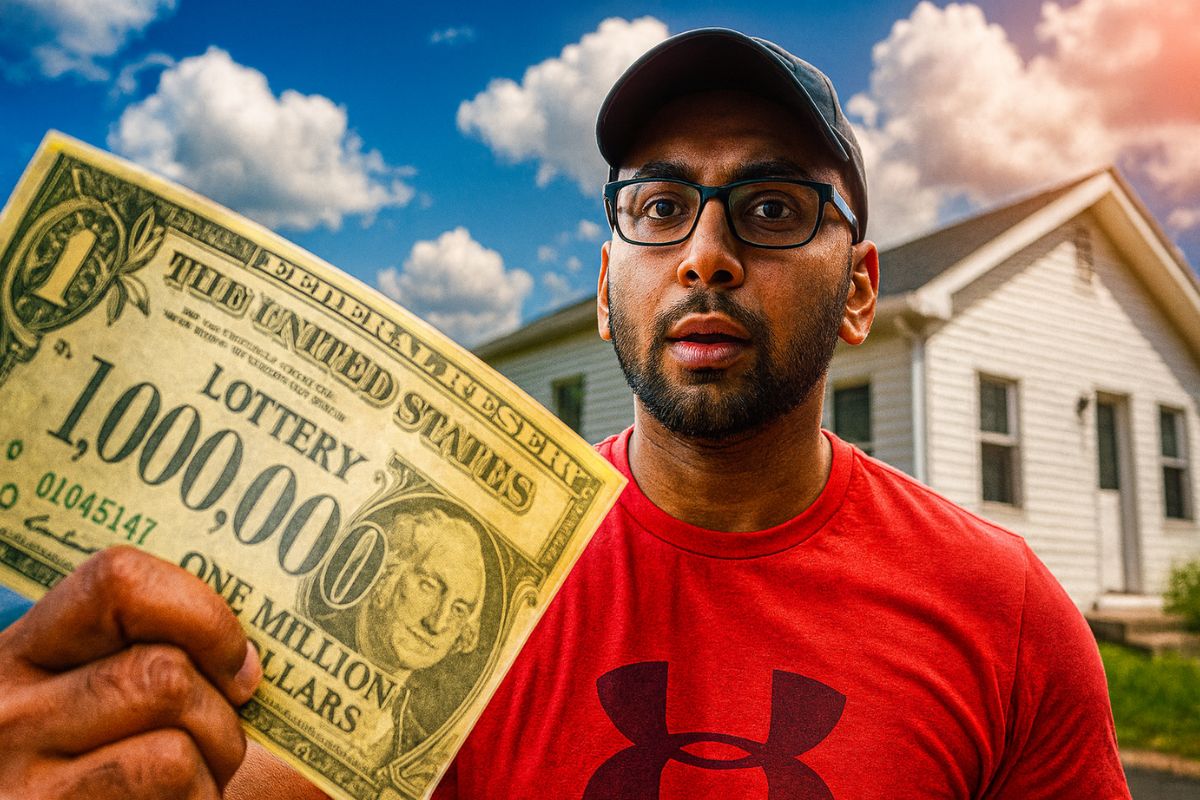


The Merchant Kal Patel Found a Winning Lottery Ticket Thrown in the Trash by Mistake and Decided to Return It to the Real Owner, in a Gesture of Honesty That Moved the United States and Went Viral on Social Media.
In a story that seems like a movie script, a convenience store owner in Kansas found a winning lottery ticket worth US$ 1 million forgotten by a customer and, instead of keeping the money, drove to his house to return the prize. Kal Patel’s act, which could have changed his own life, ended up changing the lives of everyone around him through the power of honesty amidst temptation.
The incident happened in 2018, but it continues to be remembered as one of the most emblematic cases of integrity and empathy in the United States. The story gained worldwide attention and inspired other merchants and citizens to act with the same sense of justice and humanity.
The Ticket Forgotten in the Trash
Kal Patel, of Indian origin, worked with his family at a store called Pit Stop, in the city of Salina, Kansas.
-
Over 500,000 Wild Boars Culled in Eight Months, but Industry Estimates 1.25 Million, Raising Concerns About Crop Damage, Threatened Livestock, and Health Risks in Rural Brazil

-
Chinese Spacecraft Releases Mysterious Object in Orbit, Sparking Global Debate on Space Technology and Earth Monitoring

-
Retired Builder Constructs House Using Over 4,000 Milk Cartons in Brazil, Engineer Estimates Structure Could Last 100 Years

-
Brazilian Well Taps Guarani Aquifer, Sparking Debate on Water Supply and Security




A regular customer came by to check several scratch-off tickets but, without realizing it, <strong threw the winning ticket worth US$ 1 million in the trash believing he had not won anything.
Later, while cleaning the place, Kal noticed the discarded ticket and decided to scan the barcode out of curiosity.
To his surprise, the system confirmed the million-dollar prize. Even faced with the possibility of keeping the money, he chose to act ethically: he searched for the customer and went to his house personally to deliver the winning ticket.
A Gesture That Inspired the Country

The customer’s reaction was one of total disbelief. He had completely lost hope of seeing the ticket again and, upon receiving it back, was in shock and deeply grateful.
The story quickly spread across social media, generating a wave of admiration and respect for the merchant’s attitude.
In later interviews, Kal Patel stated that he never considered keeping the money.
“Honesty is worth more than any prize,” he declared.
His decision was widely praised by the local community and the American press, becoming an example of character and trust in times of widespread distrust.
Similar Cases and the Same Value
Patel’s story was repeated years later in Massachusetts, in 2021, when the couple of merchants Abhi and Smitaben Shah found a lottery ticket worth the same US$ 1 million thrown away by a customer named Lea Rose Fiega.
Like Patel, they located the owner and returned the prize, reinforcing that ethics does not depend on coincidences, but on principles.
In both cases, the common factor was the trust relationship between merchants and customers. By knowing the people who frequented their stores, the owners were able to confirm who had actually purchased the tickets.
Additionally, they demonstrated a sense of responsibility that goes beyond moral obligation a commitment to their own conscience.
The Difference Between Scam and Honesty
These stories gain even more strength when contrasted with a common practice in several countries: the “winning ticket scam.”
In this type of crime, people pretend to have a winning ticket to deceive others, trying to sell it or commit fraud.
Kal Patel’s cases and the Shah family show just the opposite genuine honesty, without expectation of reward.
Patel’s gesture also serves as a reminder that personal integrity can generate collective impact.
His attitude inspired solidarity actions and local donations, as well as revitalizing trust between merchants and consumers.
Honesty That Became Legacy
Years after the incident, Kal Patel continues to be remembered for his choice. His story is frequently cited in reports, lectures, and TV programs as an example of ethics and humanity.
In a world where cleverness is often confused with virtue, the decision to return the lottery ticket shows that true wealth lies in a clear conscience.
As Patel himself summarized in one of the interviews: “You can make money in many ways, but there’s only one way to earn respect being honest.”
And you, what would you do if you found a winning lottery ticket in the trash? Would you keep the prize or return it to the owner? Is honesty still a non-negotiable value today? Leave your opinion in the comments we want to know how you would react in such a situation.