Portuguese
  Spanish


Artemis III mission will have an official NASA presentation on June 9, with live broadcast, crew announcement, and update on a program stage that prepares new human operations related to the Moon and space exploration technologies.
NASA has scheduled an official presentation for Tuesday, June 9, 2026, at the Johnson Space Center in Houston, to announce the crew designated for the Artemis III mission and present new information about the flight planning.
Scheduled to begin at 11 a.m. Eastern Time, the event will be broadcast on NASA+ and the agency’s official YouTube channel, with public access through the space agency’s digital platforms.
The announcement is not a global alert nor a phenomenon requiring public preparation, but an institutional presentation about a stage of the Artemis program, an initiative aimed at returning human missions to the Moon.
-
Five-Year-Old Turns Crayon Drawings of Colorful Socks into a Brand, Raising $200,000 to Aid Vulnerable Children

-
California Teacher Converts Moving Truck into Spacious, Light-Filled Mobile Home to Overcome Zoning Restrictions and Cut Costs

-
Daughter of a Construction Worker and a Baker, Bruna Achieves Dream of Studying Medicine at Brazil’s Prestigious USP at 21

-
City Provides Disposable Cameras to Residents to Capture Downtown, Uncovering Hidden Value Beyond Appearances




Press availability is also planned after the presentation, with members of the Artemis III team available for in-person and virtual interviews, according to the accreditation procedures defined by the Johnson Space Center’s communications area.
According to NASA, participation requests should be sent in advance to the team responsible for the event, which was tasked with organizing media access and confirming the operational details of the agenda.
NASA to announce Artemis III crew
Artemis III will be launched with four astronauts aboard the Orion capsule, propelled by the Space Launch System rocket, the SLS, from the Kennedy Space Center in Florida, United States.
In the profile released by the agency, the mission was redesigned to function as a crewed test in low Earth orbit, with maneuvers for approach, rendezvous, and docking between Orion and commercial vehicles related to lunar landing.
The change altered the initial expectation that Artemis III would be the mission responsible for taking astronauts back to the Moon’s surface, a goal that has been integrated into later stages of the program, according to NASA’s updated planning.
In March 2026, the agency reported that it would add a demonstration mission in Earth orbit before the next landing attempts, with the purpose of testing systems and reducing technical risks before the subsequent phases.
Under the current design, Artemis III is expected to evaluate integrated operations between Orion and one or two commercial lunar landing systems, still within a campaign planned to occur around Earth.
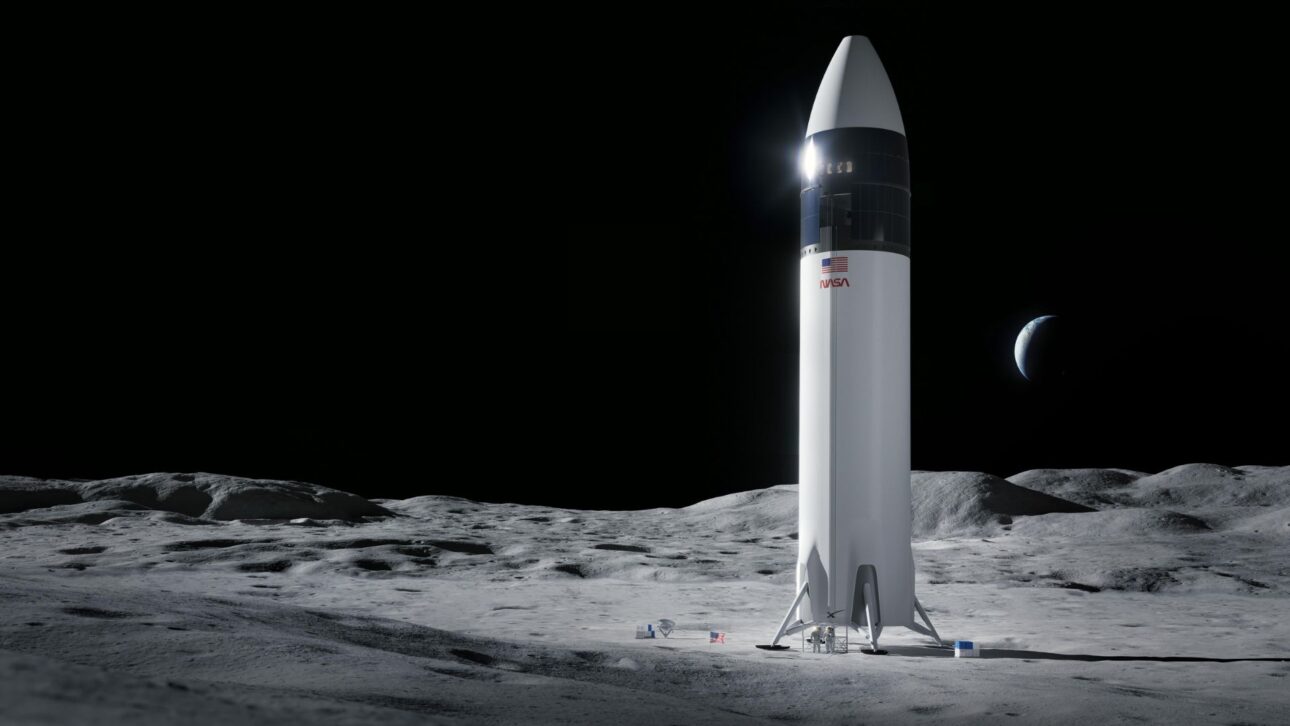
Among the vehicles mentioned by NASA are the Starship, by SpaceX, and the Blue Moon Mark 2, by Blue Origin, developed to support the transportation of astronauts in future missions on the lunar surface.
Artemis III gains new profile before lunar landing
The decision to transform Artemis III into an orbital test created an intermediate step before a new manned descent to the Moon, within the architecture adopted by NASA for the development of the Artemis program.
According to the agency, engineering teams began to evaluate different mission profiles and operational needs after the decision announced in February, when an orbital demonstration phase was included.
Jeremy Parsons, acting director linked to the Moon to Mars program in NASA’s Exploration Systems Development Directorate, classified Artemis III as one of the most complex missions ever conducted by the agency.
In a statement attributed by NASA, Parsons stated that the mission will be the first campaign in which the agency will coordinate multiple spacecraft and new capabilities incorporated into the operations of the Artemis program.
The integration between capsule, crew, ground teams, and vehicles from partner companies appears in the planning as a necessary step for future landing missions, especially due to communication, docking, and safety requirements.
Before sending astronauts back to the lunar surface, NASA intends to observe how these systems work together, including orbit permanence, transfer procedures, and coordination between the teams responsible for the operation.
Earth orbit test will have maneuvers with Orion
In the planned mission, the SLS will place Orion in orbit with four crew members, in a configuration aimed at technical demonstrations related to the capsule’s systems and commercial lunar landing vehicles.
Unlike flights destined for the Moon, the preliminary configuration foresees the use of a non-propulsive spacer instead of the intermediate cryogenic upper stage, maintaining the necessary dimensions and connection points for the rocket.
With this structure, the rocket will not perform the function of sending to a lunar trajectory, as the campaign was planned to occur in low Earth orbit, according to the profile presented by NASA.
After orbital insertion, Orion’s European service module should make adjustments to circularize the capsule’s trajectory around the Earth and position the spacecraft for the operations planned in the mission.
This design expands the possibilities of coordination between the different launches involved, as it allows more opportunities for Orion, the Starship HLS, and the Blue Moon Mark 2 within the planned campaign.
NASA also foresees that astronauts will remain inside Orion longer than the crew of Artemis II, completed in April 2026, although the final duration depends on the defined operational profile.
The extended stay will serve to continue the evaluation of life support systems, as well as allow a demonstration of the docking system in a crewed mission linked to the Artemis program.
Another point planned is the return of the capsule to Earth, a stage in which the agency intends to evaluate an updated version of the Orion’s heat shield during atmospheric reentry.
According to NASA, this version of the shield was designed to allow more flexible and robust reentry profiles in future missions, especially in operations associated with longer-duration lunar campaigns.
Artemis II served as a basis for the new mission
Artemis III advances after the crewed flight of Artemis II, cited by NASA as a test completed in April 2026 to evaluate systems of Orion, the SLS, and ground operations.
During the previous mission, astronauts traveled around the Moon in a campaign used by the agency to gather data on the performance of the capsule, the rocket, and the procedures adopted by the teams on Earth.
In the updated planning, Artemis III functions as a demonstration stage before surface missions, while the agency adjusts the flight sequence planned for the human return to the Moon.
NASA maintains Artemis IV as the mission aimed at the next crewed landing on the Moon, with a forecast indicated for early 2028 and conditioned on the readiness of commercial landing systems.
Besides the availability of vehicles, the schedule depends on the evolution of the program’s technical architecture, which includes launch systems, capsule, landing modules, orbital operations, and exploration support structures.
The Artemis program is presented by NASA as the basis for a continuous human presence on the Moon and for future crewed missions to Mars, within the exploration strategy known as Moon to Mars.
Before these stages, the agency intends to advance in phases, testing in Earth’s orbit the systems that will be necessary for transfer, landing, stay, and return operations in lunar missions.
The presentation on June 9 is expected to gather information about the crew and the operational design of Artemis III, as well as update the schedule planned for the mission set for 2027.
So far, NASA has confirmed the location, time, broadcast channels, the general objective of the mission, and the intention to disclose new details as the project advances to the next phase of the Artemis program.