Portuguese
  Spanish


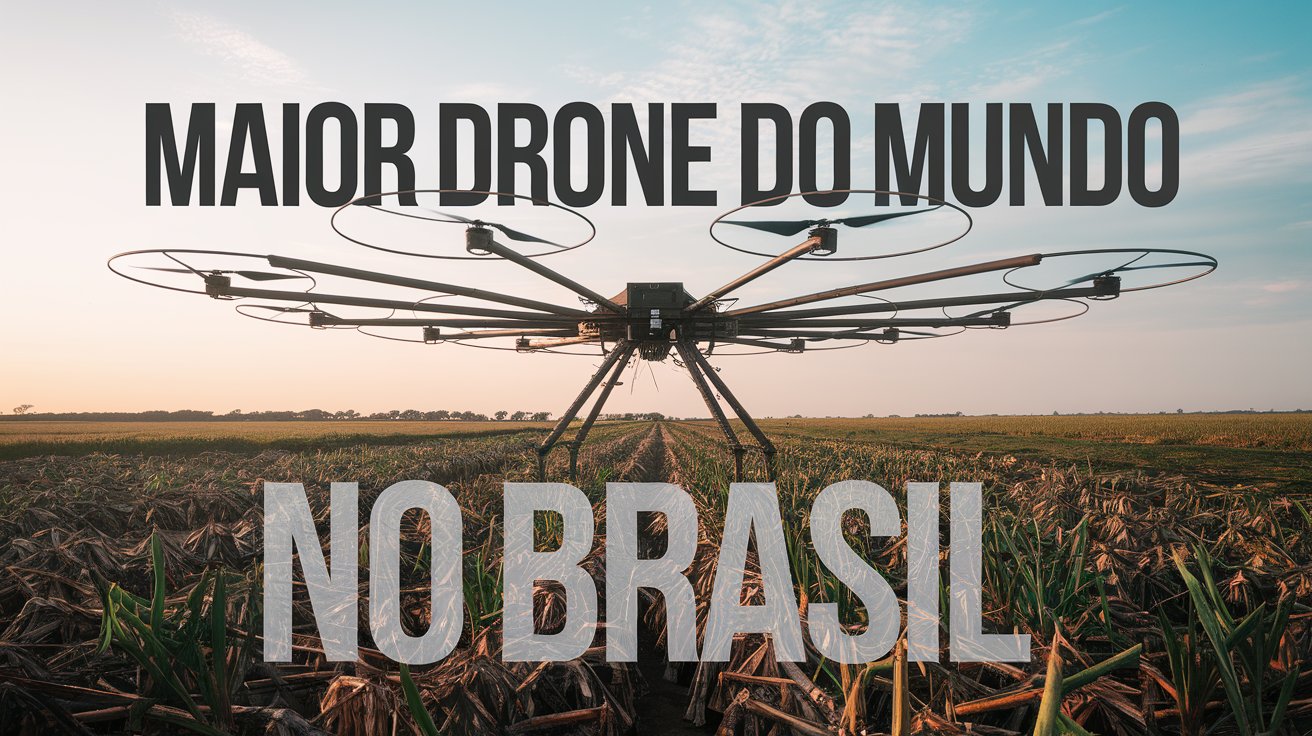

Brazil Authorizes The Largest Spraying Drone In The World: The Rotor R550 Sprayhawk. Capable Of Spraying 240 Acres Per Hour, It Promises To Replace Agricultural Planes With Greater Efficiency, Lower Costs And Advanced Technology.
Mechanization and technology are advancing more and more in the agribusiness, bringing innovative solutions to increase productivity and reduce costs.
Now, a new revolution is coming to Brazilian fields: a giant spraying drone, capable of covering a record area in reduced time.
With superior performance and remote operation, it promises to transform the sector and boost agricultural efficiency.
-
14-Year-Old Girl Develops Solar-Powered Water Purification System for India, Eliminating Need for Electricity or Chemicals

-
Forgotten Canadian Machine Harnessed Waterfall Power to Supply Mines with Compressed Air for 70 Years Without Motors or Electricity
-
Berries, Strawberries, and Blueberries Could Transform Agriculture in Northeastern Brazil, New Tests Reveal

-
Artesian Well Becomes Lifeline for Small Brazilian Farm: Drilling Reaches 60 Meters, Finds Marble, Navigates Rock Fissures, and Strikes Fresh Water



Brazil Takes The Lead With Approval Of The Sprayhawk
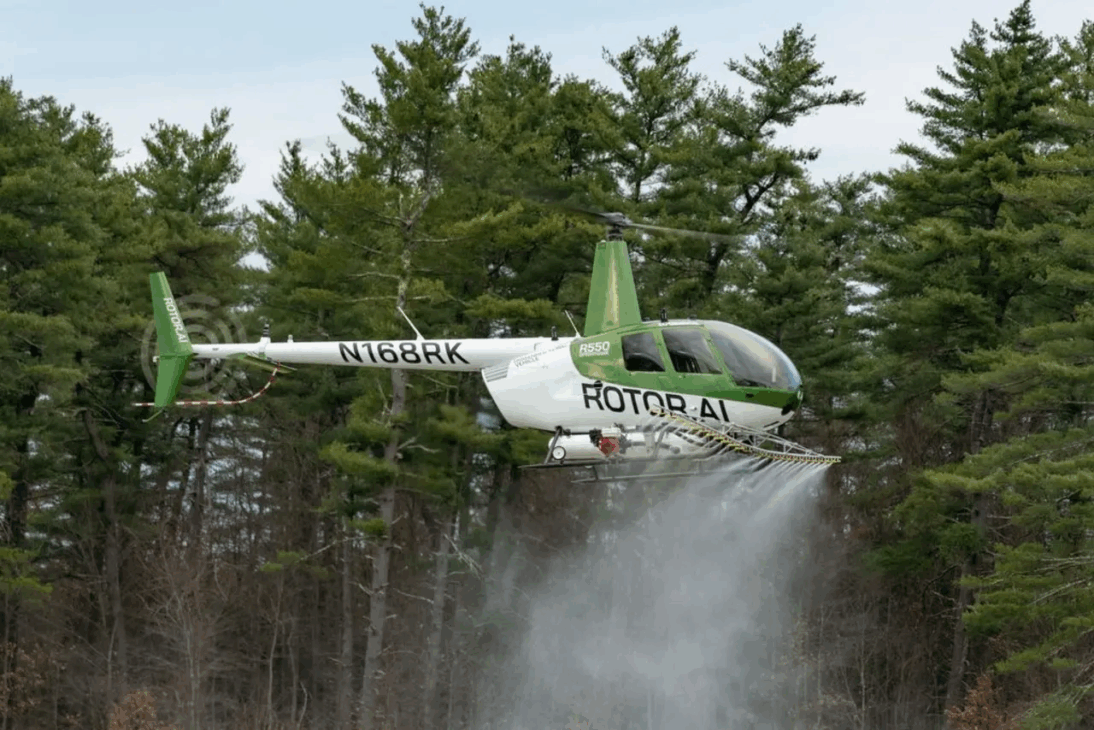
Brazil has become the first country to authorize the commercial use of the Rotor R550 Sprayhawk, a large spray drone developed by the American company Rotor Technologies.
This innovative equipment has the capacity to spray up to 240 acres per hour, surpassing the efficiency of conventional manned aircraft and small agricultural drones.
The authorization was granted by the National Civil Aviation Agency (ANAC), which confirmed the Sprayhawk’s compliance with regulations for unmanned civil aircraft.
As a result, Brazil becomes a pioneer in adopting this revolutionary technology for agricultural spraying.
Sprayhawk: A Helicopter Converted Into A Drone
The Sprayhawk is an unmanned version of the Robinson R44 helicopter, which is widely used in agricultural aviation.
With a maximum takeoff weight of 1,134 kg and a spraying tank of 415 liters, it stands out for its coverage capability and speed.
Its productivity exceeds 80 hectares per hour, making it a highly viable option for large rural properties.
The equipment can operate under visual line-of-sight (VLOS) and extended visual line-of-sight (EVLOS) conditions, reaching heights of up to 120 meters.
To ensure operational safety, initially, the drone will have a remote support pilot, who must have a Commercial Helicopter Pilot License and specific training provided by Rotor Technologies.
Advantages Of The Sprayhawk In Agribusiness
The adoption of drones in agriculture has been a growing trend, but the Sprayhawk stands out for its superior performance.
Among the main advantages are:
- Operational Efficiency: With a capacity to spray up to 240 acres per hour, it operates at a speed of 80 miles per hour.
- Safety And Autonomy: Equipped with camera sensors and LIDAR technology, it detects wires, avoids obstacles, and improves spraying accuracy.
- Cost Reduction: The operational cost is approximately US$ 2.00 per acre, while conventional aircraft can be 63% to 143% more expensive.
- Ease Of Conversion: Manned Robinson R44 helicopters can be adapted to the unmanned version, leveraging the existing fleet of over 400 units in Brazil.
According to Hector Xu, CEO of Rotor Technologies, the Sprayhawk’s approval in Brazil represents an important step towards the modernization of the agricultural sector.
“Unmanned technologies keep pilots safe, promote innovation, and make agribusiness more competitive”, Xu highlighted.
When Will The Sprayhawk Arrive In Brazil?
The Sprayhawk will be initially sold for US$ 990 thousand, a price that may vary depending on market conditions and additional import costs.
Rotor Technologies will also offer specialized training, regulatory support, and maintenance plans to facilitate the integration of the equipment into the Brazilian agricultural sector.
The first production units will be delivered in the United States in 2025, with an expected arrival in Brazil by the end of the same year or early 2026.
Since this is a novelty in the market, initial production will be limited to 15 units, which may generate high demand among farmers interested in the technology.
The Future Of Agricultural Spraying
With the advancement of digitalization and mechanization in agribusiness, the Sprayhawk emerges as a highly efficient solution for crop spraying.
The combination of high operational capacity, automation, and safety promises to replace part of the fleet of traditional spraying aircraft and small drones, optimizing agricultural processes.
If the use of this type of technology expands, the impact will be significant:
- Greater Safety In Rural Work, eliminating risks for pilots of manned aircraft.
- Reduction Of Pesticide Waste, with more precise and targeted application.
- Decrease In Carbon Emissions, as it operates with lower fuel consumption compared to conventional planes.
With Brazil’s pioneering approval of this drone, the country establishes itself as one of the main drivers of agricultural modernization.
Now it remains to be seen how the adoption of this technology will unfold and the impacts it will have on the sector in the coming years.
How To Acquire The Sprayhawk?
For rural producers interested in the innovation, the Sprayhawk will be available for order directly from Rotor Technologies.
The company provides comprehensive training, regulatory support, and maintenance, ensuring that farmers can implement the technology efficiently.
More information can be obtained directly from the manufacturer or authorized distributors.