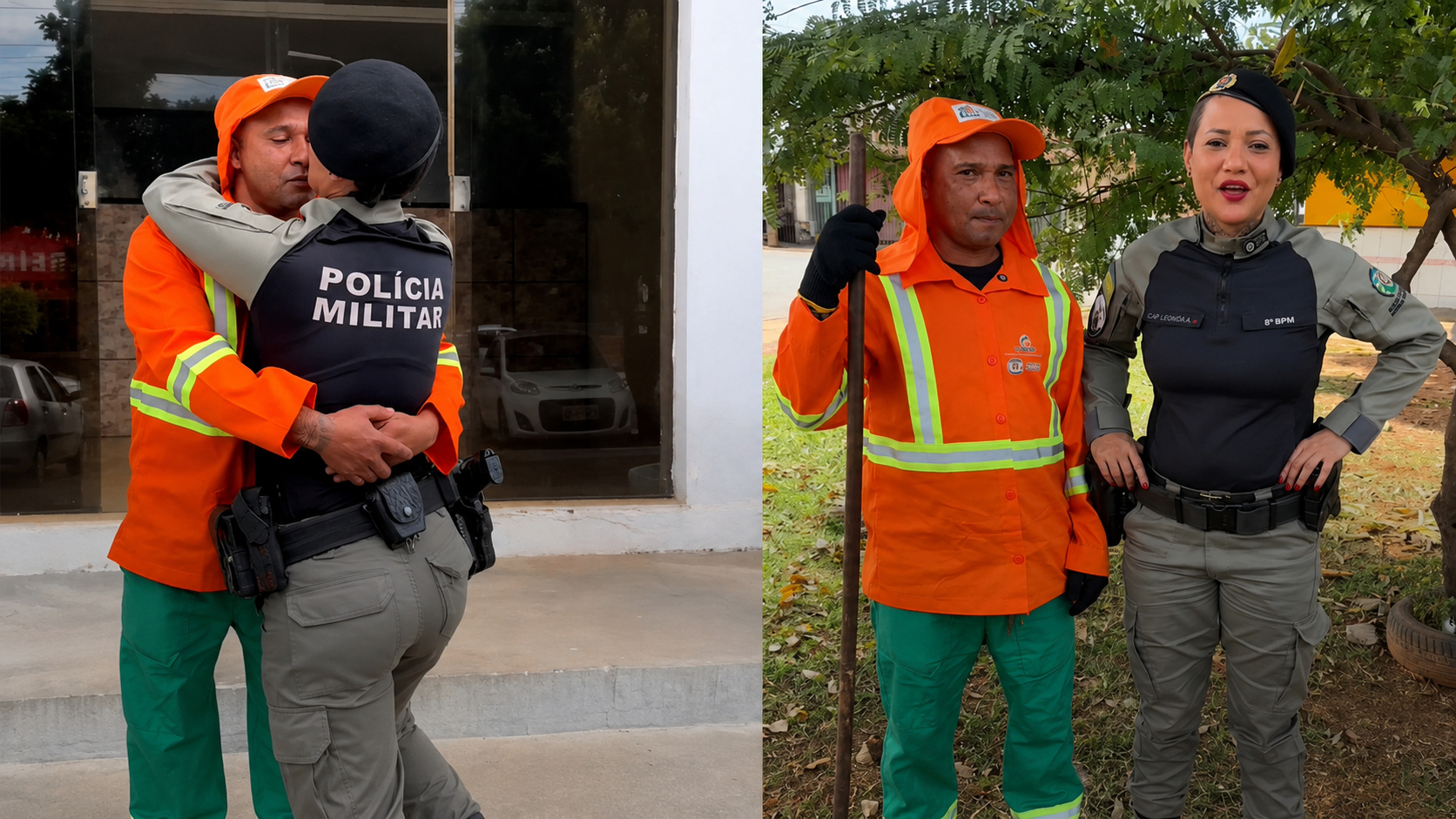

Books found by a street sweeper during cleaning in Goiânia helped his wife study, earn a scholarship, and join the PMGO.
While sweeping streets and collecting waste in Goiânia, José Francisco Barros also set aside discarded books that could still be used. This gesture, repeated in his daily work at the Goiânia Urbanization Company, ended up changing the family’s destiny by supporting the studies of his wife, Andreia Guimarães Tavares, who dreamed of attending higher education and building a career in the public sector.
According to a report published by Comurg on June 23, 2026, many of these books found during the cleaning became part of Andreia’s preparation for the Enem, helped her earn a full scholarship in Law, and later served as a foundation for her passing the Goiás Military Police exam. Official PMGO documents confirm that Andreia Guimarães Tavares was among those classified in the 2017 competition.
Books found in the trash in Goiânia became study material and changed the couple’s trajectory
The story gained attention because it connects two realities that rarely appear together in the same headline: the invisible work of urban cleaning and the rise through education.
-
July’s Night Sky to Feature Planetary Alignments, New Moon, Venus at Sunset, Buck Moon, and Two Meteor Showers

-
Fisherman Catches 18kg Catfish Near Brazil’s Itaipu Lake, Among Largest Recorded in Recent Years
-
Wet phone: Apple and Samsung warn against using rice to dry it, as it may release particles and worsen USB port damage.

-
Despite Extreme Heat, Politicians Reject Air Conditioning to Protect the Environment


Comurg states that José Francisco found several books in good condition while working on the streets and decided to take them home instead of letting them go to waste.
These materials became part of Andreia’s routine during a decisive phase. At that time, she worked as a domestic worker and was looking for a way to resume her studies, transform her own life condition, and pave the way for a university education.
It was in this context that the books collected by José Francisco ceased to be discarded objects and became concrete tools for preparation. The narrative from Comurg shows that the support at home was not symbolic: it turned into study material, discipline, and a real opportunity.
Comurg Street Sweeper and Wife Left Tocantins to Restart Life in Goiânia
The origin of the journey helps to measure the weight of this achievement. Comurg reports that the couple’s story began in their adolescence, in the interior of Tocantins, and that they moved to Goiânia in search of better opportunities, facing financial difficulties and a tough restart in the capital.


In the city, José Francisco secured a position at Comurg and began working in urban cleaning services. The company states that he has been with the company since 2009 and that the habit of collecting books found during sweeping became particularly established in the Criméia Oeste region.
Scholarship in Law and PMGO Exam Came After Study Routine with Discarded Books
Comurg states that Andreia used part of this material in preparation for the National High School Exam.
The effort, according to the company, resulted in the achievement of a full scholarship for the Law course, a step that expanded her professional horizon and consolidated education as the axis of the couple’s life change.
After this phase, came the approval in the Goiás Military Police exam. An official document from the government of Goiás with the final results of the objective and discursive tests of the 2017 exam lists Andréia Guimarães Tavares in the category 3rd Class Soldier Woman, Goiânia, with 87 points and 3rd place among those classified in that group.
What began as the reuse of discarded material ended up having a direct effect on her educational and professional path.
Comurg published that, after passing the exam and the journey within the corporation, she “now serves as a captain”.
Story of Street Sweeper Who Collected Books Shows How Small Gestures Change Destinies
The strength of this topic lies precisely in the contrast between the harsh daily routine of sweeping and the silent impact of a gesture repeated for years.
José Francisco did not find a miraculous solution nor did he rely on great resources. What he did was identify value where many people saw only waste.

This detail transforms the story into something greater than a narrative of personal triumph. It speaks about education, social mobility, invisible urban work, and how access to education, even when it arises from precarious conditions, can reorder the future of an entire family.
In the end, the journey of the couple from Goiânia sums up a powerful truth: discarded books turned into study, study turned into education, and education paved the way for entry into public security. It is a story where what seemed like waste gained new value and helped rewrite a destiny.