Portuguese
  Spanish


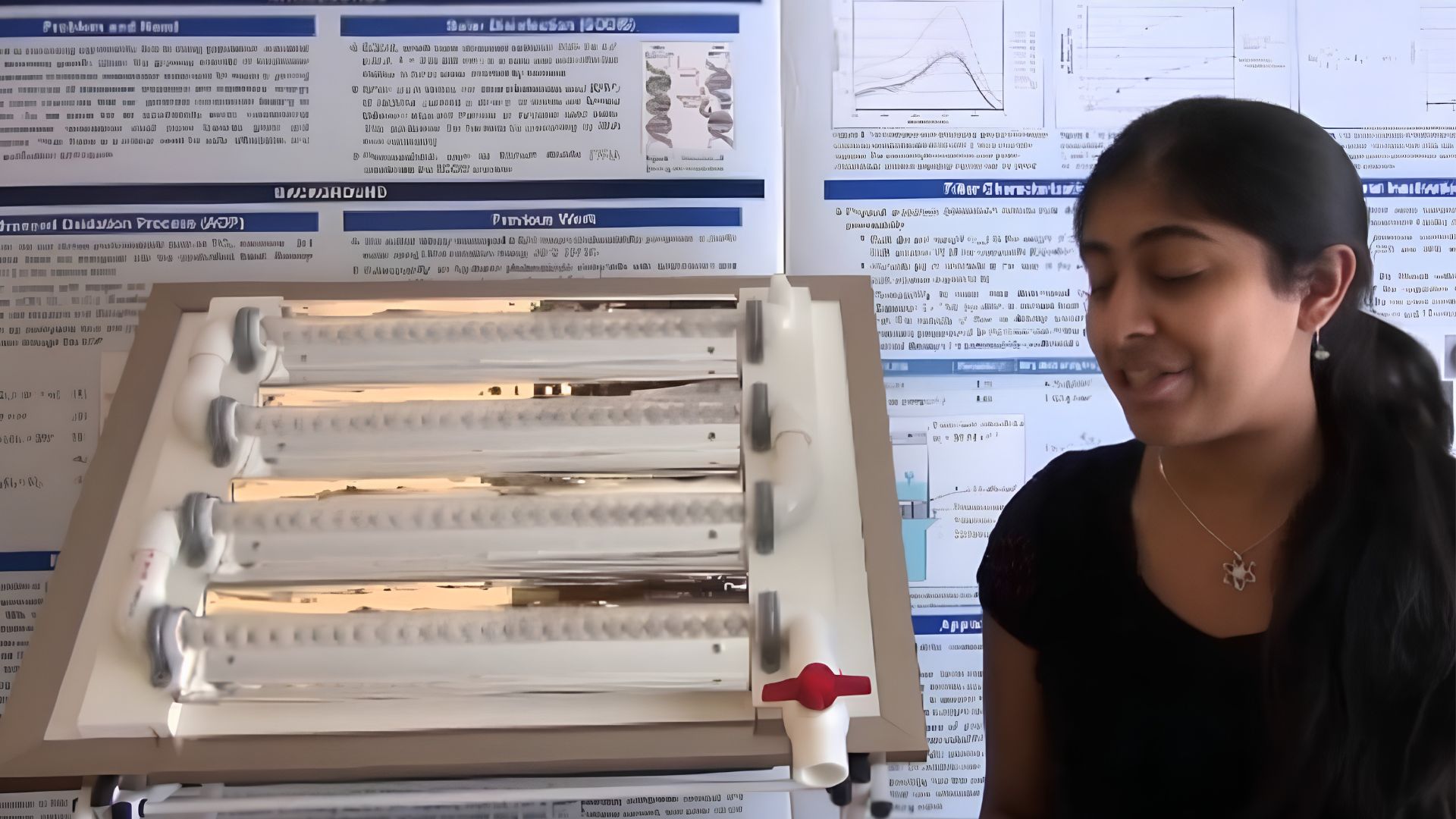

Deepika Kurup created a solar water purification system at 14 years old and gained worldwide recognition with a low-cost solution.
The potable water crisis continues to pressure communities living without adequate treatment infrastructure. It was in the face of this problem that a teenager turned indignation into applied research and caught the attention of the scientific world. In 2012, at 14 years old, Deepika Kurup, from Nashua, New Hampshire, won the Discovery Education 3M Young Scientist Challenge with a water purification system that uses solar energy to disinfect contaminated water. The solution earned her the title of America’s Top Young Scientist and a prize of $25,000.
Girl saw children drinking contaminated water in India and decided to create a solution
The origin of the invention lies in an experience Deepika had at a very young age. According to the official profile of the researcher on TED, she decided to tackle the problem after seeing children in India drinking dirty water during visits to her grandparents’ house.
The scene changed the way she viewed access to water. Instead of treating the problem as something distant, Deepika began to look for a technology that could work in regions lacking energy, infrastructure, and conventional treatment systems.
-
Forgotten Canadian Machine Harnessed Waterfall Power to Supply Mines with Compressed Air for 70 Years Without Motors or Electricity

-
Berries, Strawberries, and Blueberries Could Transform Agriculture in Northeastern Brazil, New Tests Reveal

-
Danish Resident Discovers Six Viking Gold Bracelets Weighing 762.5 Grams, Third Largest Gold Treasure in Denmark
-
Over 200 Cities in Southern Brazil on Storm Alert as Cyclone Near Uruguay Brings Heavy Rain, Hail, and Winds Up to 100 km/h




This initial motivation helps explain why the project gained so much attention. It was not just a school idea, but a practical response to a real problem, closely observed by someone who decided to tackle it with science.
Solar water purification system uses sunlight to combat contaminants
The project awarded in 2012 was described by Discovery Education and 3M as an innovative, sustainable, and low-cost system to purify contaminated water. The central point of the proposal was to use solar light to disinfect the water, reducing the dependence on electricity in the treatment stage.
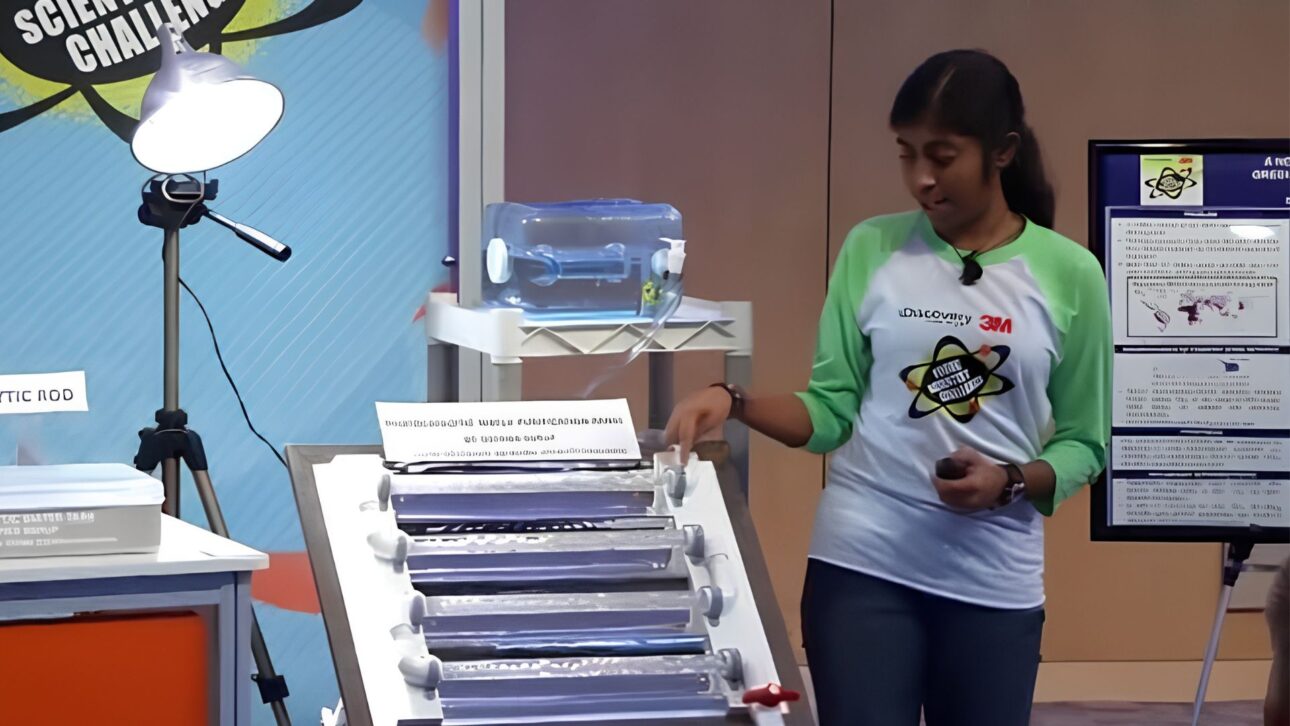
In the official profile on TED, Deepika is presented as the young woman who developed a water purification system capable of harnessing solar energy to remove contaminants.
Deepika Kurup’s research advanced and showed high efficiency against bacteria
After the victory in 2012, Deepika continued to perfect the technology. In a technical paper published by the Water Environment Federation, she presented a porous photocatalytic compound with titanium dioxide, cement, sand, and silver, designed to degrade organic compounds and inactivate bacteria in water.
The study recorded a 98% reduction in total coliform bacteria immediately after filtration. Then, exposure of the filtered water to sunlight, in contact with the photocatalytic disc, led to 100% inactivation of bacteria in just 15 minutes.


The invention went beyond being just an award-winning idea in a student competition and started to demonstrate objective technical results in microbiological performance.
US$ 25,000 prize put young scientist on the international radar
The victory in the 2012 scientific challenge gave Deepika national recognition in the United States. The official prize announcement states that she was recognized for her innovative, cost-effective, and sustainable water purification system, aimed at improving the lives of people without adequate access to clean water.
The recognition did not stop there. The official TED profile reports that Deepika also received the United States President’s Environmental Youth Award, represented the United States at the Stockholm Junior Water Prize, and later entered the Forbes 30 Under 30: Energy list.
This journey shows that the invention had an impact beyond the school circuit. The young scientist became seen as one of the most recognized voices of the new generation in solutions aimed at access to drinking water.
Low-cost technology for water purification remains strategic in vulnerable regions
Deepika Kurup’s case draws attention because it combines three factors that rarely appear so strongly in the same project: low cost, practical application, and potential use in vulnerable areas.
It was precisely this combination that turned the invention into one of the most emblematic stories of young science in the last decade.

More than creating an award-winning prototype, Deepika showed that relevant solutions can be born outside billion-dollar laboratories. In some cases, they start with a direct observation of the problem, an uncomfortable question, and the decision to test a concrete answer.
The strength of this story lies precisely there. A teenager saw a scene that many people would ignore, turned the shock into research, and created a technology that helped bring solar-powered water purification back to the forefront of the debate on accessible innovation.