






 Portuguese
  Spanish


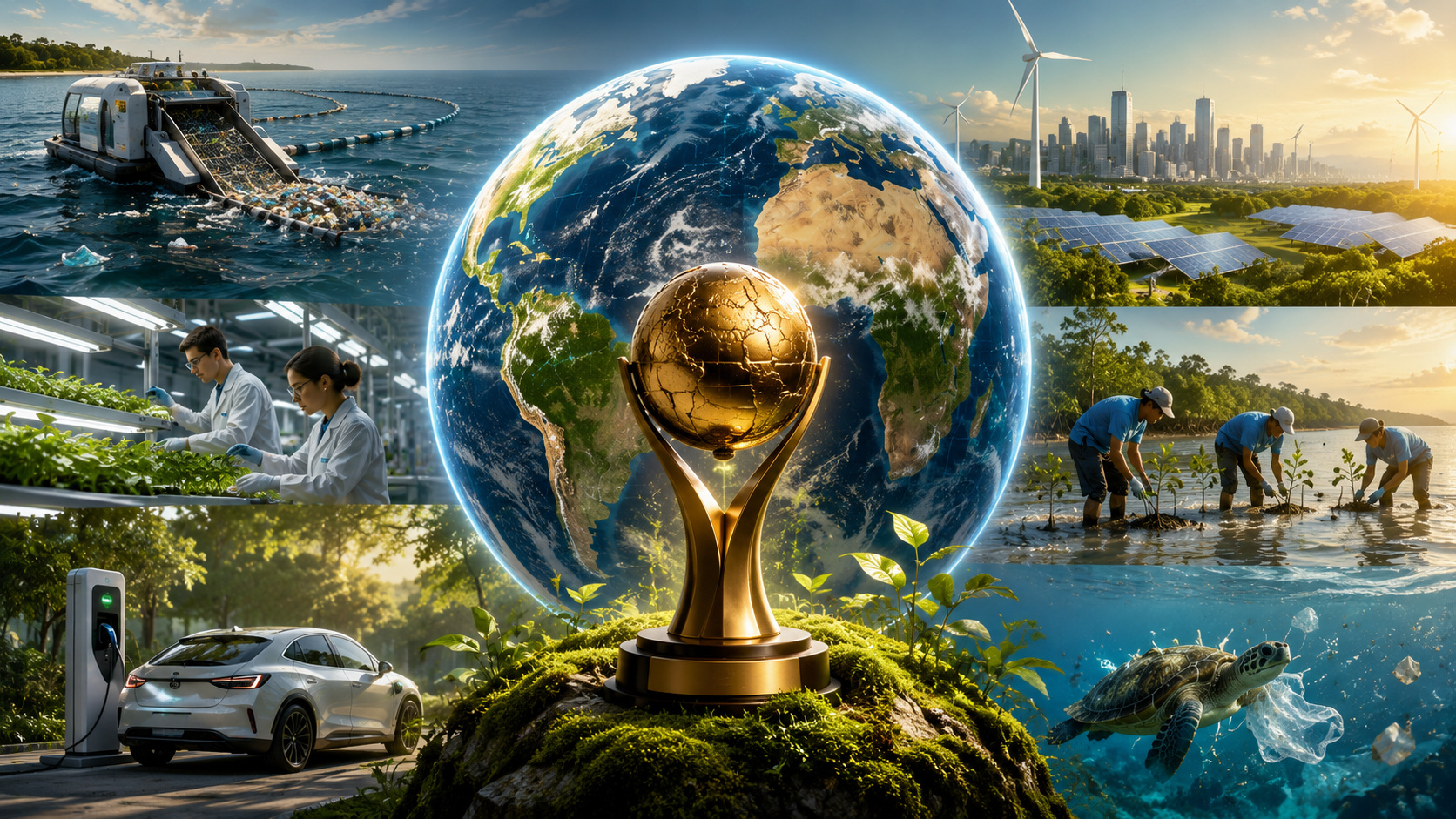

Earthshot Prize distributes £1 million for environmental solutions capable of combating pollution, climate crisis, waste, and ocean degradation before 2030.
Amidst the growing pressure of climate change, pollution, biodiversity loss, and ocean degradation, the Earthshot Prize has taken a strategic place in the global debate on environmental solutions with real impact. Launched in 2020 by Prince William, the award offers £1 million to each of the five annual winners to scale up projects capable of tackling major environmental problems this decade, according to Reuters, on April 3, 2025, and the official prize page.
The initiative is organized into five categories called Earthshots: protect and restore nature, clean our air, revive our oceans, build a waste-free world, and fix our climate. According to the Earthshot Prize itself, each year selects 15 finalists, places them in a global support program, and awards five solutions with £1 million each, one per category, with the goal of accelerating technologies, urban projects, scientific initiatives, and environmental models capable of scaling up by 2030.
Earthshot Prize aims to find environmental solutions capable of changing the planet before 2030
The Earthshot Prize was inspired by the “Moonshot” concept, used to describe the extremely ambitious space programs of the 20th century.
-
Real Estate Agent Buys Marvel Movie Subway Car for $5,000 and Converts It into Themed Airbnb
-
Real Estate Agent Buys Marvel Movie Subway Car for $5,000 and Converts It into Themed Airbnb
-
Former Roma and Fiorentina Player Filipe Gomes Returns to Brazil to Found Empório do Galeto, Aiming for $10 Million Revenue by 2026
-
Canada Builds 6.2-Hectare Containment Box to Trap 615,000 Cubic Meters of Toxic Sediment in Lake Ontario


The prize’s proposal is to create a global race for environmental solutions that can produce measurable results within this decade. According to the organization, the focus is not just on futuristic ideas, but on projects that have already demonstrated real functionality and have international scaling potential.


The competition accepts applications and nominations from individuals, startups, universities, governments, social organizations, and private companies from anywhere in the world.
The program’s differential is that it attempts to transform environmental solutions into global initiatives with significant economic and technological impact. The prize seeks technologies that can move from the laboratory to practical application in cities, industries, agriculture, and vulnerable environmental systems.
The initiative attempts to create a kind of “global environmental tech race”, using money, international visibility, and financial support to accelerate solutions that would normally take many years to achieve global scale. The project plans to distribute £50 million by 2030 to a total of 50 winners over the decade.
Environmental prize distributes £1 million for solutions against waste, pollution, and climate crisis
The Earthshot Prize was divided into five categories considered critical for the planet’s environmental future. The first involves projects for the protection and restoration of nature. The second seeks solutions to clean the air and reduce atmospheric pollution.
The third is focused on ocean recovery and combating marine degradation. The fourth category aims to create a world with less waste and inefficiency. The fifth concentrates projects related to combating climate change.

Each winner receives £1 million to scale their environmental solution and accelerate practical implementation. According to the organization, the money serves as expansion capital for projects that have already demonstrated concrete results.
In addition, all finalists become part of the Earthshot Fellowship Programme, an international network for mentorship, funding, and business connections.
The prize attempts to solve a recurring problem in environmental innovation: many promising technologies never manage to leave the experimental phase due to lack of funding and a global growth structure. The Earthshot aims precisely to accelerate these solutions before environmental problems worsen further in the coming decades.
Winning solutions already include reforestation, microplastics, and ocean recovery
Since the award’s launch, Earthshot has selected extremely varied projects. Recent winners and finalists include large-scale reforestation initiatives, microplastic filters in washing machines, international ocean protection agreements, recycling systems, and urban projects aimed at reducing air pollution.
Among the 2025 winners, for example, was the Brazilian company re.green, focused on forest restoration using artificial intelligence and satellite monitoring.
The solution drew attention for treating forests as strategic infrastructure capable of generating environmental and economic benefits simultaneously. Projects related to ocean protection, sustainable fashion, and climate solutions in Bangladesh were also awarded.
The award has become a global showcase for environmental technologies that would normally be restricted to scientific niches or local markets, transforming small initiatives into projects with international visibility and access to investors, governments, and large companies.
Earthshot seeks to accelerate environmental technologies before a decade considered critical
The choice of the deadline until 2030 was not by chance. Various climate and environmental reports have been pointing to the current decade as decisive for limiting more severe impacts related to global warming, ocean degradation, and accelerated biodiversity loss. Earthshot was structured precisely within this window considered critical by scientists and international organizations.
The logic of the award is relatively simple: instead of waiting decades for governments to implement large-scale solutions, the competition tries to accelerate projects capable of generating immediate environmental impact.

The model uses millionaire prizes to create global competition among promising environmental technologies. This includes everything from new forms of recycling to carbon capture systems, reforestation, and environmental purification.
The organization believes that some of the most important solutions to face the environmental crisis may still be hidden in small laboratories, startups, or independent teams scattered around the world.
The award precisely tries to find these initiatives before the worsening environmental problems make adaptations even more difficult and expensive globally.








