Portuguese
  Spanish


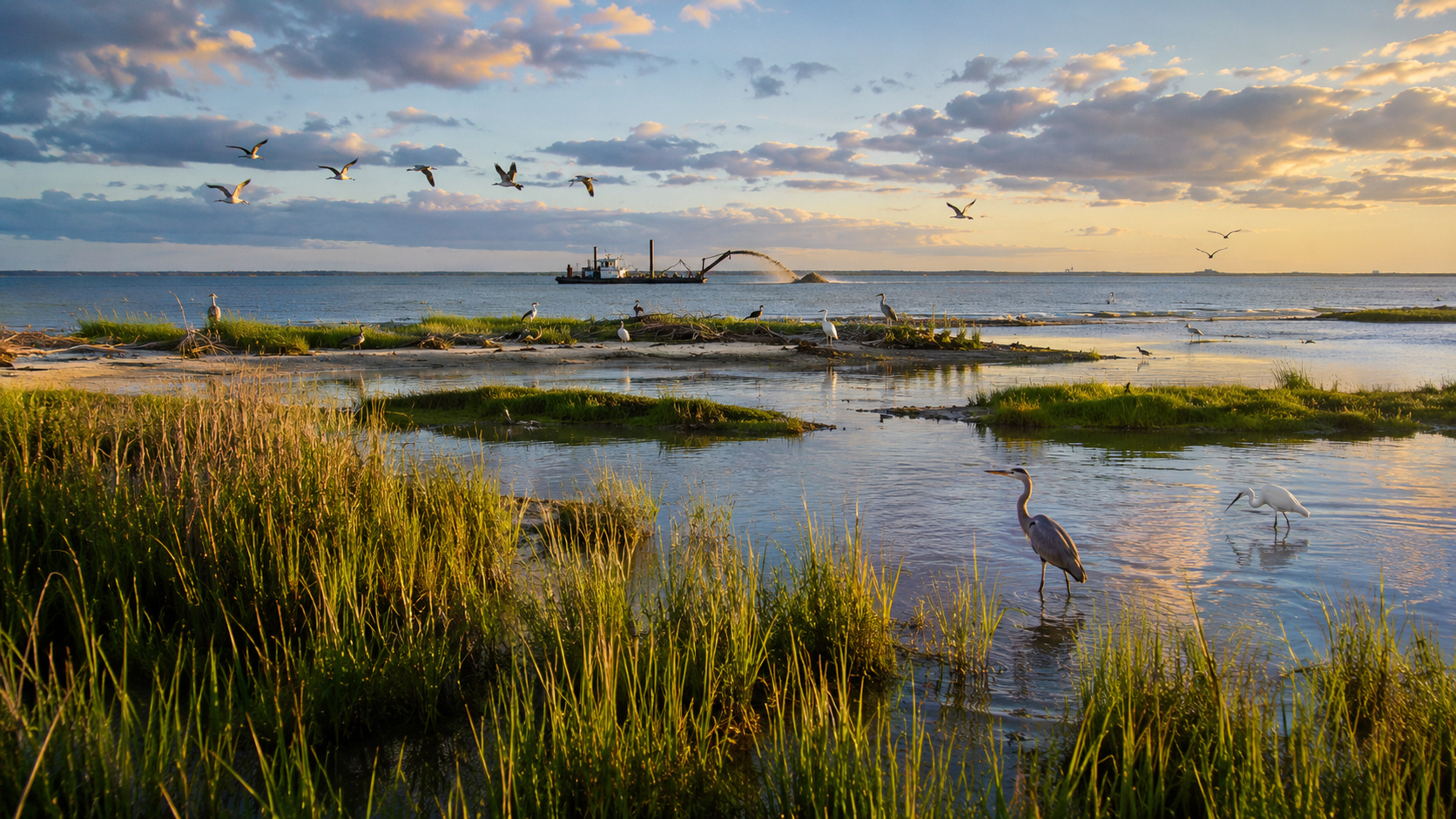

Poplar Island is reborn using clean sediments from the Port of Baltimore, creating wetlands, restored habitats, and expanding open water areas to protect ecosystems and birds
Poplar Island, in the Chesapeake Bay, underwent intense erosion and was reduced to just 4 acres in 1994. The reconstruction project uses clean dredged material from the navigation channels of the Port of Baltimore to restore the island, creating open water areas and habitat for migratory and resident birds.
The initiative not only puts the island back on the map but also promotes biodiversity and strengthens coastal ecosystems. More than 270 bird species have already been observed in the restored territory, showing that the project combines civil engineering and environmental preservation in a practical and visible way.
The goal is for Poplar Island to reach 1,715 acres of restored habitat, combining wetlands, open areas, and protection of local wildlife. The report was published by the U.S. Army Corps of Engineers, a federal government agency responsible for civil engineering and water management, detailing the progress of the work over 25 years.
-
An old ferry rusted for more than 10 years in New York, almost sank after the engine room was flooded, and now volunteers are rushing to clean the hull, remove wires, life jackets, and loose paint before sinking it in the Atlantic to become an artificial reef full of marine life.
-
An old ferry rusted for more than 10 years in New York, almost sank after the engine room was flooded, and now volunteers are rushing to clean the hull, remove wires, life jackets, and loose paint before sinking it in the Atlantic to become an artificial reef full of marine life.
-
Real Estate Agent Buys Marvel Movie Subway Car for $5,000 and Converts It into Themed Airbnb
-
Real Estate Agent Buys Marvel Movie Subway Car for $5,000 and Converts It into Themed Airbnb
How reconstruction transforms the island
The process involves transporting and depositing the clean dredged material at strategic points on the island, allowing the land to naturally recover. This material, which was once considered disposable, is now an essential resource for ecosystem recovery and creating a safe habitat for birds and aquatic species.


The wetlands formed with the sediment provide feeding and breeding grounds for wildlife, as well as contributing to the protection of fish and other animals. The applied engineering ensures that the island’s growth occurs in a controlled manner, preserving biodiversity and increasing the useful surface area of the territory.
Impacts on biodiversity and wildlife
Poplar Island has become a refuge for migratory and resident birds, with a highlight on 270 observed species. The creation of different habitats, from flooded areas to terrestrial vegetation, strengthens wildlife and helps balance the local ecosystem.
The information was released by Maryland Port Administration, the agency responsible for port management and maritime transport, which detailed that 71.1 million cubic yards of dredged sediments were used in the project and that the island will have significant expansion capacity, expanding natural and safe areas for wildlife.
Practical Benefits of Restoration
Besides the environmental impact, the project shows that it is possible to transform dredged sediments into a sustainable resource, benefiting ecosystems and maintaining navigation channels. The initiative prevents waste from being improperly discarded, while simultaneously rebuilding wetlands and natural habitats.

The work with dredged mud demonstrates that engineering and preservation can go hand in hand, offering solutions for coastal erosion and reinforcing the balance between human activity and nature.
Poplar Island as an Example of Environmental Engineering
The island has become a reference in environmental restoration, combining heavy engineering and concrete results. The project integrates long-term planning, monitoring of fauna and flora, and preservation measures, ensuring that the island’s expansion does not harm existing species.
The reconstruction also inspires other island and coastal area recovery programs, showing that it is possible to combine territorial growth and environmental protection efficiently and safely.
Social and Educational Impact
Poplar Island offers opportunities for environmental education, allowing visitors and researchers to follow the recovery of habitats and species diversity. The project transforms the island into a model of sustainable development, encouraging practices that reconcile conservation and civil engineering.
The island reinforces that human initiatives can repair damage caused by erosion and generate tangible benefits for wildlife, flora, and the local population.
The project proves that dredged sediments can be used to create restored habitats and increase biodiversity in coastal regions.
Do you believe that other islands or coastal areas could benefit from similar environmental restoration projects?