






 Portuguese
  Spanish
  6 min of reading
  0 comments


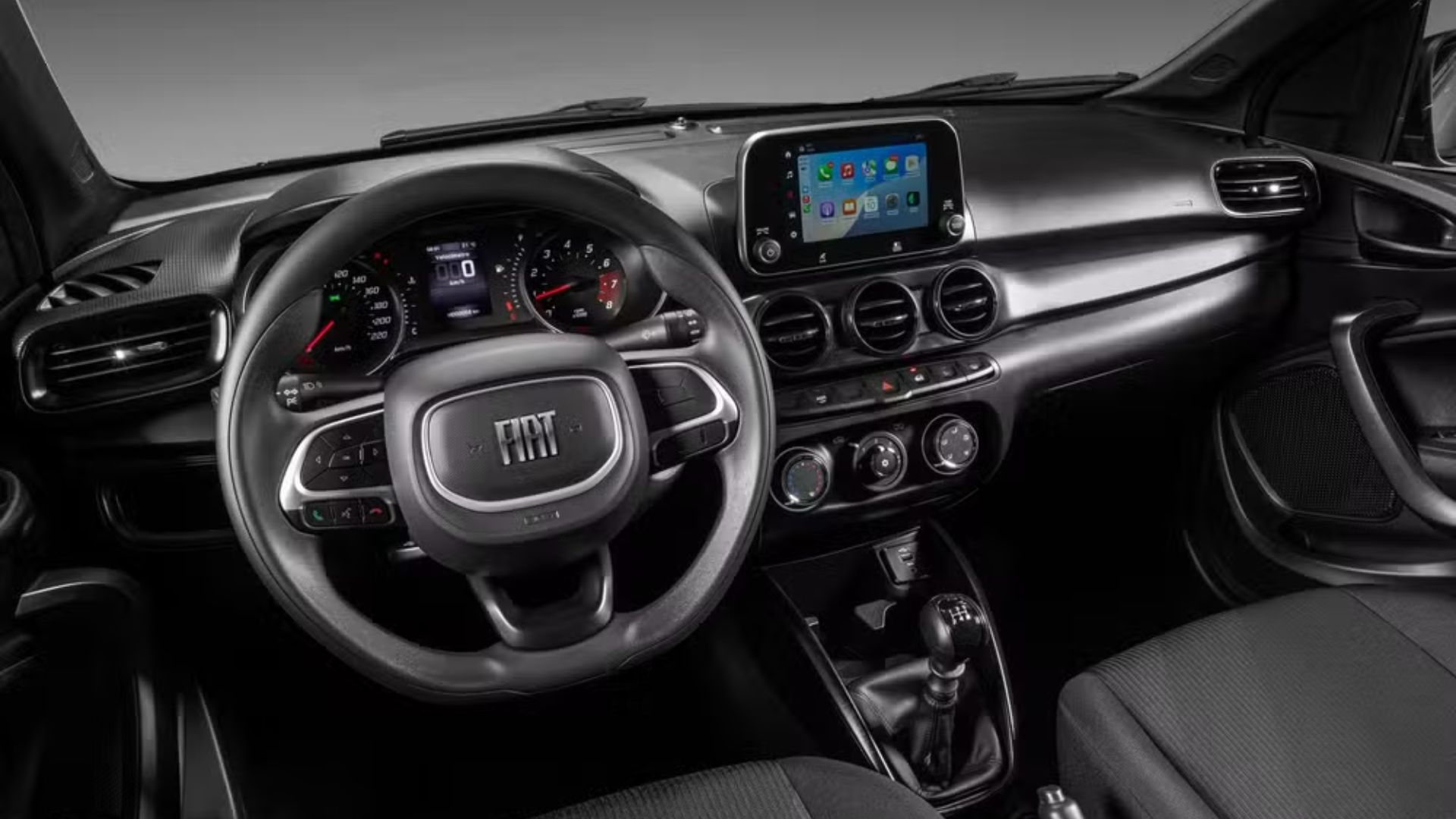
Fiat’s Compact Sedan Maintains Market Space by Focusing on a Spacious Trunk, Known Mechanics, and Rational Proposal, Even in a Scenario Dominated by SUVs and More Complex Technologies, Attracting Consumers Attentive to Predictability of Use, Costs, and Functionality in the Long Run.
The Fiat Cronos 1.3, a compact sedan equipped with a 525-liter trunk, manual transmission, and aspirated engine, continues to find buyers even in a market dominated by SUVs and more sophisticated mechanical setups.
The commercial performance of the model is associated with objective characteristics, such as load capacity, known mechanics, and a proposal aimed at those seeking predictability of use and costs over time.
In recent years, the Brazilian automotive industry has focused launches on turbo three-cylinder engines, automatic transmissions, and more complex systems.
-
Uber Faces Shareholder Scrutiny as Board Accused of Ignoring Safety, Compliance, and Harassment Warnings Amid Over 3,500 U.S. Lawsuits

-
Ferrari’s First Electric Car Divides Fans, Priced at $630,000, Amid Concerns Over Limited Editions; Brand Clarifies It’s Not Just for Future Perks
-
BYD Dolphin Mini: The Electric Car That Defies Depreciation, Losing Only 3.58% in a Year and Becoming the Best-Selling Retail Model Under $22,000

-
Electric Car JAC E-JS4 Loses $19,000 in Value in One Year, Leading Record Depreciation of Used Cars in Brazil Due to Expensive Battery and New Models


At the same time, there remains a group of consumers who prioritize traditional solutions, especially those who intend to keep the vehicle for extended periods.
Within this context, versions like the Cronos Drive 1.3 with manual transmission have begun to occupy a specific space, especially among buyers who value constructive simplicity and interior space.
Consumer Profile and Search for Predictability
There are consumers who make the buying decision considering the long term, evaluating factors like maintenance, parts availability, and mechanical history.
For this audience, the growing adoption of less familiar technologies can raise doubts, especially when the discussion about durability appears fragmented on social media.
Automotive market specialists point out that part of these perceptions is influenced by simplified or alarmist content, which does not replace in-depth technical analyses.

Even so, this environment contributes to the search for vehicles with already consolidated solutions, in which the Cronos is often cited as an example of a model that preserves a widely known configuration in the country.
In this regard, Fiat’s sedan relies on objective attributes: large trunk volume, traditional three-box architecture, and a non-supercharged mechanical set.
This is not a proposal aimed at sporty performance but rather a vehicle designed for everyday use, with a functional focus.
Launch of the Fiat Cronos and Change of Positioning
Launched in 2018 to replace the Grand Siena, the Cronos emerged with the proposal of offering a more updated compact sedan within Fiat’s portfolio.
Initially, the model sought to cater to both families and consumers interested in a more elaborately designed car, without moving into higher segments.
With the expansion of compact SUVs and changes in purchasing behavior, the sedan segment has lost relative space.
In light of this scenario, the Cronos underwent a gradual repositioning, becoming increasingly associated with rational use, professional applications, and fleets.
In these situations, factors like predictable cost and perceived robustness tend to weigh more heavily in the buying decision.
Updates for the 2026 Line and Equipment
For the 2026 line, the Cronos received specific updates in style and equipment.
According to information released by the manufacturer, the model now features a new front bumper, full LED headlights, redesigned wheels, and a multimedia center with wireless mirroring.
In higher versions, there was an enhancement of safety items, including the addition of side airbags, based on official data and recent evaluations from the industry.
Yet, even with these updates, the Cronos’ positioning remains aligned with the original proposal.
The focus continues to be on functionality and rationality, without profound changes to the project.
Firefly 1.3 Engine and Manual Transmission
The Drive 1.3 version retains the Firefly 1.3 flex aspirated engine, a configuration that has become less frequent among recent launches.
Nonetheless, this setup is still regarded in market evaluations as an alternative for simpler maintenance and predictable behavior.
Industry analysts highlight that this type of engine is still valued by consumers who prefer to avoid supercharged systems.

The manual transmission stands out as a differential for a specific audience.
Market research indicates that some drivers associate this type of transmission with greater control and, in some cases, lower maintenance costs.
This perception, however, depends on the usage profile and vehicle history.
Published assessments throughout the year classify the Cronos Drive 1.3 manual as a rational option within the compact sedan segment.
The analyses take into account price, use proposal, and positioning compared to entry versions of competing models.
Performance: Available Numbers and Technical Limits
A recurring criticism from readers and consumers concerns the absence of objective performance data in some analyses.
Information such as acceleration, recovery, and top speed are often pointed out as essential for comparison between models.
Tests published by specialized outlets indicate that the Cronos Drive 1.3 manual accelerates from 0 to 100 km/h in about 11.5 seconds.
The top speed is close to 183 km/h, according to these measurements.
The numbers vary depending on methodology, fuel, and test conditions.
Meanwhile, recovery data do not follow a single standard of measurement across publications.
As results depend on variables like load, gear used, and measurement criteria, comparable numbers are not always available.
In the absence of standardized and verifiable parameters for the specific version, the best practice is to avoid estimates.
In technical assessments, the consensus is that the Cronos delivers performance in line with its proposal.
The model is not positioned as sporty.
Nonetheless, it meets urban and highway usage demands within expectations for the category.
525-Liter Trunk as a Practical Differentiator

The volume of 525 liters in the trunk is one of the most highlighted figures in official materials and independent analyses.
This figure places the Cronos among the compact sedans with the highest load capacity in the Brazilian market.
In practice, this space benefits consumers who use the vehicle for travel, work, or frequent transportation of luggage.
Technical evaluations, however, note that the shape of the opening may limit the transport of very bulky items.
This happens despite the good total volume available.
Thus, the trunk represents a concrete advantage of the model.
Even so, it does not eliminate the need to evaluate the type of use intended by the buyer.
Absence of the 1.6 Engine and Industrial Strategy
Among older readers and consumers, it is common to reference the old 1.6 engine used in models like the Palio.
Experts explain that the reduction in the availability of such engine types is related to factors like costs, energy efficiency, and automakers’ industrial strategy.
In the case of the Cronos, the current range focuses on configurations considered more rational.
The 1.3 engine occupies an intermediate space between the 1.0 aspirated engines and more expensive proposals.
This choice allows for superior performance over smaller engines without significantly raising costs.
Comparisons with competitors often include safety criteria.
In this regard, analysts recommend closely observing the number of airbags and the equipment available in each version.
These items vary depending on the chosen package. They can directly influence the final purchasing decision.
In a scenario where SUVs continue to dominate sales and sedans occupy an increasingly specific space, to what extent will models that prioritize simple mechanics and high load capacity continue to meet the demands of a segment of the Brazilian market?





Be the first to react!