






 Portuguese
  Spanish


On A Cold Secret Mission, Team Discovers Forgotten Arsenal Inside The Minsk, Soviet Warship 8 Years Out Of Operation
A group of urban explorers decided to face the extreme cold and legal risks to invade the Soviet aircraft carrier Minsk, abandoned for almost a decade. The ship is anchored in a remote area of East Asia, surrounded by security personnel, sensors, and cameras.
With a glorious past in the Soviet Navy, the Minsk has become a forgotten colossus, laden with armaments and remnants of military technology from the Soviet era. The mission’s goal was simple and dangerous: to enter, document, and exit unharmed.
The adventure began even in the planning stages, with area reconnaissance, route study, and identification of obstacles such as armed guards and guard dogs. “The thermal camera on deck was our biggest fear,” reported one member.
-
A 3-year-old deaf student received the first white belt in Jiu-Jitsu and understood the achievement because the teacher learned Libras to communicate with him, in a video that surpassed 7 million views and moved social media by showing inclusion happening on the mat.

-
Miguel Krigsner opened a small compounding pharmacy in Curitiba in 1977, turned Brazilian fragrances into a national success, and created O Boticário, now one of the largest beauty networks in the world.

-
Meet the charming parrot grandpa, who became known for hugging free birds and revealed how he gained their trust over the years.
-
After 18 years of development, Bridgestone launches the AirFree airless tire, which requires no inflation and is puncture-proof, into daily service in Japan, starting with autonomous vehicles up to 20 km/h, used for transporting elderly people.





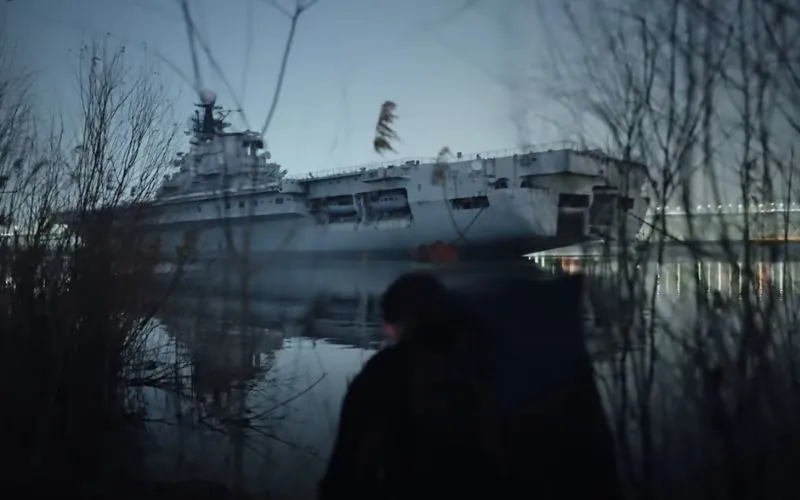
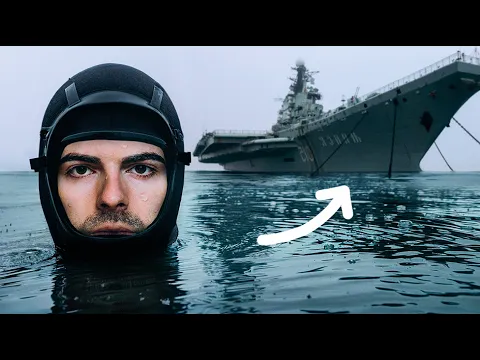
To avoid detection, the explorers decided to act in the early morning of a freezing Sunday, trusting that the base would be less active. The plan involved crossing a frozen lake and boarding with diving suits and heavy backpacks.
The temperature was -5 °C, and the risk of hypothermia was real. “Swimming in this ice is asking to freeze alive,” said one participant before the crossing.
After agonizing minutes in the icy water, the group managed to find an entry point and hid inside the ship to change clothes and dry their equipment.
“The silence inside was absolute. We could only hear the dripping water and the metallic sounds of the ship itself,” commented one of the expedition leaders, already inside the vessel.
The hostile and dark environment heightened the urgency: everything had to be done before they were discovered or caught by armed surveillance.
Forgotten Weapons and An Intact Soviet Fighter
Inside the Minsk, the explorers found much more than they expected: torpedoes, bombs, and missiles forgotten in the depths of the ship. A real war collection from the Soviet era.
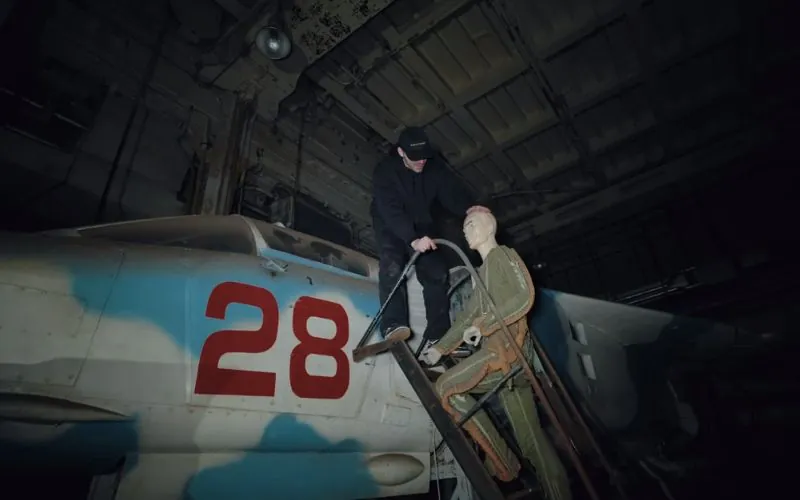
The aircraft carrier, active since 1978, was one of the largest naval symbols of the Soviet Union. Classified as a heavy aviation cruiser, it carried fighters, helicopters, and long-range weapons.
Among the found armaments, a P-500 Bazalt missile stood out, capable of carrying nuclear warheads and a range of over 550 km. “This could sink an entire aircraft carrier by itself,” said one member, in shock.
The highlight of the exploration was the discovery of an MiG-23BN, a ground attack fighter still intact in the internal hangar. Alongside it were aerial bombs and guided missiles stored precariously.
The dim lights of the place revealed old electronic systems, ammunition cartridges, and abandoned control panels, giving the feeling that time had simply stopped there.
In side rooms, they found Type 53 torpedoes, typical of the Russian submarine fleet, along with maintenance materials and decomposing military uniforms.
“It was like walking through a time capsule,” described one of the explorers. “Everything seemed ready for use, as if someone could just come back tomorrow and activate everything again.”
The tension was constant. They knew that any mistake could cost them their freedom — or worse, their lives.
Labyrinths, Toxic Dust, and Implacable Surveillance

The interior of the Minsk revealed itself as a true steel labyrinth, with narrow corridors, vertical stairs, and compartments hidden by decades of abandonment.
Humidity and cold made movement difficult. Many doors were rusty and required strength to open, generating unwanted noises that could attract external attention.
In one of the deepest rooms, the group found asbestos residues, a highly toxic material used in Soviet ships of the time. “You can feel the scratching in your throat,” complained one of the explorers, coughing.
Thermal cameras and motion sensors were identified at certain points, forcing the invaders to remain absolutely silent for long periods.
Tension rose when they spotted a guard with binoculars and a reflective vest observing the deck. “If he comes up, we’re trapped,” whispered one of the members.
Faced with the risk, they decided to wait for nightfall to access the external areas of the ship, where the radars and missiles of the upper deck were located.
During this time, they explored the command areas and found naval charts, Soviet radios, old phones, and technical documents.
“It was as if the crew had rushed out, leaving everything behind,” commented another member, observing a radio still connected to the wall.
The Escape and The Legacy of An Almost Impossible Mission
As darkness fell, the team left the interior of the ship and ascended to the deck, where they could closely observe the soviet missile launchers and radar antennas covered in rust.
With the biting wind and visibility still low, they decided to begin a strategic withdrawal, aware that the most critical moment of the mission was still to come.
Putting on the icy diving suits again was a physical and psychological ordeal. “It felt like we were wearing pure ice,” reported one member.
The crossing of the lake, done again in the dark, was silent and meticulous. No sound except the freezing water and the heavy breathing of the divers.
Upon reaching the shore, they began a 40-minute walk to the vehicle, left far away to avoid suspicion. The tension only gave way to relief when they finally got into the car.
“It was the craziest mission we have ever done. But we made it — and that’s something no one can take from us,” concluded the expedition leader, exhausted but visibly emotional.
The legacy of the mission goes beyond the images and videos captured: it is a journey through forgotten history, through the traces of the Cold War and the power of human resilience in the face of the unknown.
The adventure in the Minsk serves as a reminder that, even abandoned, symbols of war still carry secrets, memories, and risks — waiting to be rediscovered.


