






 Portuguese
  Spanish
  6 min of reading
  0 comments


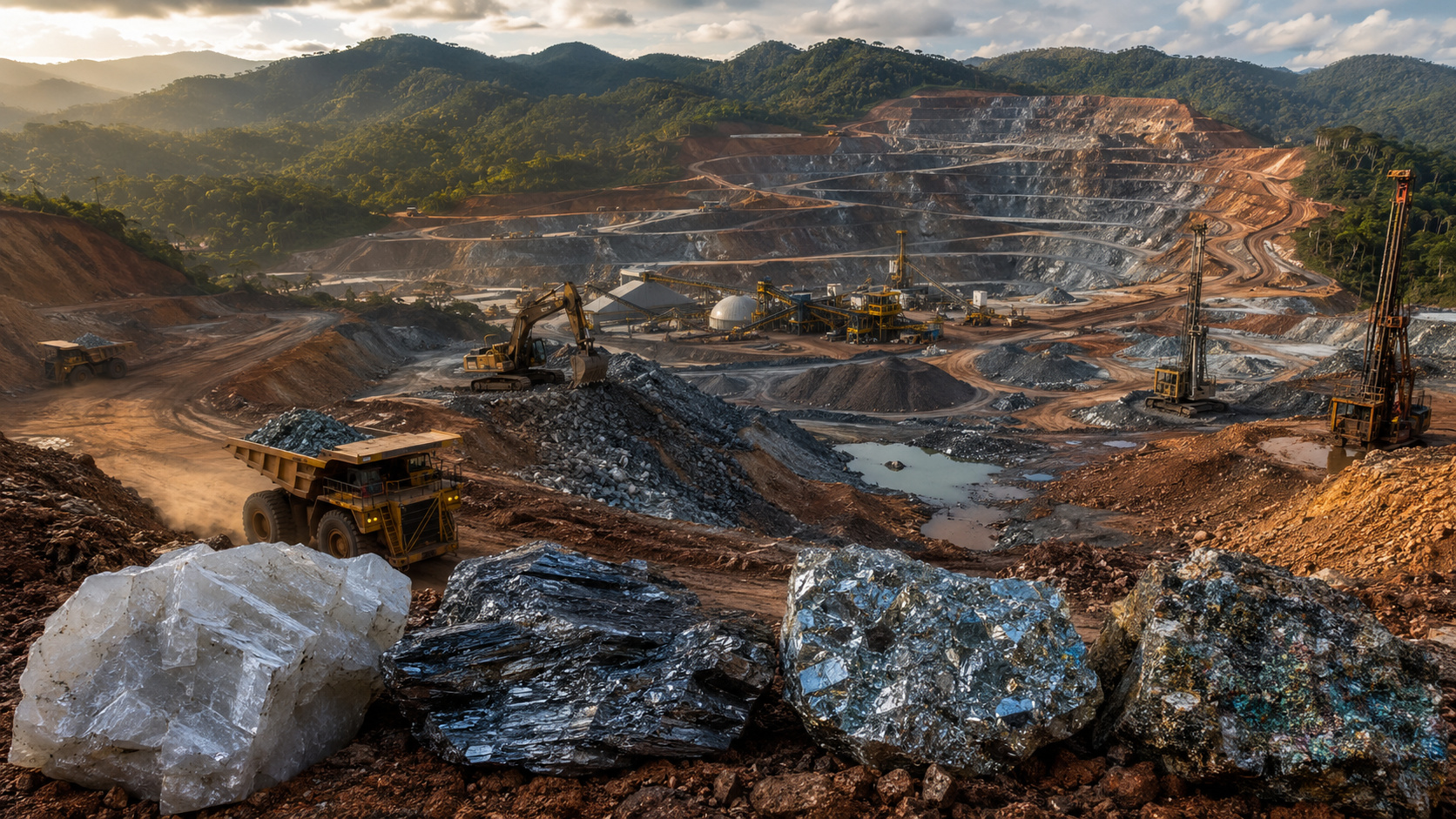
Chamber approves critical minerals policy with R$2 billion fund and R$5 billion in incentives for lithium, rare earths, and nickel.
On May 06, 2026, the Chamber of Deputies approved Bill 2780/24, which creates the National Policy for Critical and Strategic Minerals. The proposal aims to position Brazil in the global race for raw materials considered essential for electric cars, wind turbines, batteries, artificial intelligence, data centers, military systems, and advanced electronic equipment. The approved text provides for the creation of a R$2 billion guarantee fund and up to R$5 billion in tax incentives over five years to stimulate mineral exploration, processing, and transformation in the country.
The project’s advancement comes at a time of strong international pressure for minerals such as lithium, rare earths, nickel, graphite, cobalt, and copper. These materials have taken on a strategic position in global industrial supply chains due to the energy transition and the technological race between powers such as China, the United States, and the European Union.
Brazil appears in this scenario as one of the countries with the greatest mineral potential, still partially underexplored. The government and the mineral sector argue that the country has significant reserves of strategic minerals and can move beyond being just an exporter of raw materials to occupy space in industrial stages with higher added value.
-
China could reduce iron ore imports from 80% to 50% of consumption by 2030, while its share in global steel production falls from 52% to 46%, in a shift that could reshape the global market, says CMRG.

-
Brazil is sitting on one of the largest lithium reserves in the world, in the Jequitinhonha Valley, but national mining has almost become an appendage of China: 97% of the metal’s export goes to a single country, which also dominates refining.
-
Iron ore falls to 762 yuan in China as real estate sales decline and steel production hits lowest level since 2018
-
Brazil has minerals, clean energy, and a waiting market, but it could miss a billion-dollar opportunity if it doesn’t speed up the race for green minerals, while the steel industry seeks to reduce emissions.


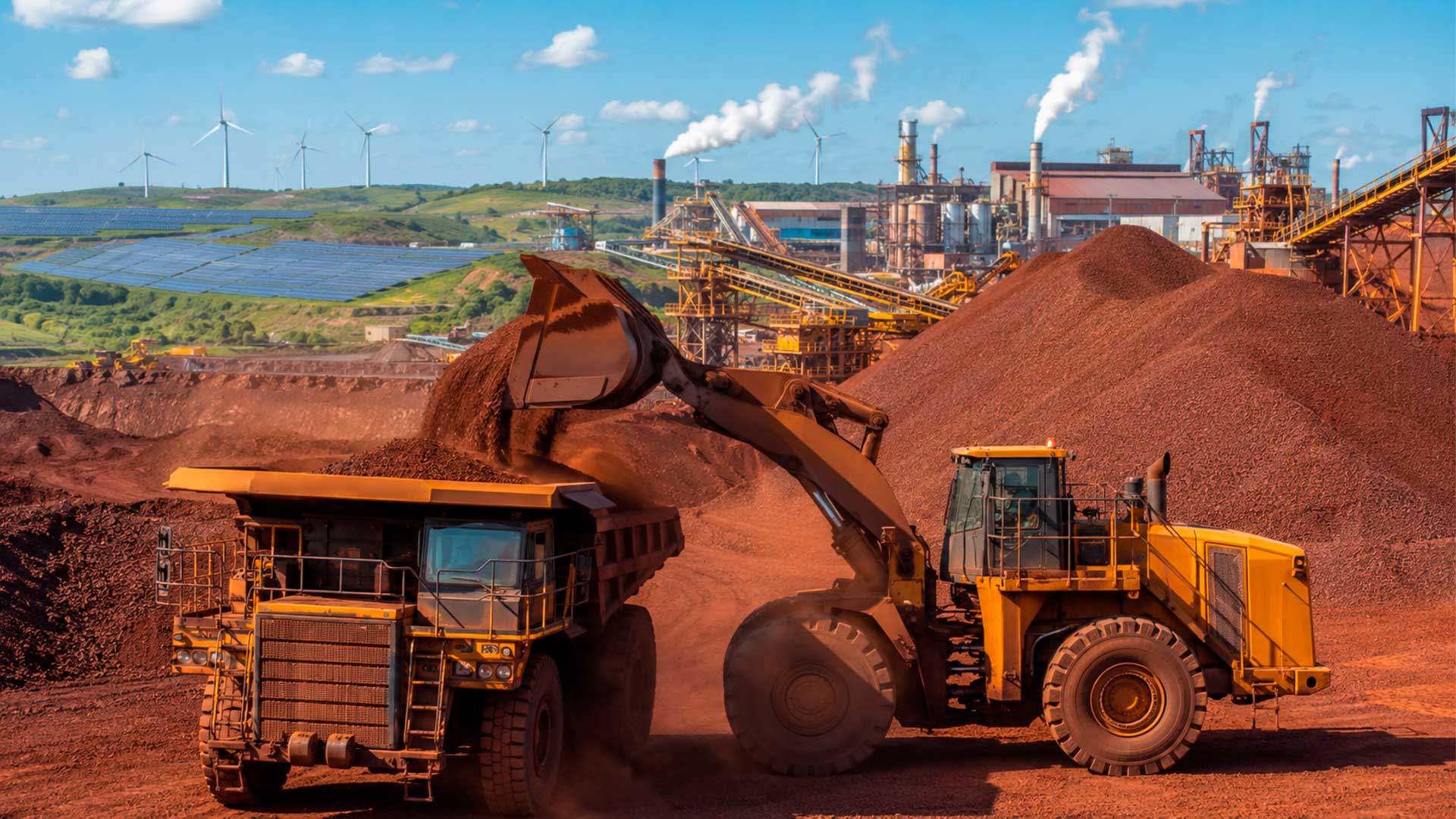
What are critical minerals and why have they become strategic for the global economy
Critical minerals are raw materials considered essential for industrial sectors with high technological and energy dependence. The classification varies between countries, but typically involves materials difficult to substitute and with supply chains concentrated in a few global producers.


Among the main examples are lithium, nickel, natural graphite, manganese, copper, and rare earth elements. These materials are used in the manufacturing of batteries for electric vehicles, industrial motors, wind turbines, semiconductors, optical fibers, defense systems, and advanced electronic equipment.
In recent years, the topic has gained geopolitical dimension because many of these minerals are concentrated in a few countries. China dominates a large part of the global processing of rare earths and graphite, while African countries have growing relevance in cobalt and manganese.
The dispute over these resources has ceased to be merely economic and has come to involve industrial security, technological sovereignty, and national defense.
Approved project creates R$2 billion guarantee fund to reduce risk in the mineral sector
One of the pillars of the text approved by the Chamber is the creation of the Mineral Activity Guarantee Fund, with an initial contribution of R$2 billion from the Union.
According to the project, the objective is to reduce financial risks in operations related to strategic mining. The fund can function as a guarantee mechanism for financing, investments, and expansion of projects considered priorities.
The logic behind the proposal is simple: mineral projects require high investments, have long cycles, and face environmental, regulatory, and market risks. By reducing some of these uncertainties, the government tries to attract private capital to accelerate new ventures.
The text also provides for the participation of public banks and financial institutions in financing supply chains linked to critical minerals.
R$5 billion tax incentives target industrialization, not just raw ore export
Another central point of the project is the provision of up to R$5 billion in tax credits over five years. The proposal seeks to stimulate not only mineral extraction but also industrial processing within Brazilian territory. This includes chemical processing, refining, and transformation into higher value-added products.
Today, a significant part of Brazil’s mineral wealth still depends on the export of raw or minimally processed commodities. The government and parliamentarians in favor of the project argue that the country loses industrial revenue and skilled jobs by exporting only ore without advancing to subsequent stages of the chain.
The current attempt is to create a policy similar to that adopted by countries that have begun to treat critical minerals as strategic assets for industrial development.
Brazilian Lithium Entered Global Radar After Electric Car Race
One of the most cited minerals in the debate is lithium. Brazil has gained international attention in recent years after the growth of projects in the so-called Lithium Valley, located mainly in Minas Gerais.
The mineral is used in rechargeable batteries for electric cars, cell phones, notebooks, and energy storage systems.

The increase in global demand has raised international prices and triggered a race for new production areas. Foreign companies have expanded their interest in Brazilian projects, especially after the advancement of automotive electrification policies in Europe, China, and the United States.
Rare Earths Became a Topic of Economic and Military Security
Another strategic group cited in the national policy involves rare earths, a set of 17 chemical elements used in advanced technologies.
Despite the name, many of these substances are not necessarily rare in geological abundance, but their extraction and processing are complex and expensive. Rare earths are fundamental for electric motors, wind turbines, radars, satellites, lasers, defense systems, and high-precision electronic equipment.
China dominates a large part of the global processing of these minerals, which has led Western countries to seek alternative sources of supply to reduce external dependence.
Brazil appears in this context as a potential alternative supplier due to reserves identified in states such as Goiás and Minas Gerais.
Project Also Aims to Accelerate Licensing and Integration Among Public Bodies
In addition to financial incentives, the approved text provides for measures to enhance coordination among federal agencies linked to mining.
The proposal seeks to integrate geological research, financing, logistical infrastructure, and industrial development policies. The government also intends to stimulate the survey of new areas with strategic mineral potential.
The topic is considered sensitive because mining in Brazil frequently faces lengthy regulatory processes, environmental disputes, and legal uncertainty.
Although the project attempts to accelerate investments, specialists warn that mineral expansion will also depend on environmental oversight capacity and regulatory stability.
Race for Critical Minerals Already Moves Billions Worldwide
The approval of Brazil’s policy occurs amidst an increasingly intense international dispute. The United States, European Union, Canada, and Australia have announced billion-dollar programs in recent years aimed at strengthening critical mineral supply chains.

In the US, the federal government has begun to treat these minerals as a matter of national security, offering incentives for domestic mining and local processing. The European Union created the Critical Raw Materials Act to reduce external dependence and expand access to strategic raw materials.
In this scenario, Brazil is trying to prevent its participation from being limited to the export of raw ore, seeking to occupy more lucrative stages of the global industrial chain.
Mineral Sector Sees Opportunity to Increase Revenue, Exports, and Jobs
Sector entities state that the advancement of the policy can stimulate private investments, job creation, and increased exports.
Furthermore, the development of associated industrial chains can increase tax revenue and reduce Brazil’s dependence on technological imports.
The debate, however, is not consensual. Environmental organizations and social movements warn of risks linked to the expansion of mining in sensitive regions, especially in areas close to traditional communities and fragile ecosystems.
The challenge will be to balance economic growth, mineral exploration, and environmental control in a scenario of increasing international pressure for new sources of strategic raw materials.
Brazil Tries to Stop Being Just a Supplier of Mineral Commodities
Historically, the country built a significant part of its mineral economy based on the export of iron, bauxite, and manganese. The new policy attempts to expand this model to minerals linked to the low-carbon economy and advanced technologies of the 21st century.
This includes not only extraction but also the development of industrial chains capable of producing refined materials, components, and associated technologies.
The economic potential is significant. According to recent sectoral projections, planned investments in critical minerals in Brazil could exceed tens of billions of dollars by the end of the decade.
Now, the main question becomes whether the country will be able to transform its mineral reserves into a high value-added industry or if it will continue to primarily play the role of a global raw material supplier.







Be the first to react!