






 Portuguese
  Spanish


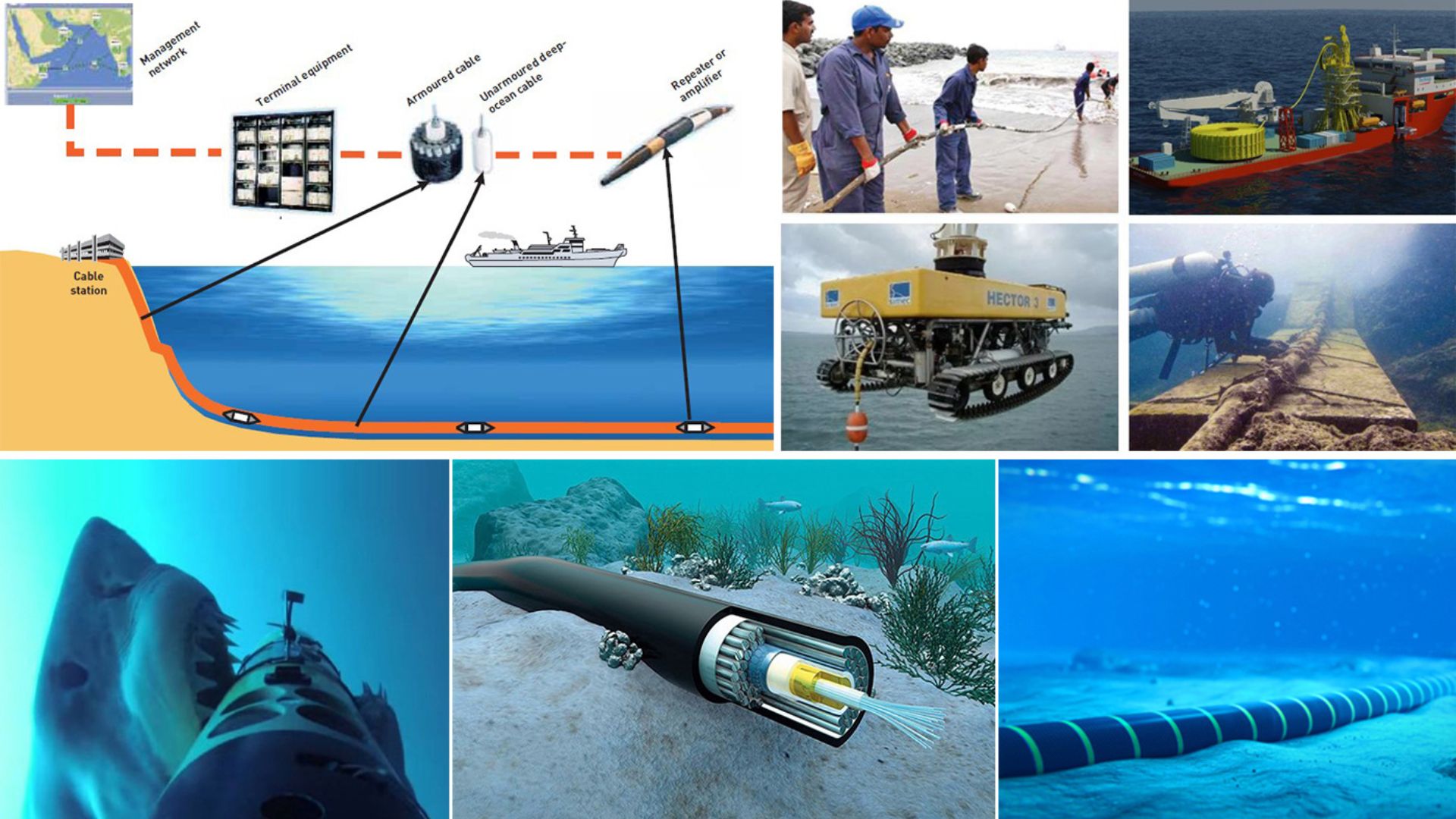


Invisible Infrastructure of the Internet Can Act as a Continuous Oceanic Sensor Capable of Registering Seismic Vibrations, Pressure Changes, and Underwater Sounds Along Thousands of Kilometers, Expanding Warning and Environmental Monitoring Systems Already Studied by International Organizations and Scientific Centers.
The same invisible infrastructure that supports digital life can play an unexpected role at the bottom of the ocean: functioning as a continuous sensor capable of “hearing” vibrations and noises over kilometers of submarine route.
Instead of merely transporting data, segments of optical fiber can be used to capture signals associated with earthquakes, pressure changes linked to tsunamis, and sounds from marine animals, in projects that already exist and have been described by scientific institutions and international organizations.
The relevance of this type of monitoring grows because submarine cables are not peripheral: they carry more than 99% of international data exchanges, according to the International Telecommunication Union (ITU), a UN agency for digital technologies.
-
8-Year-Old Girl from Kashmir Sets World Record by Reciting and Organizing All 118 Periodic Table Elements in 33.71 Seconds

-
Rembrandt Painting Missing for 65 Years Found in Home, Valued at Millions After Owner Inquires About Its Dutch Origin
-
Man Buys Abandoned Warehouse for $450 and Discovers 1980s Art Collection Worth Nearly $50,000 at Auction
-
NASA captures heart-shaped pink lagoon in Argentina’s salt flats


This global “nervous system” spreads across the seabed, connecting continents and sustaining calls, messages, transactions, and services on a planetary scale.
DAS Technology Transforms Optical Fiber into Seismic Sensor
What allows the role reversal—from “data highway” to “ear”—is a technique known as Distributed Acoustic Sensing (DAS).
In practical terms, the method uses the optical fiber itself as a linear sensor: small perturbations along the cable alter how optical signals return to the reading equipment, allowing vibrations to be recorded along the path.
The technology was initially applied in industrial and infrastructure contexts, and today appears in projects that seek to expand ocean observation coverage without relying solely on point instruments.
ITU and SMART Cables Initiative Expand Oceanic Monitoring

The agenda is not limited to isolated initiatives.
The ITU, in collaboration with the Intergovernmental Oceanographic Commission of UNESCO (UNESCO-IOC) and the World Meteorological Organization (WMO), maintains a task force aimed at investigating and promoting the use of telecommunications cables for oceanic monitoring, climate, and disaster alert.
The terms of reference for the group include both the evaluation of benefits and risks as well as defining a strategy to enable cable repeaters equipped with scientific sensors—including measurements such as pressure, temperature, salinity/conductivity, and seismic and hydroacoustic components.
Within this effort, a concept has gained its own name: SMART Cables, which stands for Science Monitoring And Reliable Telecommunications.
A technical requirements report updated by the working group linked to the task force describes the SMART Cables as commercial telecommunications submarine cables that incorporate environmental sensors focusing on scientific monitoring and disaster risk reduction.
The proposal, in practice, is to couple ocean observation to an existing infrastructure that is already being expanded for economic and connectivity reasons.
Submarine Cables in Early Earthquake Warning
A concrete example of DAS potential in the context of disasters appears in scientific literature focused on early earthquake warning.
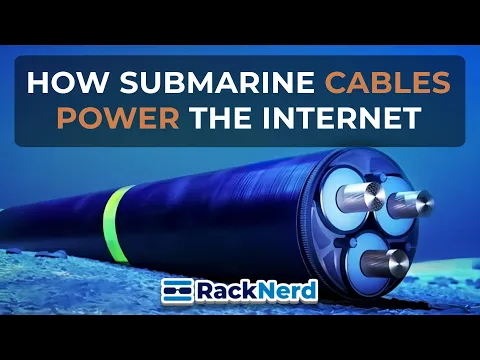

In an article published in Scientific Reports, researchers describe an operational framework that integrates DAS data into warning systems, transforming an optical fiber cable into a dense seismic array—with a case deployed in a submarine cable in Monterey Bay, California.
The study highlights the utility of covering offshore areas where instrumentation is often scarcer, and discusses the operation of the system independently or together with algorithms already used in alert networks.
The logic is simple to state, although technically sophisticated: where there are fewer sensors installed in the sea, information arrives with more gaps.
When a cable passes through critical oceanic regions, it can offer a continuous detection “corridor.”
Rather than relying solely on land-based seismometers, cable readings help capture signals closer to the epicenter in certain scenarios, which is a central point in any system intending to issue alerts with as much advance notice as possible.
Internet Cables Also Capture Whale Sounds
The same ability to register vibrations is not limited to geophysical events.
A report from the Associated Press described an experiment in the Salish Sea, in the northwest United States, in which researchers deployed a section of optical fiber cable to test whether the technology could detect orca vocalizations.
The article reports on the use of DAS as a distributed “microphone,” capable of capturing signals along the cable and helping to infer the presence and movement of animals in a sensitive area, with implications for conservation and maritime traffic management.
According to the Associated Press, the focus of the test was associated with the southern resident orcas, a group considered endangered, and the report mentioned interest in more continuous monitoring of the marine environment.
By using a cable as a sensor, the ambition is to expand observation without relying solely on fixed and spaced hydrophones, which, in noisy environments, can limit coverage and resolution.
Critical Infrastructure Starts Generating Environmental Data

The transformation of cables into observational instruments also connects with another theme that has gained priority in international debate: resilience.
The ITU itself created an advisory body focused on the resilience of submarine cables, highlighting that the criticality of this infrastructure requires coordination and the ability to respond to damages, accidents, and natural disasters.
Although this movement is linked to the continuity of data traffic, the advancement of sensors in cables adds a layer of interest: in addition to transporting information, the physical network can generate data about the ocean itself and about phenomena that threaten coastal areas.
In practice, cables with sensors or cables read by DAS can become a sort of “observation line” parallel to the telecommunications system.
Instead of requiring the installation of a new dedicated mesh of oceanographic instruments—costly, slow, and complex—part of the scientific community seeks to leverage existing routes, integrating telecommunications engineering and ocean science.
The interest in measurements such as pressure at the seabed is directly linked to tsunami alerts, as variations detected by appropriate sensors can indicate the passage of large-scale waves before they reach the coast.
Similarly, seismic and hydroacoustic sensors point toward a design of “dual infrastructure”: telecommunications and monitoring, side by side, in the same physical system.
None of this eliminates the need for traditional observation networks, such as buoys, tide gauges, and seismometers, nor replaces disaster response policies.
What these projects describe is another piece in the puzzle: an additional source of data, potentially continuous and distributed, that can complement existing systems and open a new field of research on what occurs in the ocean in near real-time.
If infrastructure built to connect people can also listen to the planet, to what extent should submarine cables be thought of as part of a larger global system for ocean alert and monitoring?





Agora sim vamos descobrir a espaçonaves, dos moradores de fora do nosso planeta que vivem ,em baixo das águas profundas dos oceânico
Muito bom
Vcs precisam parar de trazer à tona mentiras do sistema: como eles vão continuar mentindo dizendo que a internet vêm pelos satélites? Kkkkkk