






 Portuguese
  Spanish


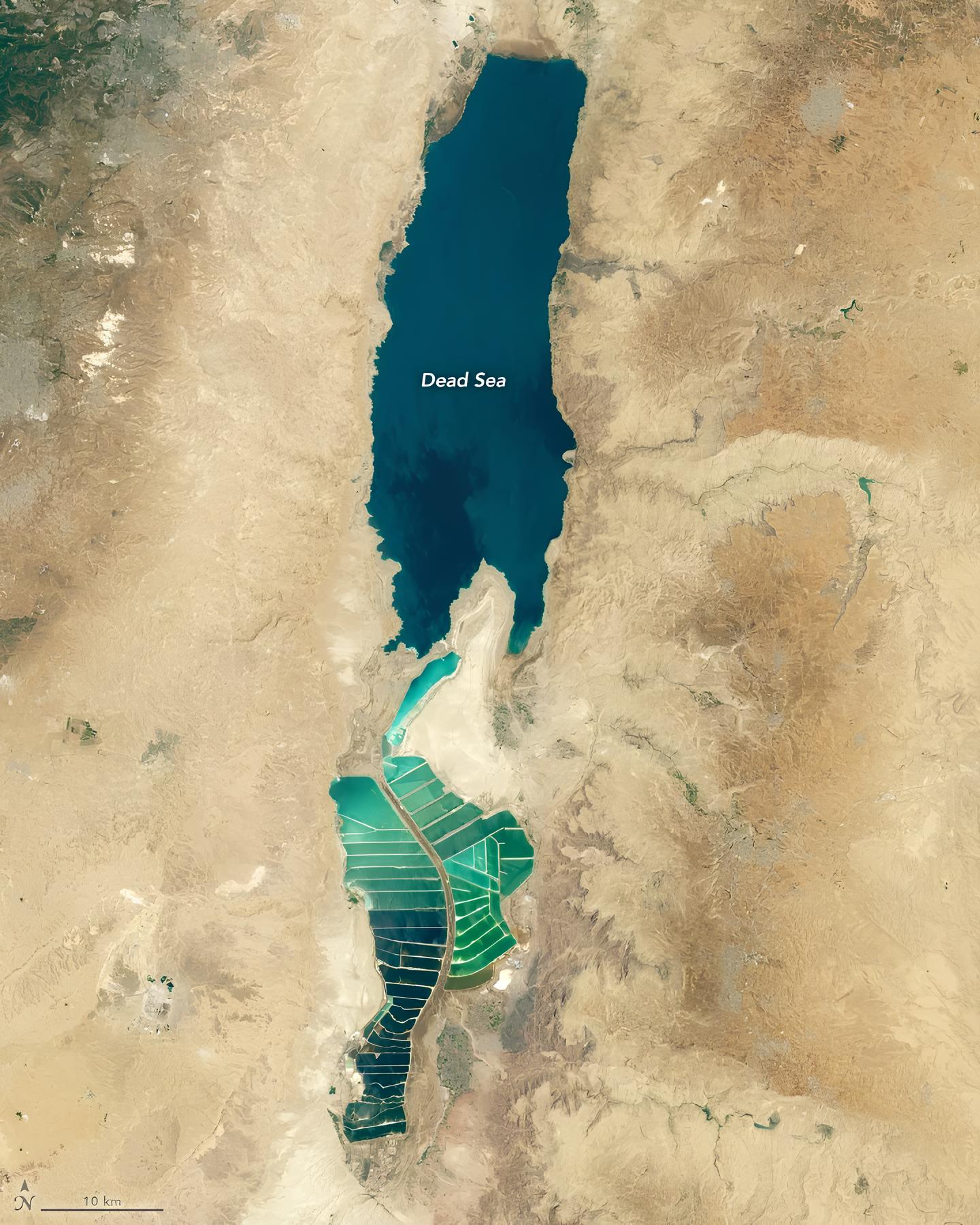


At 430 Meters Below Sea Level, The Dead Sea Is The Lowest Point On Earth On Land And Reveals One Of The Most Extreme Geographical Phenomena On The Planet.
While the collective imagination focuses on the highest peaks of the world — symbols of overcoming, risk, and grandeur — there exists an opposite extreme that impresses just as much as Everest. A place where the Earth seems to have given way, sunk, and retreated in almost an absurd manner. This extreme point is located in the region of the Dead Sea, between Israel and Jordan, and is currently about 430 meters below sea level, the lowest point on the planet on land.
It is not an ocean floor, nor a submarine trench. It is exposed ground, roadways, stones, salt, tourists, hotels, soldiers, trucks, and cities — all at a lower level than any other continental place on Earth. A geographical phenomenon so rare that it challenges human perception of altitude, relief, and even how the Earth’s crust works.
The Lowest Point On Earth On Land Is Not A Common Valley
Technically, this depression is part of the Jordan Rift Valley, a massive geological fracture that extends from Lebanon to East Africa. It results from the continuous drifting of two major tectonic plates: the African and Arabian plates. Over millions of years, this literal movement of “tearing the Earth” has caused the crust to gradually and persistently sink.
-
Former Atacadão Employee Turns Online Cake-Baking Lessons into a Confectionery Brand with Factory, Store, Delivery, and Nearly $400,000 in Revenue

-
Brazilian Startup Sells Nearly 9 Million Surprise Bags of Near-Expiry Food, Prevents Thousands of Tons of Waste, Aiming for $42 Million Revenue by 2026
-
How to Prevent Brown Recluse Spider Bites: Common Hiding Spots and Free Tips to Reduce Risks

-
Natto: The Unusual Japanese Superfood Gaining Popularity on Social Media and Driving Record Exports





The result is a geological corridor of subsidence, where the terrain has dropped hundreds of meters relative to the average sea level. The Dead Sea, which occupies this depression, not only inherited this sinking but continues to sink slowly to this day.
Measurements taken by geological institutes from Israel, Jordan, and organizations such as the USGS (United States Geological Survey) confirm: the level of the Dead Sea has fallen by more than 30 meters in just the last century, and continues to drop at an average rate that has already reached more than 1 meter per year in recent decades.
A “Sea” That Is Not A Sea But Dominates Water Chemistry On The Planet
Despite its name, the Dead Sea is not exactly a sea, but a closed hypersaline lake with no natural outlet to oceans. All the water that enters it, mainly through the Jordan River, can only leave through evaporation. And it is precisely this that makes the place a chemical anomaly.
The average salinity of the Dead Sea exceeds 34%, compared to about 3.5% for oceans. It is nearly ten times saltier than normal sea water. This extreme concentration of salts, especially magnesium, potassium, and sodium chlorides, virtually prevents any complex life forms. Fish, large algae, and aquatic plants simply cannot survive.
This is where the name “Dead Sea” comes from. But the absence of visible life conceals one of the most chemically active and economically exploited environments on the planet.
The Impossible Floatation That Became A Global Symbol
The absurdly high density of the water makes any human body float with extreme ease. There is no need to know how to swim. The body simply does not sink. This characteristic has transformed the location into one of the most curious tourist destinations in the world.
Tourists from all over the planet travel to the region not only to “float effortlessly,” but also to explore:
- dermatological treatments with mineral-rich mud
- hyper-concentrated waters used for therapies
- rehabilitation centers and medical tourism
- international high-standard spas
Tourism around the Dead Sea generates billions of dollars over the years, sustaining hotels, clinics, road infrastructure, and thousands of direct and indirect jobs between Israel and Jordan.
A Silent Collapse: The Ground Is Literally Opening Up
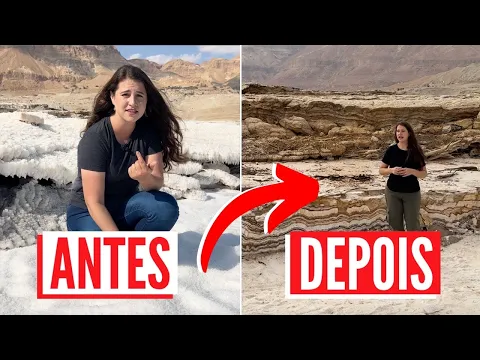
What few people know is that the accelerated shrinking of the Dead Sea is causing one of the most dangerous geological phenomena in the region: the formation of sinkholes, enormous holes that suddenly appear in the ground.
These craters form when underground layers of salt dissolve with the infiltration of fresh water, causing the ground above to collapse abruptly. In some areas, hundreds of craters have already appeared, some with dozens of meters in diameter.
Roads have been closed. Parking lots have disappeared. Tourist spots have been abandoned. And the process continues to advance.
This is today one of the biggest geological and infrastructure challenges in the region.
Why Is The Level Of The Dead Sea Dropping So Quickly
The main cause is not natural. It is human.
In recent decades, Israel, Jordan, and other countries in the region have begun to intensely exploit the waters of the Jordan River for:
- urban supply
- agricultural irrigation
- industrial consumption
Since the Dead Sea has no outlet to the ocean, any reduction in the volume of water entering it directly affects the level. Added to this are:
- extremely arid climate
- high evaporation rates
- climate change
The result is an unbalanced equation: less water comes in than evaporates, year after year.
A Natural Laboratory For Extreme Science
Because of its continental depth, absurd salinity, high atmospheric pressure, and strong solar radiation, the Dead Sea has become a true open-air laboratory for scientists studying:
- extremophilic micro-organisms
- cellular resistance to hostile environments
- development of dermatological drugs
- chemical behavior of concentrated salts
- effects of atmospheric pressure on the human body
The atmospheric pressure there is about 5% higher than at sea level, which also generates unique physiological effects, especially for people with respiratory diseases.
Tourism At The Lowest Point On The Planet Is A Strategic Asset
Even amid the water collapse, the Dead Sea region remains a crucial tourist asset. Luxury hotels, therapeutic resorts, and international medical centers compete for clients from all over the world.
People with psoriasis, vitiligo, respiratory issues, and chronic skin diseases seek the location precisely for the extreme and unique conditions of the environment, which are not replicated anywhere else on Earth.
In geographical and economic terms, the Dead Sea is not just a “hole on the map.” It is a strategic asset for health, tourism, and scientific research.
Geography As A Mirror Of Environmental Collapse
While Everest symbolizes the upper extreme of the Earth’s crust, the Dead Sea symbolizes the lower extreme. Together, they form a kind of vertical portrait of the Earth: from the highest point to the lowest point.
However, unlike mountains, which change on scales of millions of years, the changes in the Dead Sea happen before our eyes, over just a few decades. The lake shrinks, the soil sinks, craters appear, tourism shifts, cities recede.
Geography, in this case, is not just a landscape. It is a warning.
One Of The Greatest Natural Paradoxes On The Planet
The Dead Sea is, at the same time:
- the lowest point on Earth on land
- one of the most hostile environments to life
- one of the most sought-after therapeutic centers in the world
- one of the most severe cases of ongoing environmental collapse
Few places on the planet gather so many extremes in a single physical space.







