






 Portuguese
  Spanish
  5 min of reading
  0 comments


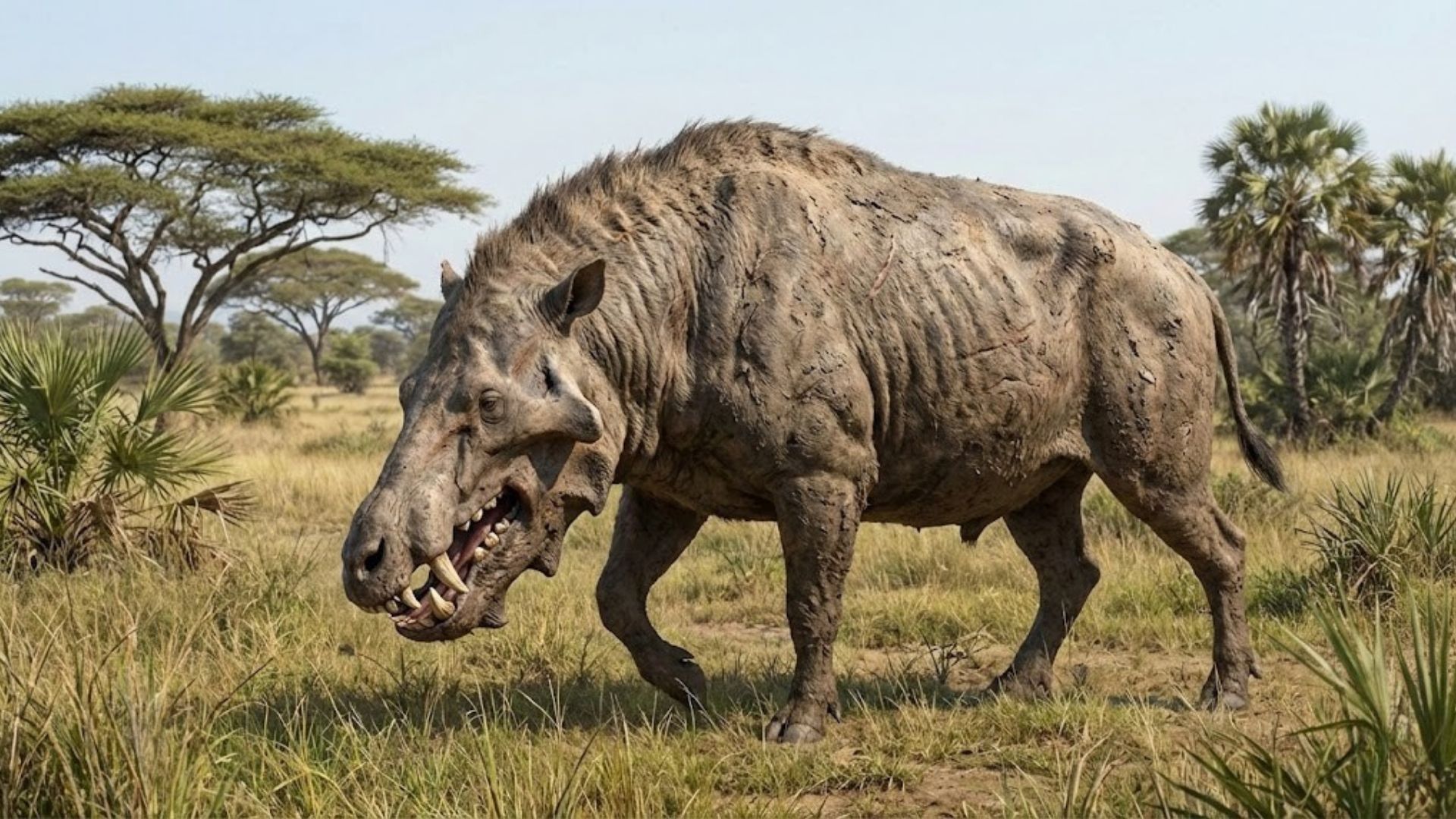
Large Prehistoric Mammal Known for Its Robust Skull and Broad Diet Lived Between the Eocene and Miocene and Left Fossils on Different Continents, Helping Scientists Understand the Diversity and Dynamics of Past Ecosystems.
A large mammal with a pig-like appearance but an disproportionately robust skull occupied vast areas of the Northern Hemisphere millions of years before the emergence of humans.
This refers to the Entelodon, a member of an extinct group known as entelodonts, that lived between the Eocene and Miocene and became popularly known by the nickname “hell pig”, a term used by researchers and popular science to describe its imposing appearance.
Despite the frequent comparison with modern pigs, specialists emphasize that entelodonts belonged to their own lineage within the artiodactyls, the order of hoofed mammals that today includes deer, bovines, and swine.
-
Brazilian mechanic invented a lamp made from a PET bottle during the 2001 blackout, the idea turned into an NGO present in 30 countries and has already illuminated 40,000 people in 200 communities without electricity in Brazil.

-
Centuries-old mystery gains new chapters in Greece after excavations reveal a possible lost temple of Poseidon, hidden among ancient lagoons, monumental remains, ritual objects, and an architectural plan that surprised even the experts.

-
2-month-old baby says “I love you” to parents and the video froze the internet: doctors say most babies only speak after the first year of life
-
At 98 years old, Priscilla Sitienei returned to school in uniform, sits next to children, and has a new dream: to become a doctor, after decades of working as a midwife in rural Kenya.



The external resemblance exists, especially in the overall body shape and certain skull traits, but it does not imply a direct relationship with today’s pigs in the strict sense of zoological classification.
Geographical Distribution and Origin of the Group
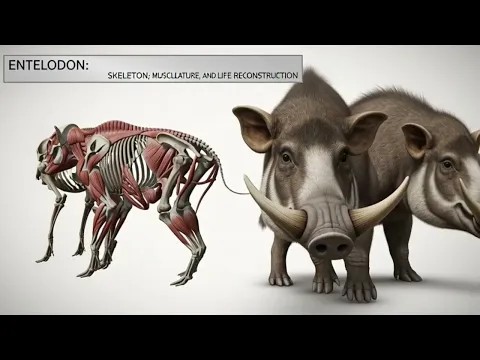

Fossil records indicate that these animals were widely distributed across regions that today correspond to Europe, Asia, and North America.
According to syntheses published in reference works of paleontology, there is evidence that the group may have originated in Central Asia, possibly in the area of present-day Mongolia, before expanding to other continents during the early Cenozoic.
Within this group, the Entelodon draws attention due to its cranial anatomy.
The skull was large and had lateral bony protrusions that, according to recurring interpretations in the scientific literature, could serve multiple functions, including protection and disputes among individuals of the same species.
These structures contribute to the animal’s allegedly unusual appearance in reconstructions based on fossils.
Estimated Size and Physical Characteristics
Size estimates vary depending on the species and the material analyzed.
Research describes entelodonts as about two meters in body length, while the skull in some related genera could approach one meter.
Data on weight and exact height are less consensual, leading some experts to treat these numbers with caution, emphasizing only that it was a large mammal for its time.
Jaws, Teeth, and Omnivorous Diet
The dentition and jaws reinforce this interpretation.
The set of teeth, combined with the associated biting musculature, suggests a broad diet.

Anatomical studies indicate that the Entelodon was omnivorous, capable of consuming both plant and animal matter, without extreme specialization in a single type of food.
This view is reinforced by comparative analyses done by paleontologists, which suggest an opportunistic feeding behavior.
In this context, the animal could feed on fruits, roots, and other vegetation, in addition to scavenging carcasses and eventually capturing smaller prey.
The ability to handle bones and tougher tissues is noted in scientific works as compatible with this dietary pattern, especially in the case of occasional scavengers.
Still, researchers caution that labels like “dominant predator” or “most feared animal” are more part of popular imagination than direct scientific assertions.
The position of an animal in the food chain depends on local factors such as environment, climate, and the presence of other large carnivores.
In the case of the Entelodon, what fossils allow us to assert with greater certainty is the combination of large size, jaw strength, and dietary flexibility.
Indicators of Behavior and Disputes Among Individuals
Another aspect frequently discussed in the literature is social and aggressive behavior.
Bite marks and injuries observed in fossils attributed to the group are interpreted by specialists as possible indicators of confrontations between individuals.
These disputes could be related to territory defense, competition for resources, or mating, common hypotheses in comparative studies with modern mammals.
The bony structures of the skull gain relevance in this debate.
According to interpretations found in academic and museum materials, they could act as a form of cushioning or protection during clashes.
Still, the authors of these studies emphasize that behavioral reconstructions based on bones involve margins of uncertainty and should be treated as grounded hypotheses, not as definitive descriptions.
Extinction in the Miocene and Environmental Changes
Despite its large size, the Entelodon was not immune to environmental pressures.
The fossil record indicates that entelodonts disappeared around 16 million years ago, in the early Miocene.
The extinction of the group is generally associated with a combination of factors, including climatic changes, transformations in vegetation, and ecosystem reorganization.
Studies of the period show that the Miocene was marked by significant changes in habitats, favoring some groups of mammals while disadvantaging others.
In this scenario, specialists point out that large animals with high energy demands may have been particularly affected, especially in the face of the diversification of new, more specialized carnivores.
More than an isolated episode, the extinction of the Entelodon is analyzed as part of a gradual process of faunal renewal.
Paleontologists avoid attributing the disappearance of the group to a single direct cause, emphasizing that long-term environmental factors usually act in combination throughout evolutionary history.
Scientific Importance of Entelodon Today

Even after its disappearance, the Entelodon remains relevant to science.
The group helps illustrate the diversity of evolutionary pathways taken by artiodactyls, many of which left no direct descendants.
By comparing these fossils with current species, researchers can refine hypotheses about relationships, adaptation, and extinction.
Museum and university collections around the world still preserve materials attributed to entelodonts.
These fossils continue to be analyzed in taxonomic and ecological studies, allowing for revisions and adjustments in what is known about geographical distribution, anatomical variation, and lifestyle of these animals.
Given a past marked by profound environmental changes and the rise and fall of large mammals, what new insights might future research reveal about how seemingly well-adapted species ultimately become extinct throughout Earth’s history?


-

-

2 people reacted to this.