Portuguese
  Spanish


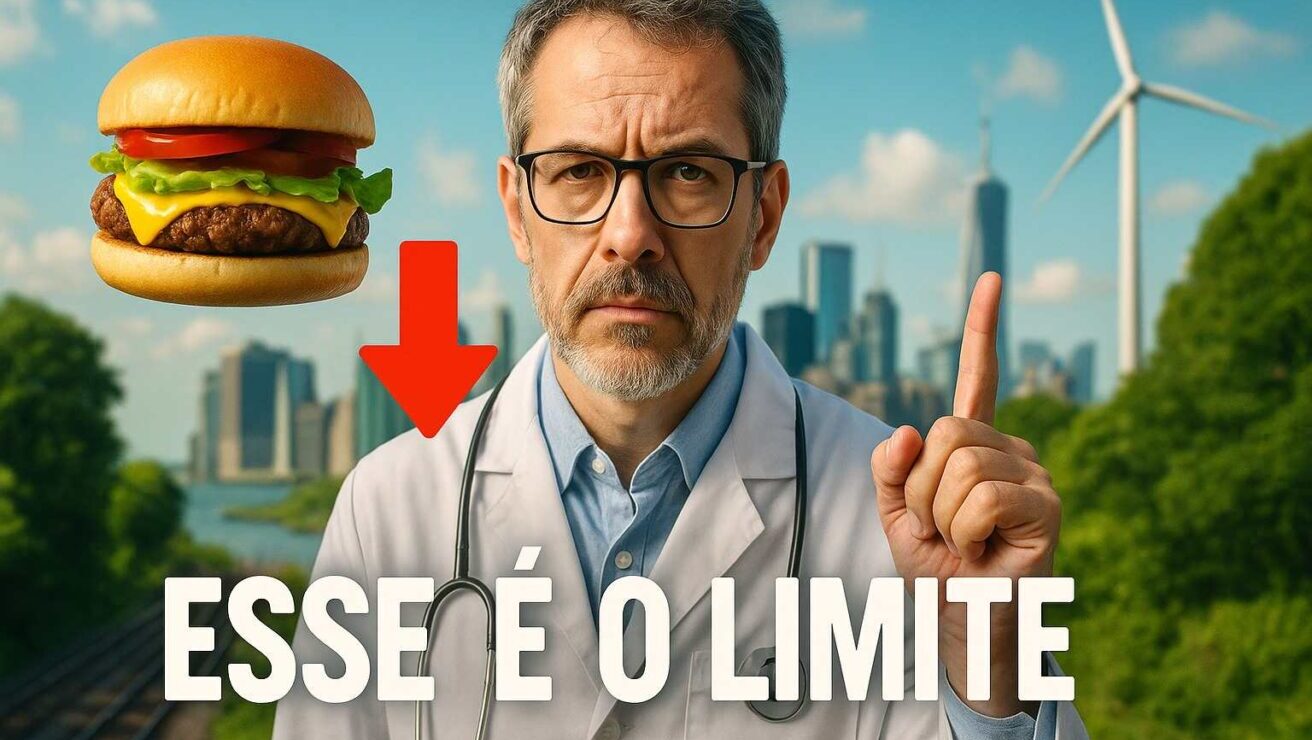

A Simple Hamburger Can Have Much Greater Impacts Than Just Caloric. For British Scientists, Reducing Meat and Dairy Consumption Is an Essential Measure to Contain Climate Change and Ensure Food Security in the Future.
Eating a hamburger may seem like a simple pleasure, but according to a British scientist, it can come at a high cost to the planet.
Paul Behrens, a professor at the University of Oxford and a researcher at the British Academy, states that limiting meat and dairy consumption is one of the most important actions to curb the impacts of climate change.
Behrens recommends that, to help the environment, people should consume only one hamburger every two weeks.
-
IBM Breaks 1-Nanometer Barrier with 0.7 nm Chip Featuring Nearly 100 Billion Transistors and 3D Architecture, Promising AI Revolution

-
Apple Raises MacBook and iPad Prices as Memory Costs Surge by Up to 98%, Losing Edge Over Rivals and Highlighting AI Boom’s Impact on Consumers
-
China Establishes State Centers to Train Humanoid Robots, While the West Lags Behind with Makeshift Solutions
-
The Trap of Modern Technology: How Screen Overload and Digital Connections Can Impact Your Mental Health and Well-being




For him, this adjustment in diet is a viable and efficient way to halt the advance of global warming.
Diet with Less Meat, but Without Radicalism
Despite the warning, the professor assures that his proposal does not require everyone to become vegetarian. The idea is to reduce — not eliminate — the consumption of animal products.
“It’s not even vegetarian, although it includes a reasonable — and healthier — amount of meat and dairy,” he stated.
As an example, he suggests that a person can still consume a hamburger every two weeks without exceeding the acceptable limits for the environment.
Behrens’ proposal is based on data that shows how meat production requires large areas of land, consumes many natural resources, and generates high greenhouse gas emissions.
Diet Change Could Free Up Areas the Size of Scotland
The most important thing, according to him, is that a collective change in dietary patterns could generate concrete positive effects.
He estimates that adopting a plant-rich diet could free up an area of land nearly the size of Scotland, previously occupied by cattle farming and dairy production activities.
This area could be used more sustainably, including for tree planting and growing more accessible food, helping to stabilize the country’s food system.
Food Crisis Is Already Affecting Prices in the United Kingdom
Behrens also pointed out that the effects of climate change are already directly impacting people’s wallets.
According to him, one third of the food price increases recorded in the United Kingdom in 2023 were caused by climate impacts on agricultural production.
He warns that, if nothing is done, price increases may repeat year after year, exacerbating stress in the global food system. The risk is that this leads to collapses in supply chains, social crises, and even political instability.
Scientific Consensus and Viable Alternatives
“This trajectory of food price increases caused by climate — leading to social unrest and political decay — is not inevitable,” Behrens wrote.
The consensus among researchers, according to him, is that the best way to avoid this scenario is to increase the amount of vegetables in the population’s diet and reduce the presence of meat and dairy.
This change can considerably reduce the environmental impact of food without completely eliminating animal products.
Study Shows Direct Impact of Meat on Emissions
Moreover, a previous study from the University of Oxford reinforces this idea. The research revealed that consuming just 100 grams of meat per day — less than one hamburger — generates four times more greenhouse gases than a vegan diet.
The study analyzed data from over 38,000 farms in more than 100 countries and concluded that meat-rich diets have the most negative impact on the planet, contributing to climate change and biodiversity loss.
What Will Go on the Plate in the Future
In the view of some companies and researchers, the menu of the future may include quite different foods.
A report from HelloFresh predicts that Britons will start consuming dishes such as seaweed pasta, soy spaghetti, and dandelion salad.
These meals are low in dairy and free of meat, precisely the items identified as major emitters of gases like carbon dioxide and methane.
Eliminating Meat Could Reduce Global Emissions by 68%
A study published in 2022 went even further. According to researchers, the total elimination of meat production worldwide by 2037 could cut global greenhouse gas emissions by 68%.
The study used simulations based on data from the UN and showed that livestock farming is one of the main sources of methane, nitrous oxide, and carbon. These gases are released both by animals and by the logistical chains involved in the production and transportation of meat.