





 Portuguese
  English
  Spanish
  3 min of reading
  0 comments


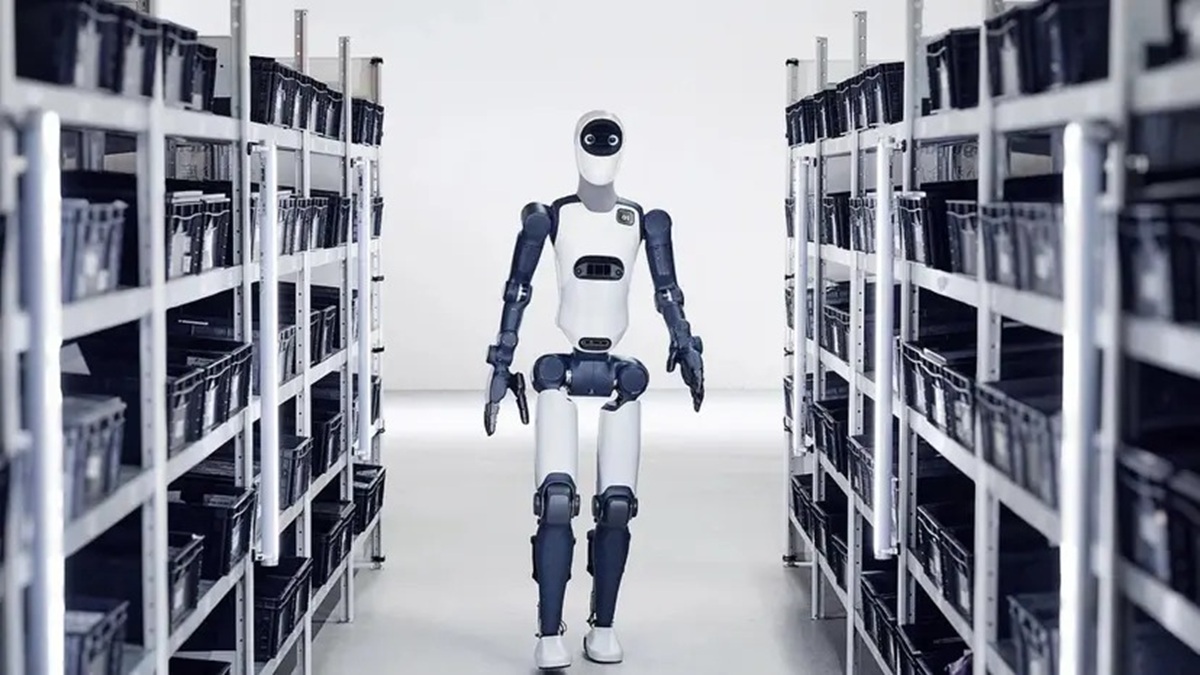
Presented By German Startup, The Humanoid Robot Agile ONE Reunites 71 Degrees Of Freedom, Tactile Sensors In The Hands, Audio Interaction And Autonomy Of Up To Eight Hours, Focusing On Real Industrial Operations, Safe Collaboration With Humans And Large-Scale Production Expected For 2026
The German startup Agile Robots introduced the Agile ONE, a humanoid robot aimed at industrial environments, combining physical artificial intelligence, human-like dexterity, and safe operation alongside workers to perform complex, repetitive, and high-precision tasks on the shop floor.
Concept And Industrial Application
Designed to operate in real manufacturing environments, the Agile ONE is intended to work safely and efficiently alongside humans. The five-fingered humanoid carries out activities that include transporting materials, operating machines, using tools, and precise handling of components.
The central proposal is to integrate the robot into existing operations, increasing productive capacity without requiring deep reconfigurations of the environment.
-
New Motorola phone to be launched in June with military-grade durability, 6,500 mAh battery, 50 MP cameras (rear and front), and a 6.8-inch AMOLED display with 5,200 nits; meet the Edge 70 Pro+

-
Xi Jinping personally released 80 million dollars in emergency aid to Cuba and sent 60,000 tons of rice along with 5,000 solar systems that are arriving at hospitals and maternity wards in 168 municipalities on the island under the United States blockade.

-
Technique created in the USA detects hidden underground tunnels by sending sound from bottom to top and can help protect roads, railways, and critical infrastructure.
-
Something strange happened in the Earth’s core in 2011, scientists analyzed 27 years of data and discovered a reversed flow under the Pacific that still defies explanations about the planet’s magnetic field.




The company states that the system was designed for continuous and demanding tasks, maintaining operational consistency across shifts.
Dexterity, Interaction And Spatial Awareness
The Agile ONE incorporates integrated artificial intelligence with support for audio conversations, allowing direct and intuitive interaction with human operators. The system responds to verbal commands and adjusts actions according to changes in the environment, favoring cooperation in daily work.
The robot features advanced spatial awareness for navigation in dynamic environments, with active motion and sound tracking. Proximity sensors assist in collision prevention and reinforce safe and comfortable robot-human interaction.
User experience elements include vibrant colors, responsive eyes, and an information display on the chest. These features aim to make the behavior of the humanoid understandable to workers, reducing uncertainties during direct collaboration.
Technical Specifications And Operational Performance
From a technical standpoint, the Agile ONE was developed for strength, endurance, and precision. The robot stands 174 cm tall, weighs 69 kg, and can carry loads of up to 20 kg during industrial operations.
The maximum speed reaches 2 meters per second, allowing agile movements in the manufacturing environment. The battery autonomy extends up to eight hours, enabling prolonged use across multiple shifts without frequent recharges.
With 71 degrees of freedom in total, including 21 in each hand, the humanoid offers human-like dexterity. This configuration allows for fine and coordinated movements, essential for high-precision and repetitive industrial tasks.
Physical AI And Layered Architecture
The Agile ONE was developed as a stable, flexible, and highly tactile humanoid robot, designed specifically for close collaboration with humans. The system combines advanced hardware, intelligent software, and an ergonomic design aimed at practical real-world demands.
Each hand is equipped with sensors at the fingertips and force and torque sensors at all joints. This structure allows executing delicate and forceful tasks with precision, stability, and adaptability, handling tools and complex assemblies.
The company reports that the AI system was trained on one of the largest sets of real industrial data in Europe, complemented by simulated environments and human demonstrations. This training enables direct skill transfer to real factories.
The layered AI architecture separates levels of specialized intelligence. Upper layers handle strategic reasoning and planning, while lower layers manage quick reactions and fine motor control, combining cognitive decision-making and precise physical execution.
Production And Next Steps
According to Agile Robots, human-robot interaction is a pillar of the project, reflected in sensors, visual signals, and clear communication. The goal is to ensure intuitive, safe, and comfortable operations in shared industrial environments.
The startup plans to begin large-scale production in early 2026 at a new factory in Bavaria. The manufacturing process for the hardware will be fully maintained under internal control, ensuring standardization and quality of the humanoid robot.





-

-

-

-

-

10 people reacted to this.