






 Portuguese
  Spanish


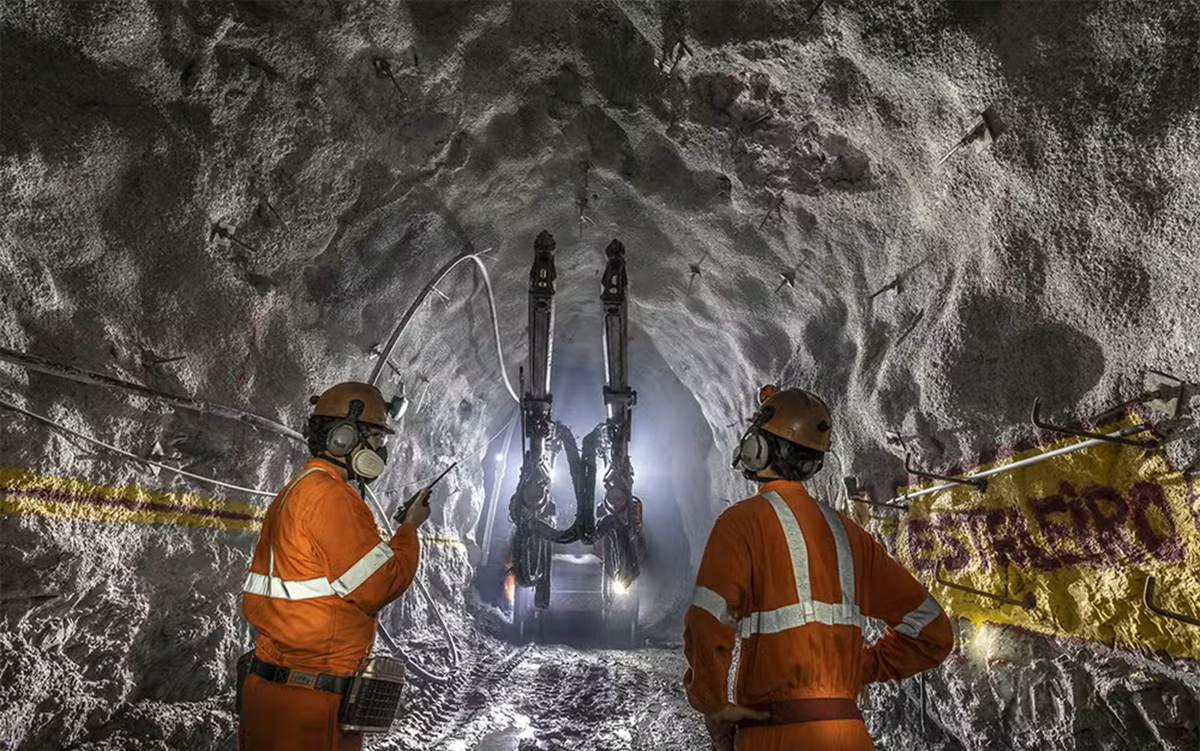


With More Than 1,600 Meters of Depth, the Cuiabá Mine is the Largest Underground Gold Mine in Brazil and Moves Billions a Year
Minas Gerais has always been synonymous with gold. But what few people imagine is that, nowadays, the extraction of this precious metal is done with cutting-edge technology and involves billion-dollar investments.
The largest underground gold mine in operation in Brazil, located in Sabará, in the Metropolitan Region of Belo Horizonte, is the best example of this.
The Cuiabá Mine goes more than 1,600 meters below the surface and is one of the most important in Latin America. The Cuiabá Mine is operated by AngloGold Ashanti.
-
Workers renovating a playground in northern England uncover 176 World War II bombs buried underground; training artifacts still contained explosives.

-
Brazilian Architect Transforms Waste into Sustainable Homes with Solar Power and Rainwater Systems for 40 Years

-
Security Guard Becomes Doctor at Louisiana Hospital Where He Once Worked, Studied Chemistry Between Shifts

-
Woman Rescued from Luxury Complex in Brazil Worked Without Pay for 55 Years, May Be Entitled to Over $300,000


Two Burj Khalifas of Depth
The depth of the mine is impressive. To give you an idea, it reaches the equivalent of almost two Burj Khalifas, the tallest building in the world, at 828 meters.
In surveys conducted by the company itself, gold has already been detected up to 2,400 meters deep. But reaching it is not simple.
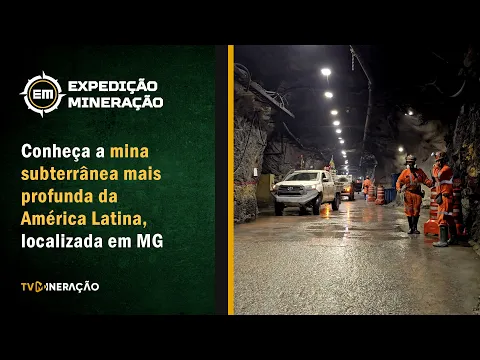

Extracting gold in such a structure requires planning, strength, and a lot of money.
The operation is complex and expensive. To extract just 6 grams of gold, one ton of rock must be blasted.
According to O TEMPO, for each meter advanced inside the mine, the cost is R$ 29 thousand. Even so, the company manages to open 1,300 meters of new galleries per month.

Production in Tons
The Cuiabá Mine, along with the Lamego mine, also located between Sabará and Caeté, is responsible for 77% of AngloGold’s gold production in Brazil.
In 2023, 271 thousand ounces of gold were extracted in Cuiabá, out of the 351 thousand produced in the country. One ounce is equivalent to just over 31 grams. The annual average ranges from 8 to 10 tons.
Only in 2024, 58 thousand ounces of gold have already been produced by operations in Minas Gerais. The name “Cuiabá” comes from an old settlement in the area. Today, the site has practically become an underground city.
An Underground City
The internal structure of the mine is impressive. There are offices with functioning wi-fi at all levels.
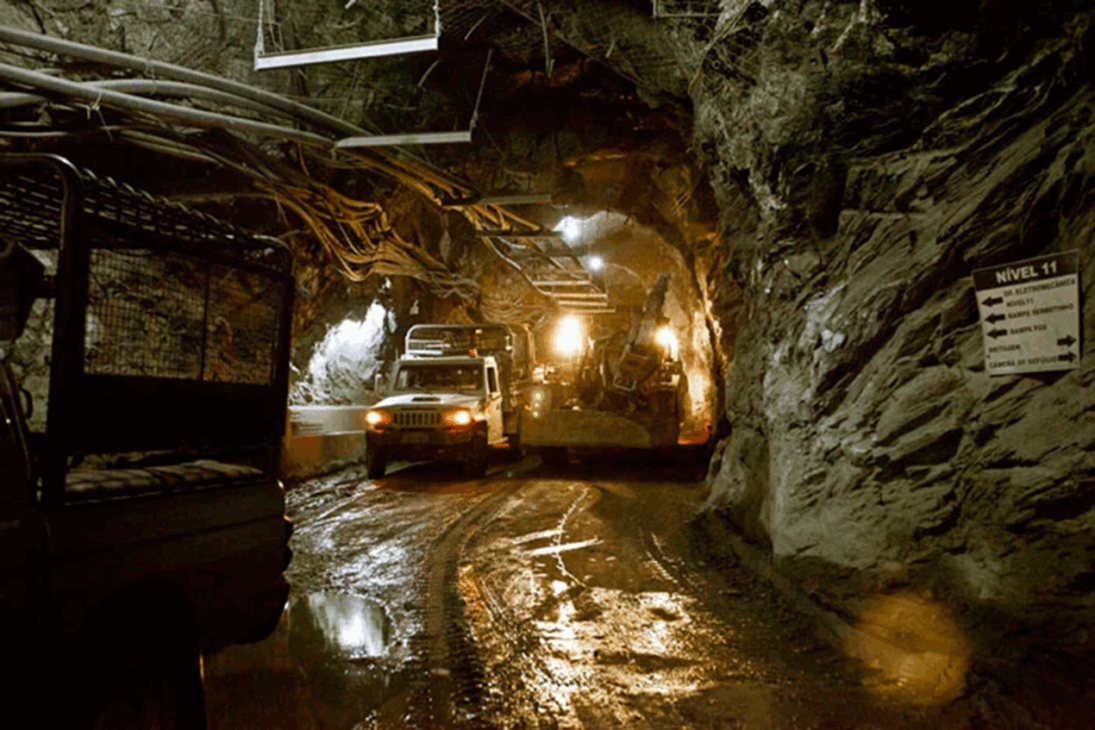
There are 444 routers installed underground. There are also pathways for truck and car circulation, mechanical workshops, robots, and temperature-controlled fans. Even over a kilometer from the surface, the temperature does not exceed 24°C.
The galleries total 330 km in length, with 26 km of main ramp.
The descent begins in an elevator that takes about 4 minutes to reach level 11, at 900 meters. From there on, transport is done by car, van, or machinery to the deepest level, 23, which takes another 25 minutes.
The elevator has two floors, accommodates up to 50 people, and carries supplies like cables, fiber optics, and containment materials.
At level 11, there is also a workshop, a rock mechanics laboratory, and a living space with an exclusive room for women, equipped with an armchair, sink, extra overalls, and sanitary napkins.
Technology and Safety in Every Detail
In total, there are 150 pieces of equipment operating underground, including 74 large units. One of the highlights is a 20-ton electric loader that runs on batteries.
It has an exclusive charging station, with three batteries alternating between use, charging, and cooling.
About 1,000 employees work daily in the mine, with 400 operating simultaneously on each shift. All are monitored with a location device attached to their belts.
The device, the size of a cellphone, shows in real-time the position of each worker.
On the surface, a panel displays the location of everyone, with their full names. This control is essential due to the refuge chambers in case of accidents. These places have limited capacity, so the number of people needs to be strictly monitored.
From Ore to Gold Bar
The process of transforming ore into gold takes about a week.
It starts with mineral research, goes through mining planning, long drilling, blasting, cleaning, crushing, hoisting, milling, flotation, and concentration. The concentrated material is then transported by cable car to the Queiroz plant in Nova Lima.
At the plant, the ore undergoes heating, leaching, smelting, and finally becomes a gold bar with 99.99% purity.
Each bar weighs about 1.4 kg. This entire process was planned at least two years in advance.
Once finished, the gold is sold to partners. The jewelry company Vivara is the only one that buys directly from the mining company. The Cuiabá Mine has a projected lifespan until 2050, but it all depends on the cost-benefit of extraction in the future.
The Cuiabá Mine is an example of the new profile of mining in Brazil: deeper, more expensive, and with much more technology.


Para muito além do ouro e seu óbvio valor, está mina é um verdadeiro tesouro na conjuntura geopolítica atual que só tende a piorar. Eu falo de uma estrutura que pode se tornar um grande bunker, podendo salvar milhares de vidas humanas e também de animais em caso de uma guerra nuclear, onde o nosso país possa também ser um dos alvos.
No tempo do império 1 quinto do ouro ia para Portugal que usava este ouro para pagar aos ingleses a sua divida.
Na fritada dos ovos nosso ouro continua enriquecendo os ingleses e nós continuamos pobres com tanto ouro. Que democracia é esta? Como funciona isso? Alguma parte fica pra nós? Alguém consegue explicar esta parte? Pra onde vai esta parte? Se é que Alguma parte fica prá nós!!!
Com tanto ouro no nosso Brasil, não tem necessidade de uma empresa estrangeira no nosso país!Temos todo está tecnologia moderna de ponta para fazer este trabalho,mas infelizmente a roubalheira é tanta…que
Entendo sua opinião, mas é importante levar em conta alguns pontos: Uma parte considerável da riqueza extraída fica para o país, na forma de impostos sobre mineração (o que está sob a terra pertence à União, e só pode ser extraído sob concessão e pagamento, assim como nas concessões de poços de petróleo) e sobre imposto de renda do lucro da empresa; há geração de riqueza para o país também na forma de milhares de empregos altamente especializados e bem remunerados, assim como ocorre na área de petróleo; quando Eldorado dos Carajás foi descoberta e invadida pelo povo, quase ninguém ficava rico lá, havia mortes, crimes, e a maior parte do ouro garimpado lá era gasto das zonas de **** que migraram para lá e em bebida e drogas. Para explorar qualquer minério é preciso profissionalismo e expertise de grandes empresas, sejam estatais, mistas ou privadas, onde a riqueza extraída deve ser dividida entre impostos para o estado, empregos bem remunerados, infraestrutura e segurança para operação, compensação ambiental, e obviamente o lucro da empresa, pois ninguém vai fazer um investimento gigantesco desse de graça.
Eo campo de batalha, só interessa a vitóriaaaaaaa ė vencer e vencer e vencer eu venço sergiogudes, quando é q o Brasil vai pertencer o brasileiro; só quando o saci cruzar as pernas,ou quando o morcego 🦇 doar sangue ou quando o Brasil ganhar da Alemanha de7x1 nuncaaaaaaaaaa.