Portuguese
  Spanish


A geophysical survey in Machrie Moor revealed circular marks under the Scottish peat and rekindled interest in ancient ceremonial structures associated with the Neolithic and Bronze Age on the Isle of Arran.
Archaeologists identified in the subsoil of Machrie Moor, on the Isle of Arran, in western Scotland, traces of a possible new prehistoric circle formed by 12 buried circular marks.
The discovery was announced on June 30, 2026 by Historic Environment Scotland, the body responsible for researching, recording, and protecting Scotland’s historical heritage, after a geophysical survey revealed signs that could not be perceived with the naked eye.
Machrie Moor already hosts one of Scotland’s main archaeological complexes, according to Historic Environment Scotland.
-
Engineers Develop Fridge-Sized Machine to Produce 95-Octane Synthetic Fuel from Air and Water, Aiming to Sustain Combustion Engines Without Oil

-
Two-Armed Robot Uses AI to Reassemble Destroyed Pompeii Frescoes, Solving an “Impossible” Puzzle
-
New Law in Brazil Requires Breaks for Type 1 Diabetes Management at Work, School, and Public Exams

-
Scientists Confirm “Greening” of Antarctica: Ice on the World’s Coldest Continent Turns Green as Mosses Multiply Over Tenfold in Four Decades


The landscape houses stone circles, monoliths, burial cairns, and cists associated with the Neolithic and Bronze Age, in a period estimated between 3500 BC and 1500 BC.
The new structure was covered by the peat layer.
According to the Scottish body, the team led by archaeologist Nick Hannon found 12 anomalies similar to pits.
When analyzed together, these marks form a circle, with spacings that may indicate the existence of two other points in the original arrangement.
The comparison with monuments like Stonehenge occurs due to the circular shape and the possible ritual context associated with the archaeological landscape.
Even so, specialists treat the find as a possible stone or wooden circle, as no excavation has confirmed the complete composition of the structure.
Sensors revealed hidden marks in the subsoil of Machrie Moor
The discovery did not occur through traditional excavation.
The archaeologists used geophysical survey equipment to track changes in the soil, technology capable of detecting magnetic differences and other anomalies that may be related to stones, wood, metals, or ancient human interventions.
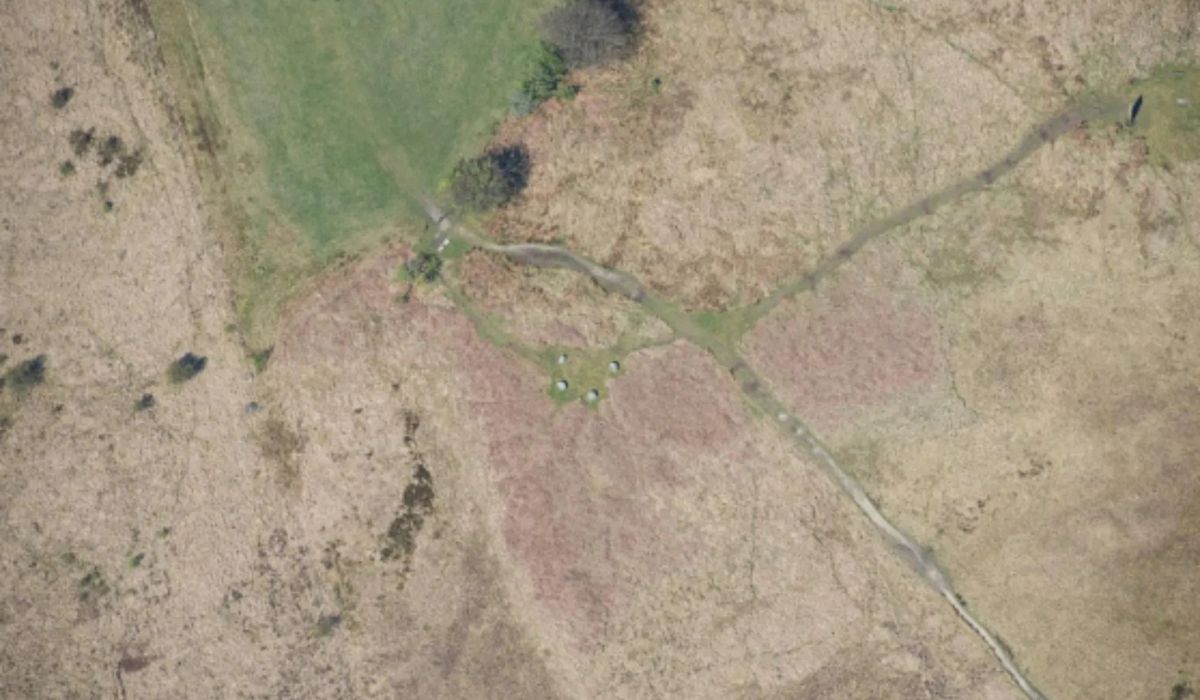
In Machrie Moor, the signals appeared in an area where there was no visible structure on the surface.
As the marks did not contain stones inside, researchers consider the hypothesis that the circle was formed by wooden posts or by stones removed at some undetermined point in time.
This method has been used in sensitive archaeological areas because it allows for investigating the underground before any direct intervention.
In places with fragile remains, prospecting helps map points of interest and reduces the risk of damage to information preserved for long periods.
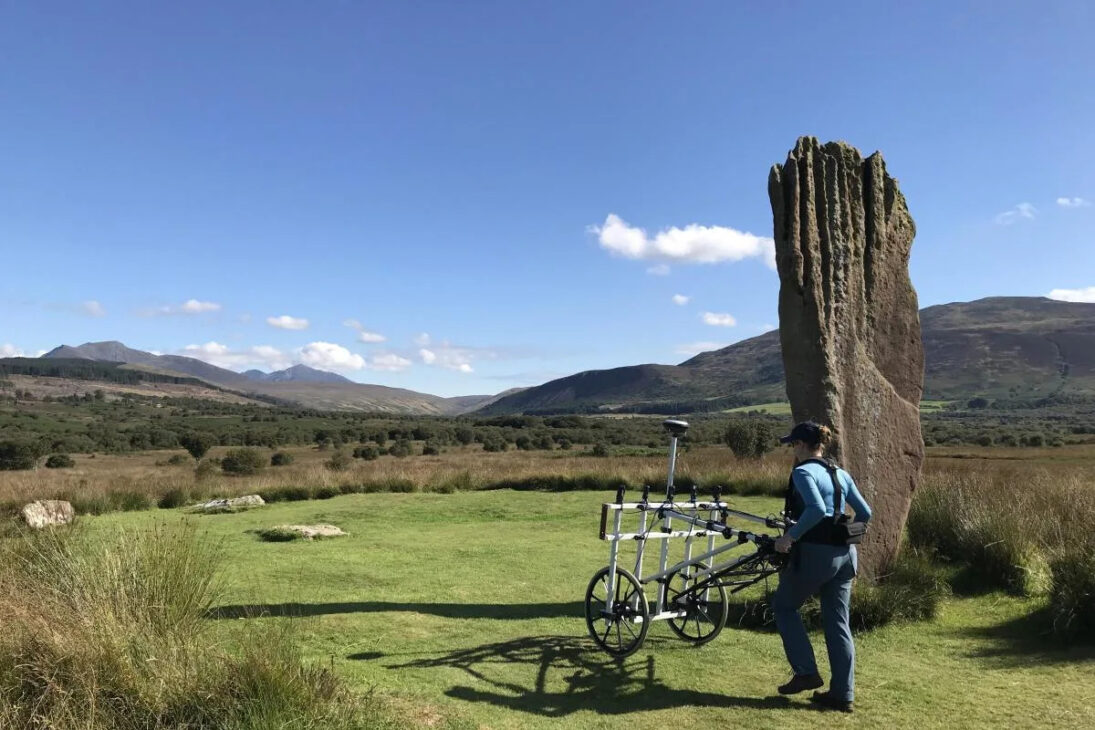
Nick Hannon, senior heritage records manager at Historic Environment Scotland, stated that the team was “tremendously excited” about the discovery.
According to him, the archaeologists already knew that Machrie Moor still held materials to be identified, but finding a new circle “completely exceeded” expectations.
The researcher also said that the tools used to study the underground are constantly developing.
According to Hannon, these resources allow for expanding knowledge about buried history without disturbing the land and without compromising possible archaeological remains.
Prehistoric site gathers rituals, burials, and solar alignment
Machrie Moor is near Blackwaterfoot, on the Isle of Arran, and concentrates remains associated with domestic, ritual, and funerary activities of communities that lived in the region thousands of years ago.
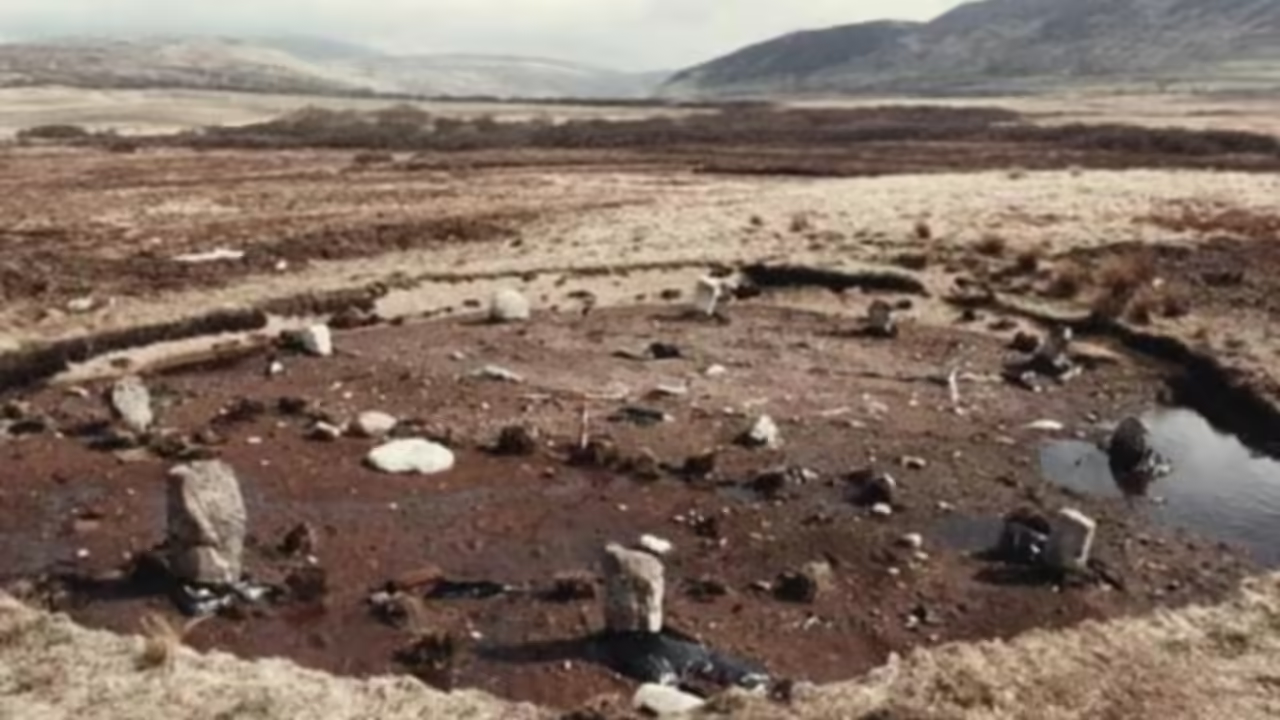
The site is known for six stone circles identified as circles 1, 2, 3, 4, 5, and 11.
Previous research indicated that some of these stone circles were preceded by wooden structures in the same positions.
This sequence suggests that part of the ceremonial landscape underwent transformations over time, with possible replacements of posts by stones in different phases of occupation.
The already known circles have been associated by archaeologists with ritual and ceremonial practices of Neolithic and Bronze Age farmers.
In later periods, these areas also received burials, including cremations and inhumations, according to information from Historic Environment Scotland.
Another element studied is the relationship between the monuments and the surrounding landscape.
According to the Scottish agency, the circles align with a striking opening at the top of Machrie Glen, a point where the sunrise on the summer solstice would have been visible.
This feature is interpreted by experts as a possible indication that solar observations were part of the ceremonies held at the site.
In the case of the new circle, however, archaeologists do not yet claim that it had the same function as the other monuments.
The hypothesis of ritual use is considered plausible because the structure appears in the same archaeological context as Machrie Moor.
Confirmation, however, depends on new stages of research, as geophysical prospecting identifies anomalies but does not replace more detailed analyses of dating, materials, and function.
Structure may be about 28 meters in diameter
A report by Live Science, based on the research report, stated that the detected ring is approximately 28 meters in diameter and that the circular marks appear spaced around 6.5 meters.
The publication also pointed out that two larger gaps may correspond to locations where there were two other posts or stones, which would raise the original total to 14 elements.
This data indicates that the marks may be part of a planned structure, rather than isolated alterations in the terrain.
Even so, as the monument has not been excavated, researchers avoid definitive conclusions about the materials used and the purpose of the circle.
The discovery adds a new element to the study of Machrie Moor, an area already associated with ritual, funerary, and domestic activities in different periods of prehistory.
For archaeologists, the new set of marks may help understand how ancient communities organized their ceremonial spaces.
The case also shows that areas studied for decades may preserve structures not identified on the surface.
With the use of remote sensing technologies, research teams can locate buried traces that do not appear in traditional visual inspections.
Discovery expands study of the prehistoric landscape of the Isle of Arran
The relevance of the new circle, according to experts, lies in the possibility of expanding the understanding of the prehistoric landscape organization of the Isle of Arran.
Instead of analyzing only isolated monuments, researchers observe how circles, burials, and natural alignments may have formed a set used by different generations.
Machrie Moor preserves, in the same area, stone circles, possible wooden structures, funerary monuments, and evidence of alignment with solar phenomena.
For Scottish archaeology, this combination allows the study of changes in territory occupation throughout the Neolithic and Bronze Age.
The identification without excavation is also related to a change in method at sensitive sites.
Before opening the ground, researchers can map anomalies, compare patterns, and determine which areas require further investigation, with less risk of interfering with still-preserved materials.
According to Hannon, discoveries like this explain the importance of heritage recording work.
The researcher stated that the team seeks to protect Scotland’s heritage while revealing new information about the past.
So far, the confirmed information is that sensors detected a previously invisible circle under Machrie Moor, in a region that already concentrated relevant prehistoric remains of the Isle of Arran.
The next step for the research will be to determine, based on new studies, when the structure was built, what materials were used, and how it related to the other monuments on the site.