






 Portuguese
  Spanish




Renovation of a playground in England revealed 176 World War II training bombs buried beneath the ground after decades of use by children.
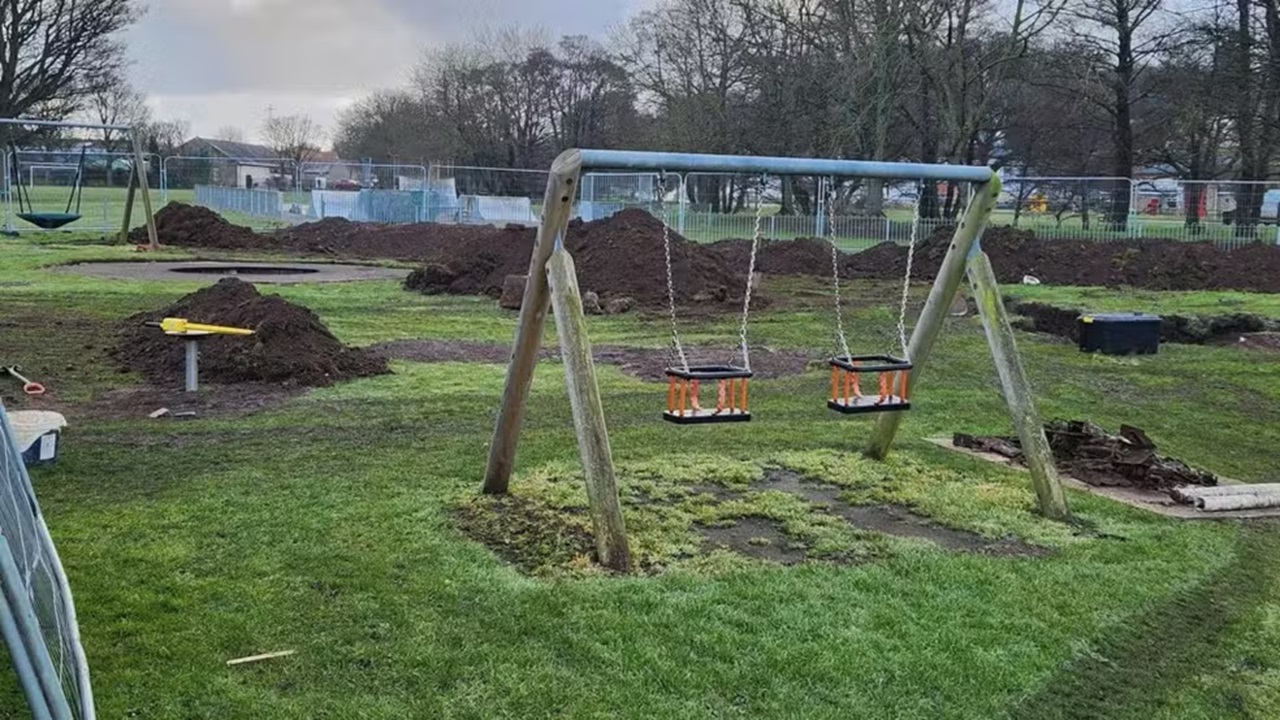
In January 2025, an expansion project at Scotts Park, in the town of Wooler, in the county of Northumberland, northern England, revealed a military legacy buried beneath an area used by children for decades. What began with the finding of a metallic object during excavation led to the discovery of 176 World War II training bombs beneath the park’s soil.
The discovery halted the renovation of a new inclusive playground and turned a community project into a public safety operation. According to reports from people and local authorities, the land was associated with a former military training area, and part of the material had remained buried there since the war period.
Excavation in Wooler playground revealed 176 World War II training bombs under children’s area
According to Reuters, the first call was made on January 14, 2025, when workers found a metallic object during excavations at Scotts Park. The item was handled with caution and later identified as an old training artifact.
-
Brazilian Architect Transforms Waste into Sustainable Homes with Solar Power and Rainwater Systems for 40 Years

-
Security Guard Becomes Doctor at Louisiana Hospital Where He Once Worked, Studied Chemistry Between Shifts

-
Woman Rescued from Luxury Complex in Brazil Worked Without Pay for 55 Years, May Be Entitled to Over $300,000

-
Brazilians in Portugal Face Increased Police Checks as Consulate Advises Carrying Documents; Long-term Resident and Tourist Report Heightened Scrutiny in Porto.





After the initial discovery, the investigation progressed quickly. Sky News reported that a team hired for the sweep found 65 artifacts on the first day of work and another 90 the next day, bringing the total to 176 training munitions already removed from the area.
The very scale of the find changed the scope of the project. Local authorities reported that only part of the land had been cleared at that time, leading to the possibility that new items might still be buried in other areas of the park.
Training bombs still required specialized removal due to internal charge and preserved fuses
Although they were classified as training bombs, the devices were not treated as harmless pieces. According to reports gathered by Sky News and People, the artifacts still contained internal components and, in several cases, were found with fuses and preserved content, requiring specialized removal.
The devices weighed between 9 and 11.5 pounds, approximately 4 to 5.2 kilograms, according to local councilor Mark Mather, interviewed by Sky. The material was treated as potentially dangerous throughout the entire removal operation.
The discovery also had financial and operational impacts. Sky News reported that the safe removal of the munitions was estimated between 30,000 and 40,000 pounds, with support from the Northumberland County Council to cover the costs.
Scotts Park in Northumberland may have been used as a military training area during World War II
Local authorities began working with the hypothesis that the Scotts Park area may have been used as a Home Guard training field, a British defense force mobilized during World War II. According to People, this association was mentioned by the police and authorities involved in the case.
This hypothesis helps explain why such a high volume of artifacts appeared concentrated under a single recreational area. Instead of isolated disposal, the pattern found suggests a link to former training activities conducted on the site.
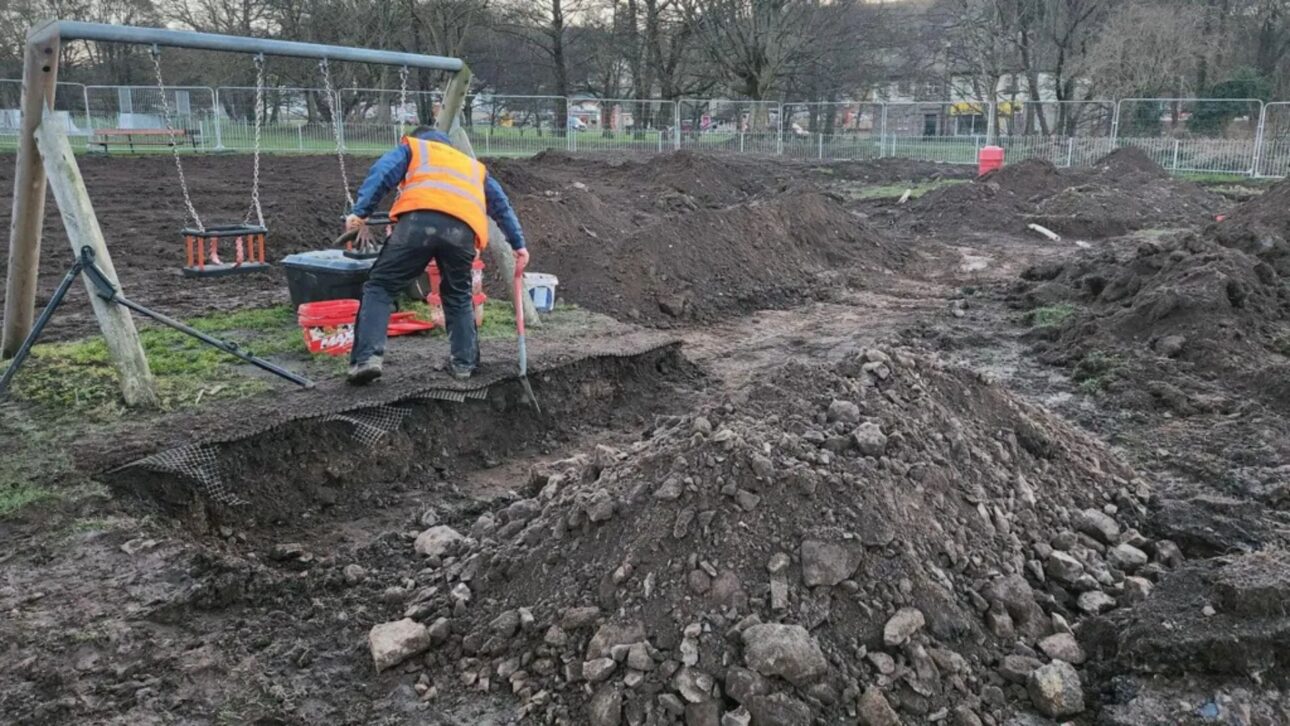
The case turned a recreational space into an example of how military legacy can remain invisible underground for decades. In Wooler, the renovation of a children’s park ended up exposing a historical risk that was not perceptible on the surface.
Decades of children’s use of the land heightened the alert about soil safety and urban works
The local impact was immediate because the park had been regularly used by the community. Mark Mather told the British press that the situation was shocking precisely because children played in that area without knowing that the ground hid dozens of old military artifacts.

The construction of the new playground had to be halted until the area could be declared safe. According to Sky News, the goal of the local council was to resume the project only after obtaining formal certification that the park would be 100% safe for reopening.
More than just a curious episode, the discovery brought to the forefront a relevant issue for urban projects in historical areas: the need for prior soil assessment in regions with a military or training past.
Findings of World War II military artifacts still mobilize evacuations and security operations in Europe
The case in Wooler is not isolated on the continent. In June 2025, for example, the discovery of three American bombs from World War II during construction in Cologne, Germany, led to the evacuation of about 20,500 people and prompted one of the largest operations of its kind in the city since the end of the war.
This type of occurrence shows that buried artifacts continue to emerge during excavations, renovations, and major infrastructure projects in Europe, even eight decades after the conflict.
In Wooler, the difference was the location of the find: a children’s playground that had been operating for years over ground with hidden military heritage.


