






 Portuguese
  Spanish


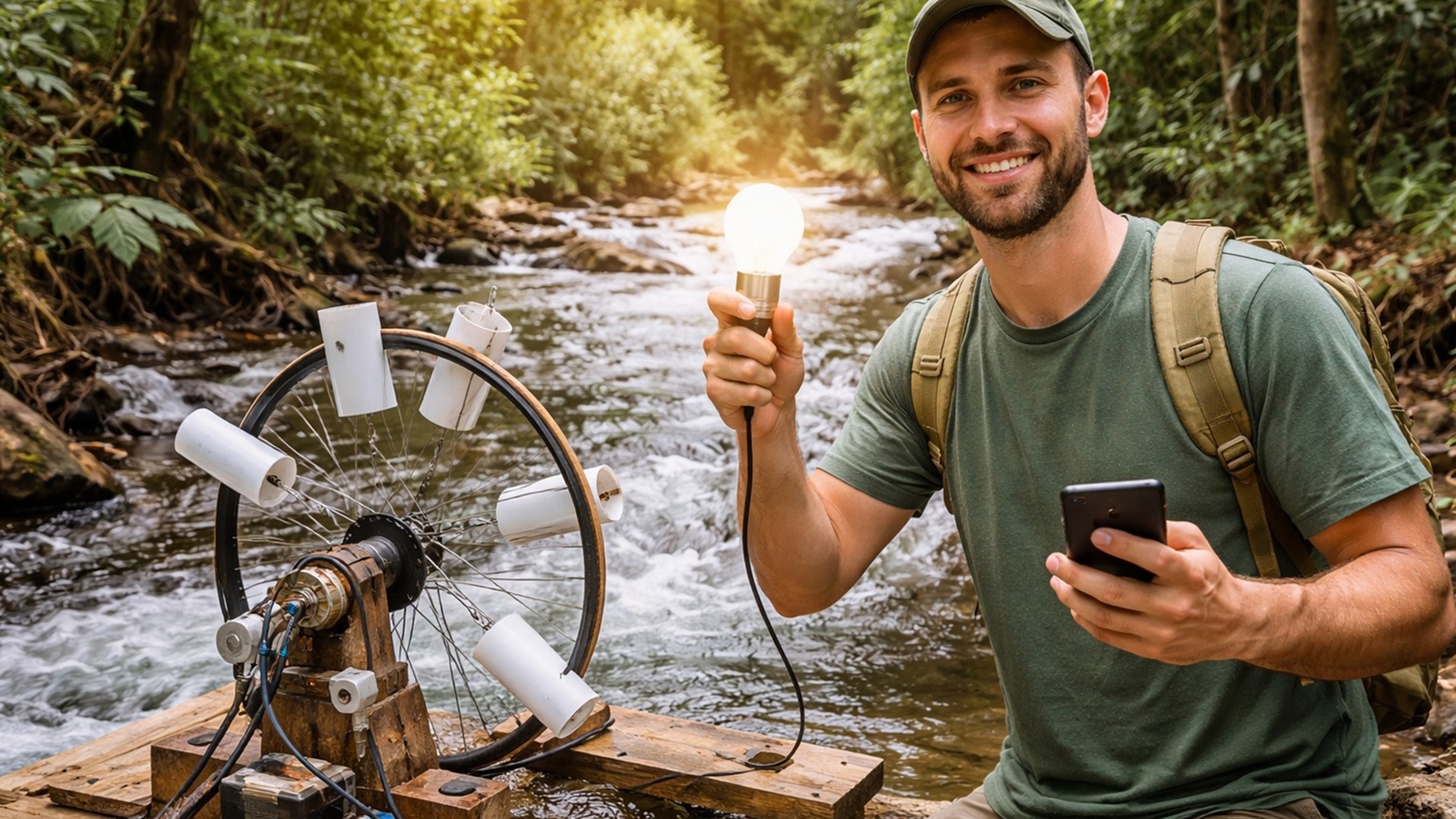


American Adopting Off-Grid Life Shows, in Video on Social Media, How to Generate Electricity with Running Water Using Simple Materials, Presenting an Alternative for Emergency Situations and Reducing Energy Costs in Unstable Scenarios
Amid rising global energy costs, an American prepper shared on social media a method for producing electricity with running water, aimed at emergency situations and off-grid living, using simple materials and a homemade hydro-generator.
The search for energy self-sufficiency has been growing in a context of high prices and dependence on imports in various countries. This scenario has encouraged some of the population to adopt lifestyles outside of the traditional electrical grid.
In addition to the cost, other factors drive this choice. Independent production eliminates payments to utilities, reduces emissions, and increases resilience amid concerns about cyberattacks and blackouts. Interest in this model grew significantly after the uncertainties brought by COVID-19.
-
Workers renovating a playground in northern England uncover 176 World War II bombs buried underground; training artifacts still contained explosives.

-
Brazilian Architect Transforms Waste into Sustainable Homes with Solar Power and Rainwater Systems for 40 Years

-
Security Guard Becomes Doctor at Louisiana Hospital Where He Once Worked, Studied Chemistry Between Shifts

-
Woman Rescued from Luxury Complex in Brazil Worked Without Pay for 55 Years, May Be Entitled to Over $300,000




Off-Grid Living and Emergency Preparedness
The so-called doomsday preppers advocate for preparation for potential disasters through autonomous energy solutions and supplies. In this context, emergency situations are treated as plausible scenarios that require prior planning.
The American prepper gained popularity by sharing DIY survival projects. On his TikTok account, @creativesurvival, he demonstrates how to create small-scale energy solutions for those looking to live remotely.
A recent video features a practical guide for creating green energy for a forest home using water from a nearby creek and a hydro-generator. The stated goal is to show how innovation can generate renewable energy in emergency situations.
Homemade Hydro-Generator Made with Simple Objects
The device built by the prepper is not comparable to large dams, such as the gigantic Himalayan dam mentioned in the video. It is a small-scale system, assembled with repurposed materials.
To create the hydro-generator, he used the frame and chain from an old bicycle, a small generator, conductive wire, wooden boards for support, a PVC pipe, a saw, screws, a hammer, fire, and a metal pen with a sharp tip.
The process began with cutting the PVC pipe into smaller parts. Then, the metal tip was heated in the fire and used to melt holes in the material. The pieces were secured to the bicycle wheel with screws, all facing the same direction.
Assembly over the Creek and Connection to the Generator
After preparing the improvised turbine, the prepper built a support structure with wooden boards over a nearby creek. The setup was positioned so that the running water could spin the adapted wheel.
The bicycle chain was then connected to a small generator. The conductive wire was attached to the generator to allow for the transmission of the produced energy. With the continuous flow of water, the system began generating electricity.
According to the video demonstration, the energy produced was sufficient to light a bulb and charge a smartphone. The outcome was presented as a practical solution for emergency situations in environments outside the conventional electric grid.
Complementary Application and Limitations of the Project
The content itself emphasizes that the project may not be feasible in all contexts. Nevertheless, it is pointed out as a useful alternative for those living off the grid and in need of a clean supplemental source.
In scenarios where solar or wind systems fail, the homemade hydro-generator can serve as support. In these cases, emergency situations require adaptable and low-cost solutions.
The central proposal of the video is to demonstrate that innovation can ease life and reduce energy expenses. By reusing simple materials, the prepper highlights that it is possible to generate electricity without relying on traditional infrastructure.
The growing interest in this type of content accompanies the trend of seeking greater home resilience. The combination of cost reduction, lower emissions, and preparation for emergency situations reinforces the attractiveness of off-grid solutions.
Although limited in scale, the project exemplifies how creativity can transform common objects into functional systems. For those adopting remote living, initiatives like this expand the possibilities of energy autonomy and practical preparation for unforeseen events.


