Portuguese
  Spanish


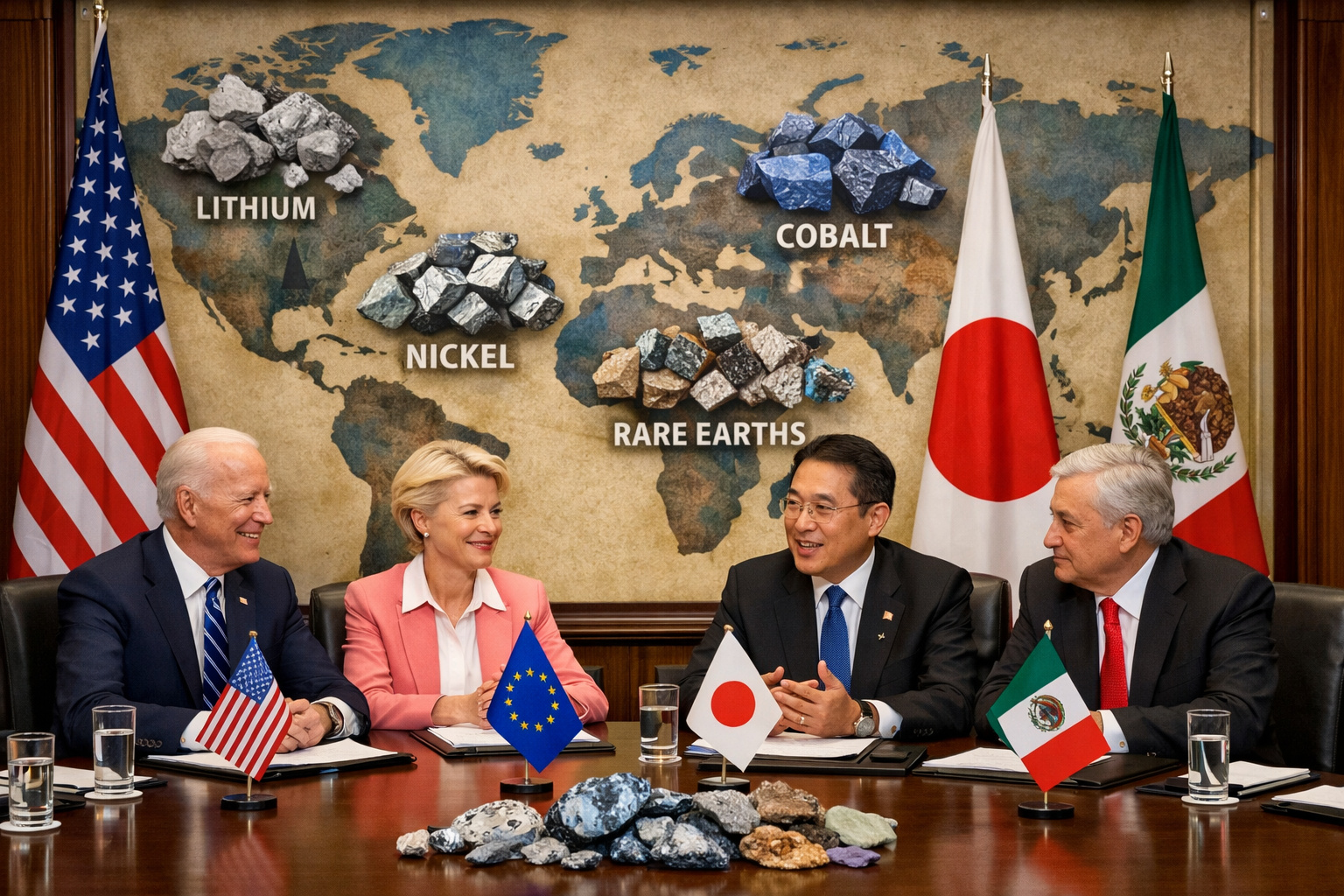

Agreement On Critical Minerals Brings Together Around 50 Countries In Washington, Establishes Clear Deadlines And Expands Geopolitical Dispute For Strategic Supplies
The U.S. government announced a new strategic alliance on critical minerals. The agreement includes the so-called rare earths and involves Japan, Mexico, and the European Union. The decision came after a ministerial meeting in Washington, which gathered representatives from around 50 countries.
The information was disclosed by “Metrópoles,” in a report signed by Junio Silva. According to the content, the initiative aims to reduce vulnerabilities in the global supply chain,currently heavily dominated by China. In this context, Washington has begun to prioritize more robust and coordinated trade agreements.
Moreover, the topic gained urgency because critical minerals support strategic sectors. Among them are technology, energy, industry, and defense. Therefore, the debate has moved to occupy a central space on the international geopolitical agenda.
-
U.S. Dismisses Brazilian Foreign Ministry’s Military Risk Warning as “Absurd,” Cites Brazilian Criminal Gangs Operating in the U.S. Since May 2026

-
Ukraine War Impacts Brazilian Fuel Supply: Russian Diesel Imports Drop 65% in June, Brazil Turns to US and India Amid Market Concerns

-
Chinese Nuclear Submarine Launches Simulated Warhead Missile in Pacific, Heightening Regional Tensions Amid Naval Drills with Russia Near Qingdao; New Zealand and Papua New Guinea Warn of Persistent Chinese Military Presence
-
Ayatollah Ali Khamenei’s Funeral Draws 15 to 20 Million in Tehran, Calls for Revenge Against Trump After Joint Israel-U.S. Attack



Agreement With Mexico Defines Coordinated Trade Policies Within 60 Days

In the case of Mexico, the Office of the United States Trade Representative (USTR) reported that the agreement includes a specific action plan. This plan provides for the creation of coordinated trade policies, with a maximum deadline of 60 days for adoption.
Among the proposed measures are the identification of reserves, the encouragement of mineral exploration, and the import of critical minerals at minimal prices. Thus, countries aim to avoid supply disruptions and reduce external risks.
At the same time, the partnership strengthens regional supply chains. Therefore, the United States advances in economic integration while protecting strategic interests. The move also creates a more predictable environment for new investments in the sector.
European Union And Japan Advance In Joint Memorandum On Strategic Minerals
Meanwhile, the agreement reached between the United States, the European Union, and Japan follows similar objectives. However, it broadens the focus on research, information exchange, and technical cooperation. According to the official announcement, the governments should finalize a memorandum of understanding within 30 days.
In recent years, the discussion on critical minerals has gained momentum on a global scale. This is because the 17 metals known as rare earths have essential applications. They are used in electric vehicles, semiconductor chips, and military equipment.
On the other hand, the concentration of global production has raised strategic concerns. In light of this, the new alliance seeks to diversify suppliers, stimulate innovation, and increase industrial resilience. The ultimate goal is to reduce dependence on a single producing hub.
In your opinion, will this alliance be sufficient to reduce global dependence on China for rare earths, or will Chinese dominance remain untouched?